Cop Secretly Follows Lost Boy, Then He Bursts Into Tears When He Sees…
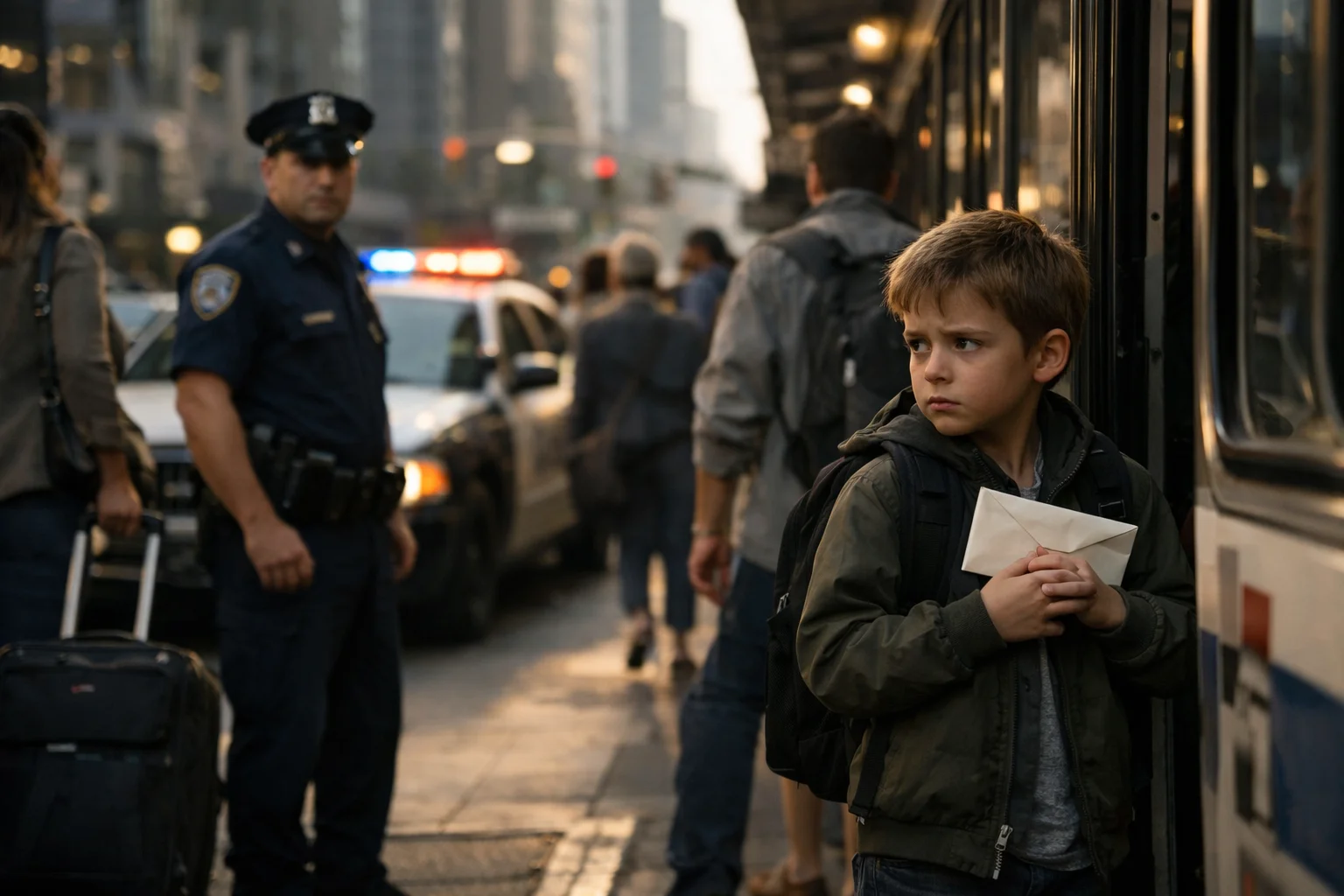
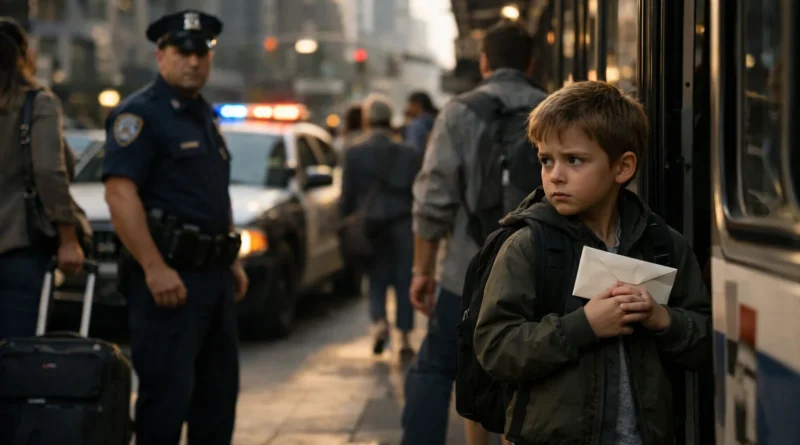
Officer Sean Smith first noticed the boy near the back entrance of the downtown bus station, where the city got noisier and less forgiving. It was just after school hours, the sidewalks crowded with commuters, delivery carts, and people who never looked up. The boy was small enough to disappear in that mess, but there was something about the way he walked that made Sean slow down. He wasn’t wandering aimlessly. He was marching, jaw tight, backpack bouncing against his shoulders, as if he had decided something huge and was afraid that stopping for even one second might ruin it.
Sean rolled down his window and called out as gently as he could. The boy turned, and Sean saw right away that he couldn’t have been older than nine. “You okay, buddy?” he asked. The boy nodded too fast. He said his name was Leo and that he wasn’t lost. He was “just going somewhere important.” When Sean asked where, Leo tightened his grip around a folded envelope and took two quick steps back. Sean got out of the patrol car, meaning only to keep the child from drifting deeper into the traffic and crowds, but the movement spooked him.
Before Sean could say another word, Leo darted between two adults pulling rolling suitcases and slipped through the bus doors just before they hissed shut. Sean caught the route number, swore under his breath, and jogged back to his cruiser. He could have called it in and had another unit farther ahead pick up the boy, but some instinct told him not to lose sight of that child. So he pulled into traffic and followed the bus, already knowing this would not be a routine stop…
The bus headed east, away from schools, apartment blocks, and the neighborhoods where a child should have been going home. Sean watched each stop carefully, just in case Leo got down. When Leo finally got off, it was in an older part of town near pawn shops, closed repair garages, and buildings with peeling paint. Sean parked around the corner and followed on foot. Leo kept checking the folded envelope in his hand, then looking up at street signs, his face pulled tight with concentration. He was trying to act grown-up, but every few seconds he glanced around like he was suddenly remembering just how big the city was.
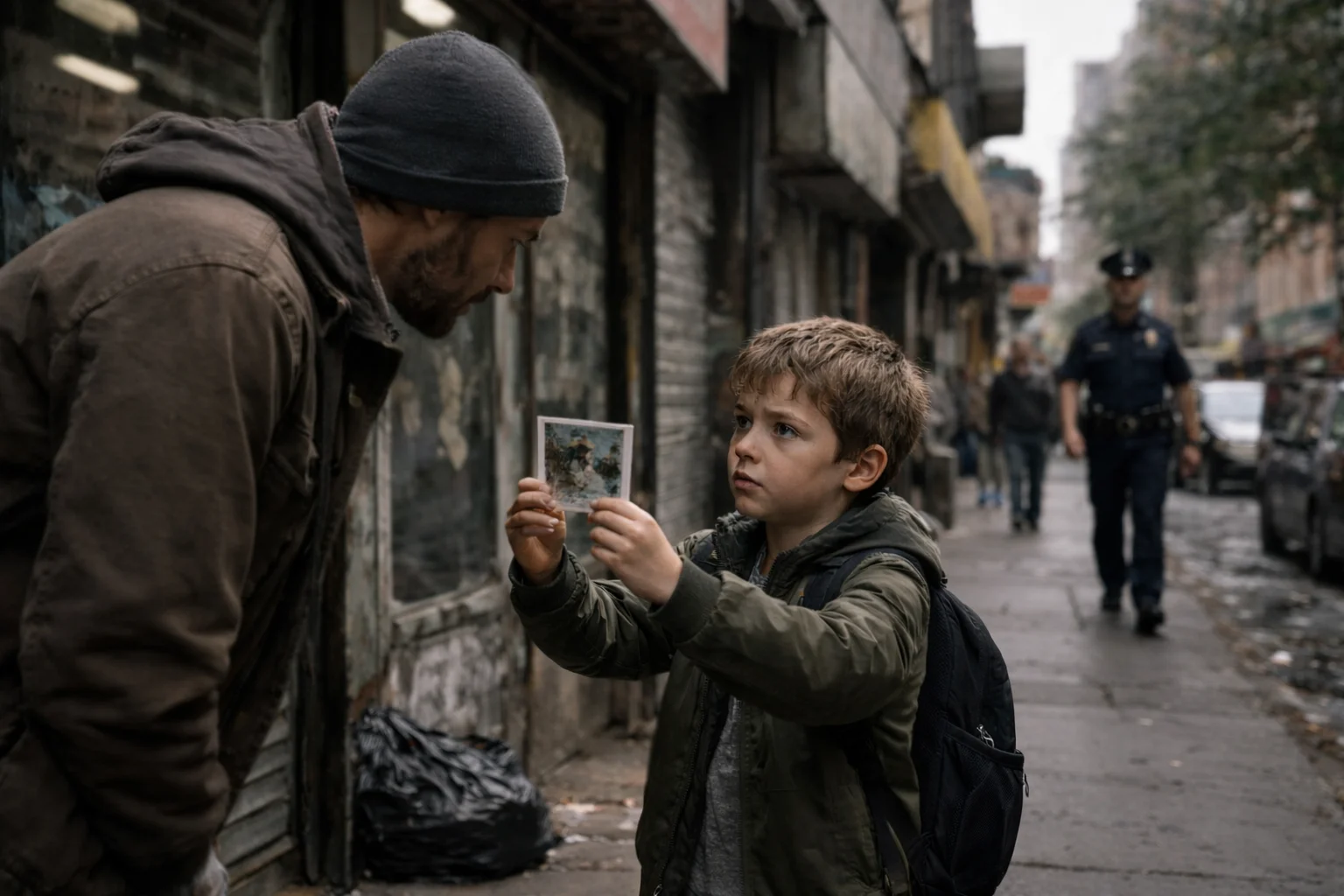
At a corner deli, Leo used a handful of coins to buy a bottle of water. He didn’t even take change; he just snatched the bottle and hurried back outside. A few doors down, he stopped an older man sweeping in front of a shuttered appliance store and held up a worn photograph. Sean edged closer and heard the boy ask, “Do you know him?” The man squinted at the picture and shook his head. Leo thanked him and kept moving. At the next shop, he asked again. Then at a laundromat. Then outside a mechanic’s lot. The same photograph, the same question, each time sounding a little more hopeful and a little more scared. Sean could’ve easily intervened, but he just quietly followed.
Sean radioed dispatch and gave them the little information he had: male child, maybe nine, first name Leo, dark backpack, heading east on foot. He asked them to notify him if a missing-child call came in, but for now, there was nothing. No parent calling frantically. No school alert. No one reporting a boy wandering alone downtown. The child clearly had somewhere in mind, yet Sean still had no idea who he was looking for or why it mattered so much.
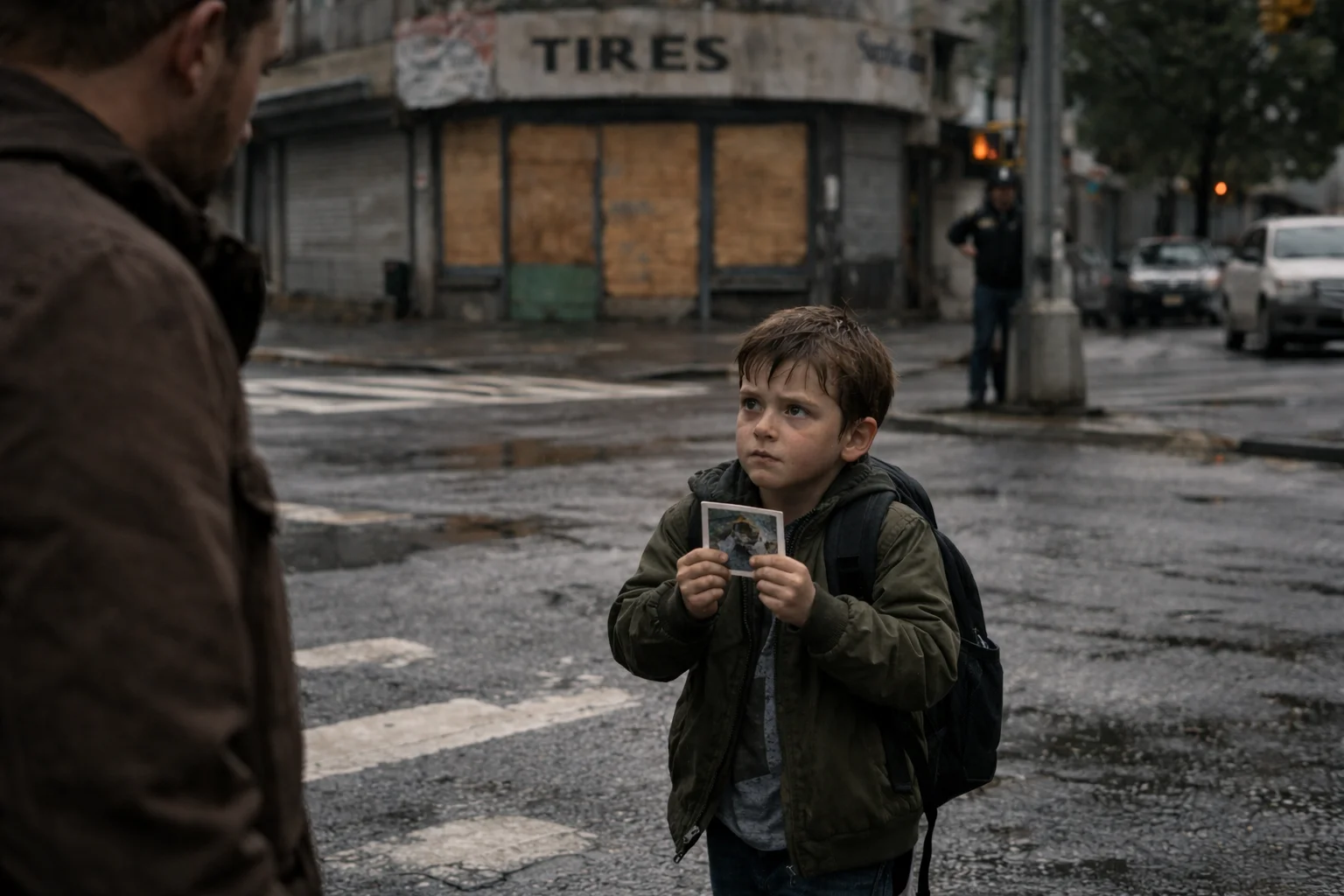
Then, outside a boarded-up tire shop, the wind flipped the photograph just enough for Sean to glimpse the back. There seemed to be writing there in faded blue ink, but from where he stood, he couldn’t make it out. Leo snatched the photo closer to his chest. A minute later, he crossed another street, stopped a woman carrying dry cleaning, and held the picture up toward her. She barely looked before shaking her head. Then he tried again with a barber on his break. Same photo. Same urgent question. Sean still had no idea who the boy was searching for, only that it was someone Leo was desperate to find before an adult could stop him.
Leo kept pressing farther into the older part of town, toward streets lined with discount stores, church basements, and loading docks. He checked a bulletin board outside a mission hall, peered through the gate of a locked repair yard, and stood for nearly a full minute outside a cramped pharmacy as if trying to decide whether to go in. Sean stayed well back, close enough to intervene if traffic or strangers became a problem, but far enough not to trigger another sprint. He had dealt with frightened kids before. The quickest way to lose one was to make them feel cornered.
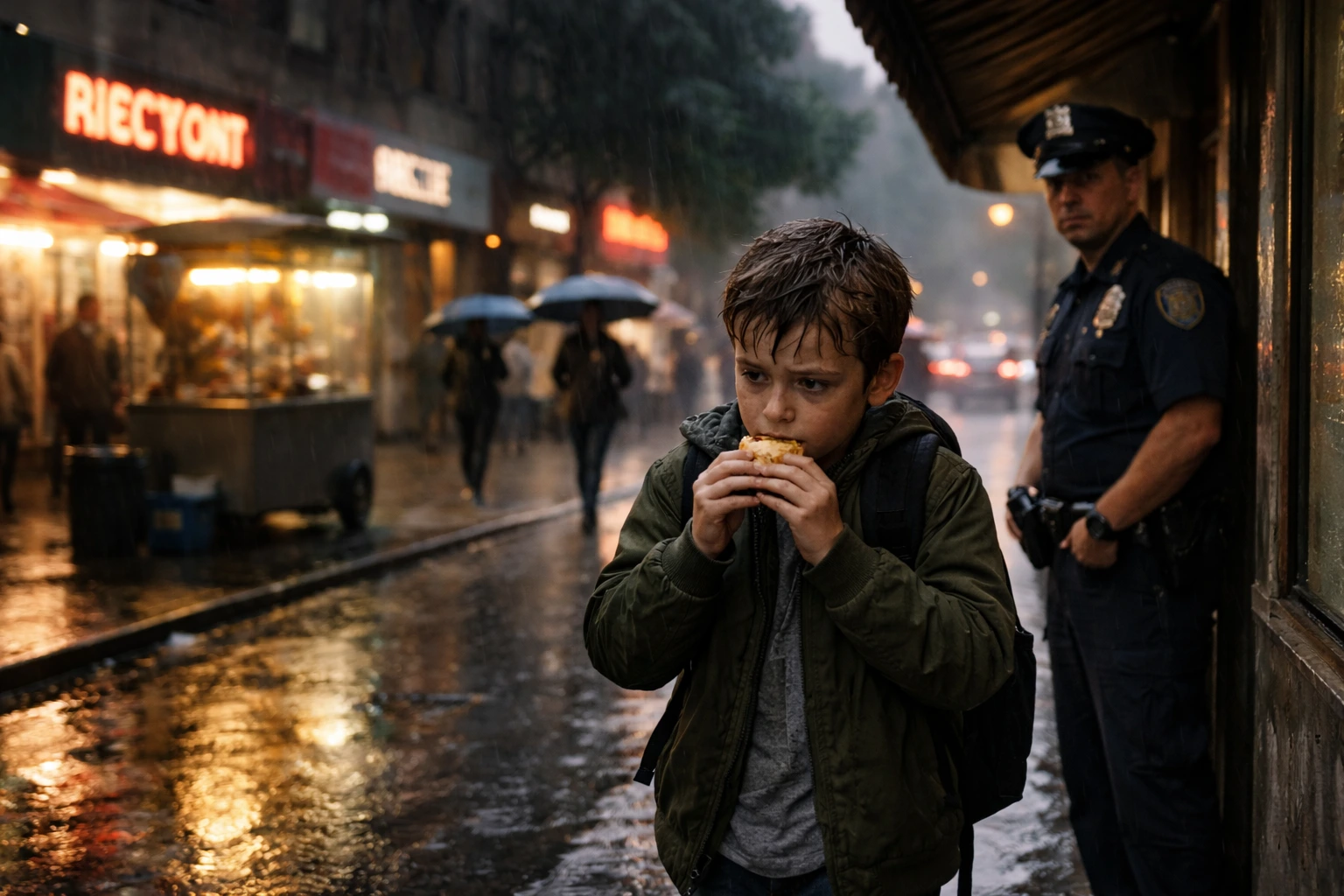
A light rain began to fall, thin at first, then steadier. Leo hunched his shoulders and kept going. Sean ducked into a coffee stand and bought a grilled cheese sandwich, then quietly asked the teenage cashier to tell the boy an extra order had been made by accident. Leo accepted it only after looking around twice, suspicious and proud at the same time. He ate while walking, taking small bites as if he was trying to make it last. Sean watched him limp slightly on his left foot and knew the child had been on the move longer than he’d first assumed. Whatever this was, it was bigger than a sudden impulse.
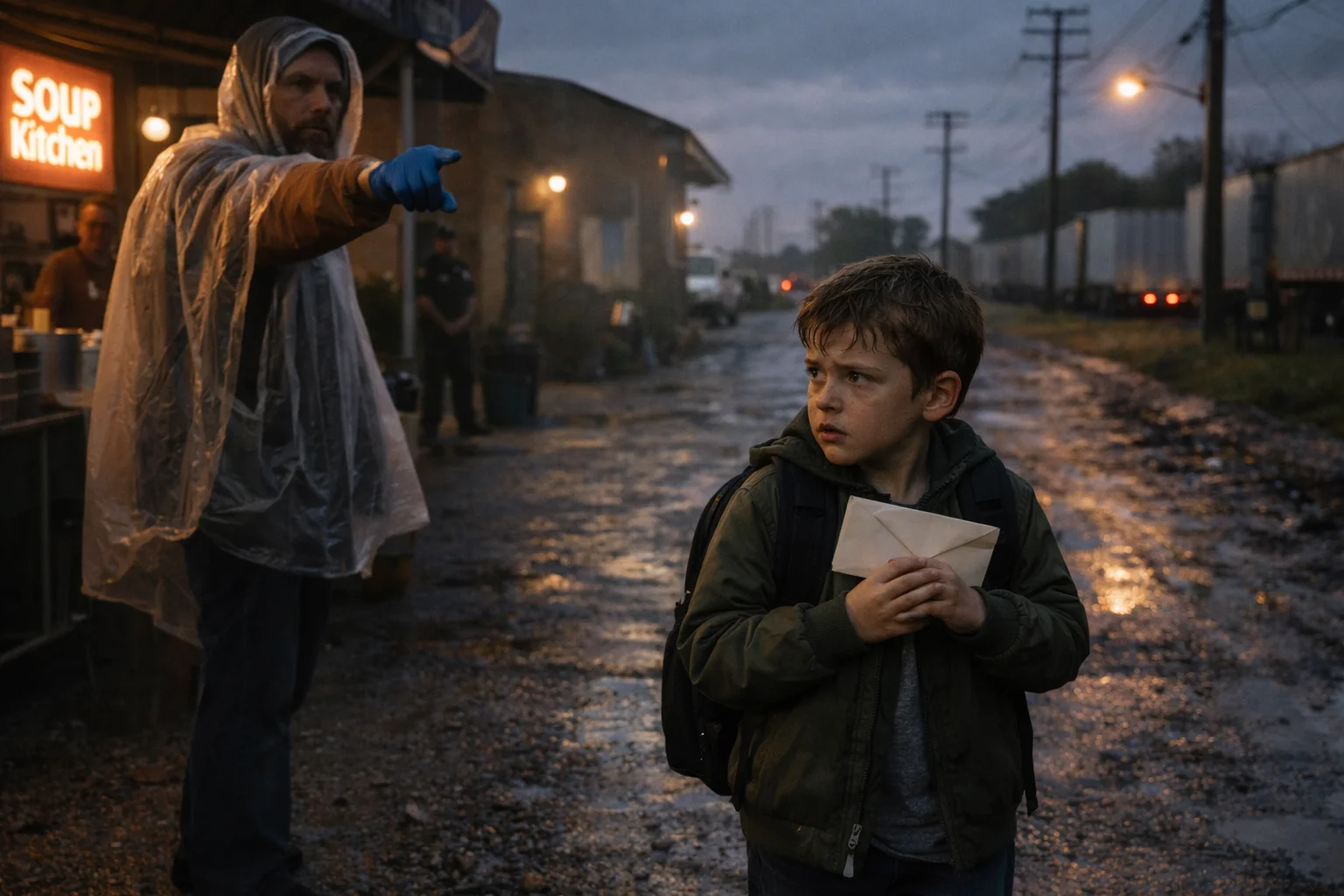
Near dusk, Leo reached a soup kitchen by the freight road, the kind of place that served meals without asking too many questions. Sean lingered beneath the awning while rain tapped against metal gutters overhead. Leo went inside for less than a minute, then came back out speaking to a volunteer in a plastic poncho. Sean couldn’t hear the full exchange over the trucks growling past, only broken pieces: “used to come by,” “not lately,” “maybe by the river.” The volunteer pointed down a service road that curved toward the industrial waterfront. Leo looked at the photo again, tightened his backpack straps, and headed that way.
The city changed fast after that. Shop windows gave way to chain-link fences, rusted warehouses, and muddy lots spotted with puddles. The sidewalks cracked. The streetlights were farther apart. Twice Sean lost sight of Leo behind parked box trucks and felt his stomach drop before spotting the child again, always moving, always scanning faces. At the end of one block, Leo paused beside a pay phone no one used anymore and studied the envelope in his hand as if trying to read courage from it. Sean could see that the boy was scared now. But whatever answer he believed was waiting ahead mattered more to him than the fear.
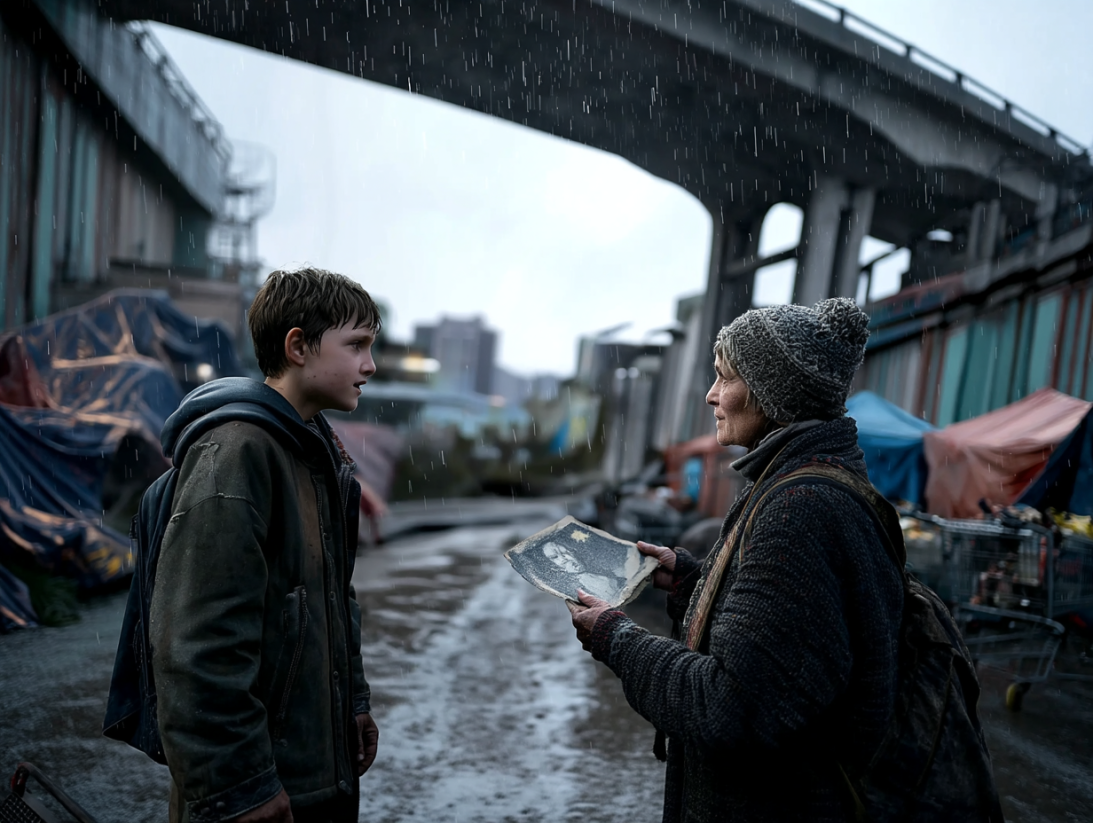
Elm Street Bridge rose out of the rain like something cold and forgotten. Beneath it were shopping carts, tarps, milk crates, and the careful little arrangements that told Sean people had been sleeping there for a long time. Leo slowed for the first time all afternoon. He stopped near a pair of men arguing over a radio, then backed away and tried another cluster farther down. This time, he held up the photograph with both hands, as if urging people to take him seriously. Most barely glanced. One waved him off. Another muttered that kids should go home before dark.
Then an older woman in a knitted cap looked from the picture to Leo’s face and softened. She said she thought she knew the man. Sean was just near enough to make out her words, more through the movement of her lips. “River boats now,” she said, jerking her chin toward the marina. “Repair yard past the fence.” Leo thanked her so fast the words tangled together, then spun and ran. Sean saw the reversing truck half a second before Leo did. He lunged forward, grabbed the back of the boy’s backpack, and yanked him off the road just as the truck rolled through. Leo twisted around, wet hair plastered to his forehead, eyes wild. “I have to find him,” he shouted, voice cracking. Then he tore free and slipped through a gap in the chain-link fence.
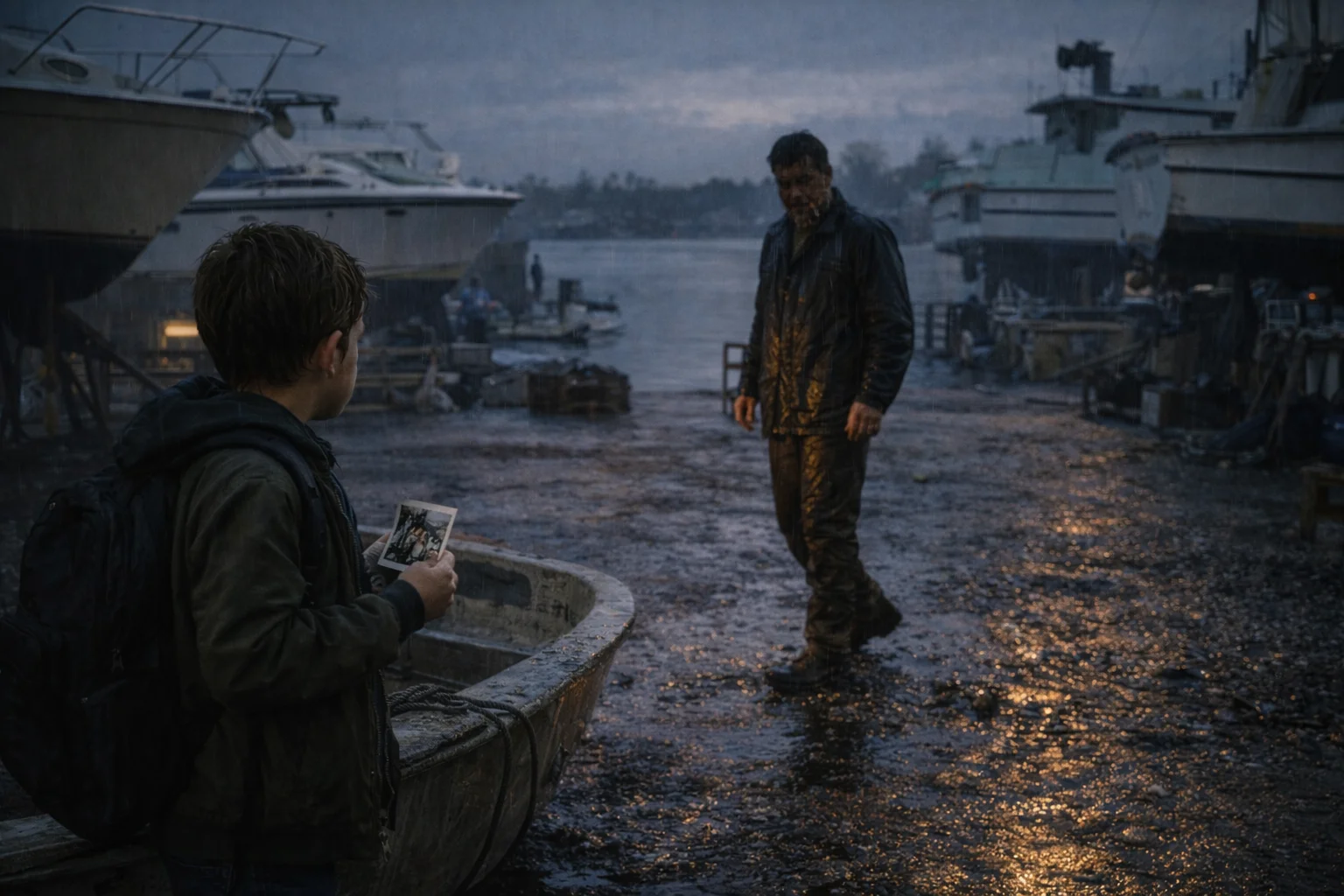
The marina repair yard was loud even in the rain. Metal rang against metal. Generators hummed. Welding sparks flared blue-white near the water. Boats sat propped on blocks, their hulls scraped and half-painted, ropes coiled in dark piles between them. Leo moved through the maze of pallets and equipment more slowly now. Sean followed a few steps behind, his pulse still high from the truck, no longer thinking about writing a report or calling ahead. He was thinking only about keeping the child safe until this ended—whatever “this” turned out to be.
Leo stopped beside an old fiberglass skiff and stared across the yard. Sean followed his gaze and saw a man in a rain-dark work jacket bent over a boat trailer with a welding mask down. On a nearby workbench sat a thermos, a lunch tin, and a pair of gloves. Nothing unusual. Just a laborer finishing his shift. But when the man straightened and lifted the mask to wipe rain from his face, Sean saw it: a small pale scar near the eyebrow. Leo froze. Even from behind, Sean could feel the change in him—that sudden fragile stillness of someone who had spent all day chasing a hope and had finally caught up to it.
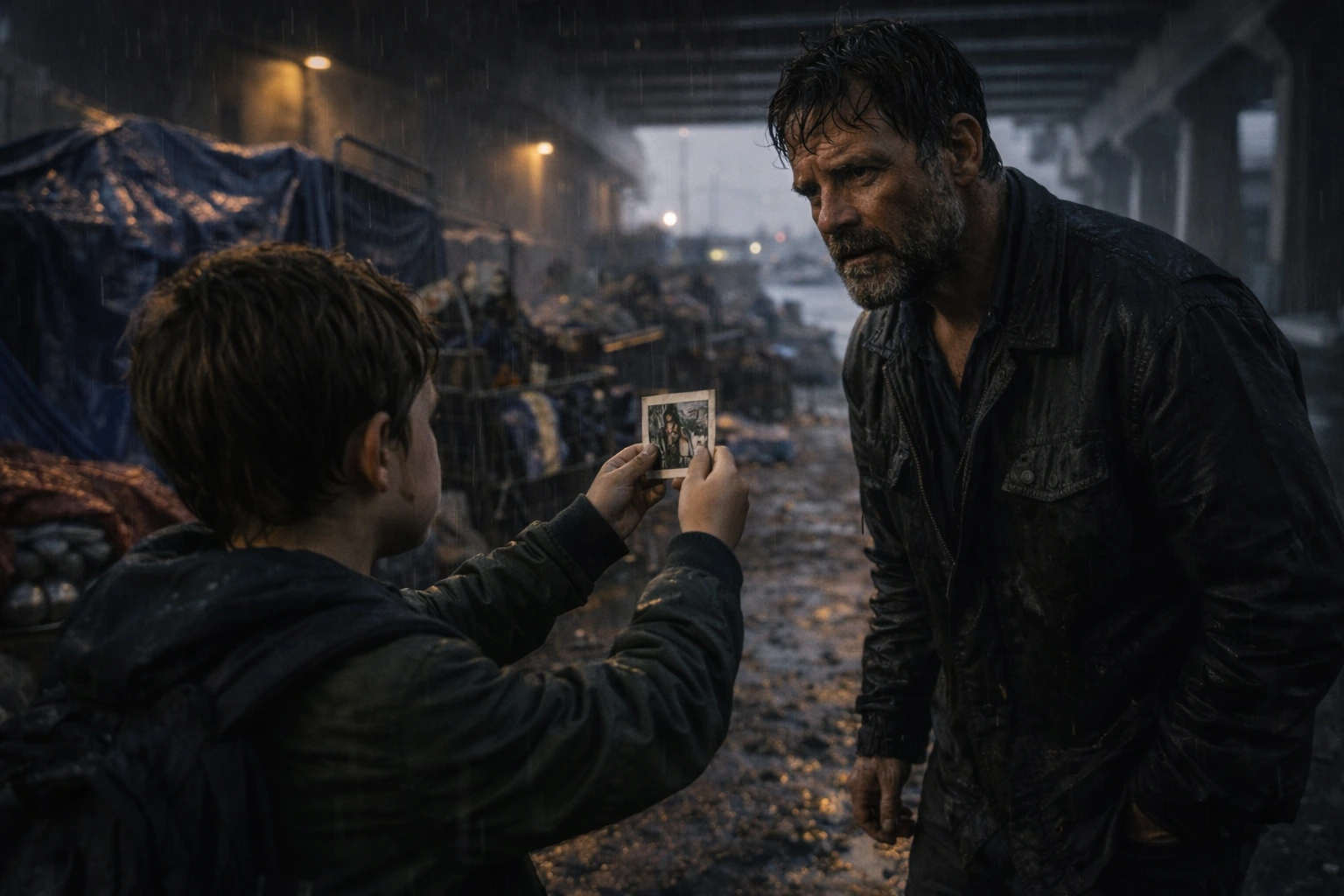
For a second, Leo didn’t move at all. His chest rose and fell quickly beneath his wet jacket. The man turned back toward his workbench, unaware that a child was staring at him as though the whole city had narrowed down to that one muddy patch of concrete. Sean stayed perfectly still. He had the strange feeling that if he said a single word, the entire moment might shatter. Leo took one small step forward, then another, his shoes splashing softly through shallow water. The man glanced up again, annoyed at first, probably expecting a coworker or delivery driver.
Instead, he saw a little boy standing in the rain, gripping a photograph so tightly the paper had bent in the middle. Confusion crossed the man’s face before recognition did. Sean watched it happen in stages. First surprise. Then disbelief. Then a kind of dread, as if the man already knew what seeing that child there might mean. Leo’s lips parted, but no sound came out. He swallowed hard. Sean could hear the river slapping against the dock and the hiss of rain on hot metal somewhere nearby. The whole yard seemed to go quiet around the two of them, though Sean knew the machines were still running.
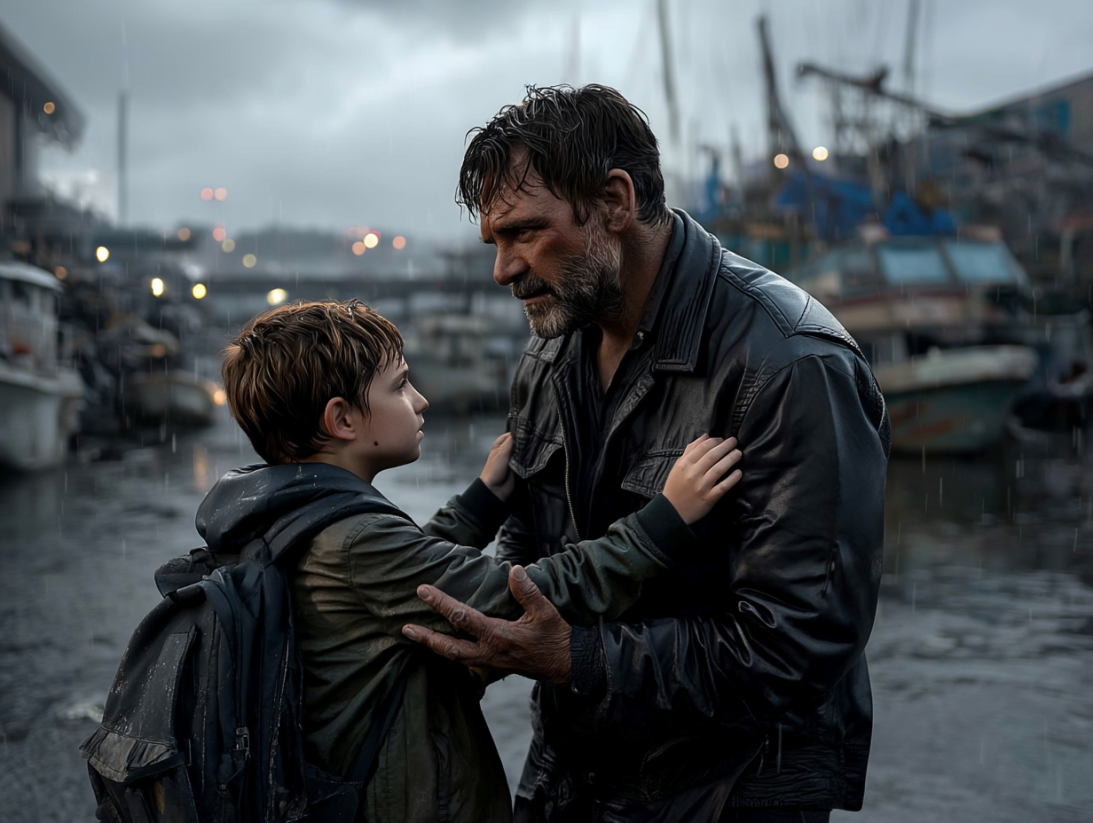
Then, in a voice so small Sean almost missed it, Leo said, “Dad?” The man turned fully around. For one suspended second, neither of them moved. Then Leo’s words came rushing out, messy and breathless, the way they do when a child has been holding everything in for too long. He said his little sister couldn’t breathe. He said his mother was at the hospital. He said the landlord had come again and there had been shouting, and he didn’t know what to do. He had found the old envelope and the photograph and thought that if he could just find his dad, maybe things would stop falling apart for one night.
The man stared at him as if the air had been knocked out of his chest. The welding mask slipped from his hand and hit the concrete with a sharp crack. Sean saw the man’s mouth tremble before any words came. “Leo,” he said, and the name seemed to break him open. He dropped to one knee right there in the rain, one hand over his face, as if he suddenly couldn’t bear the weight of what his son had just said.
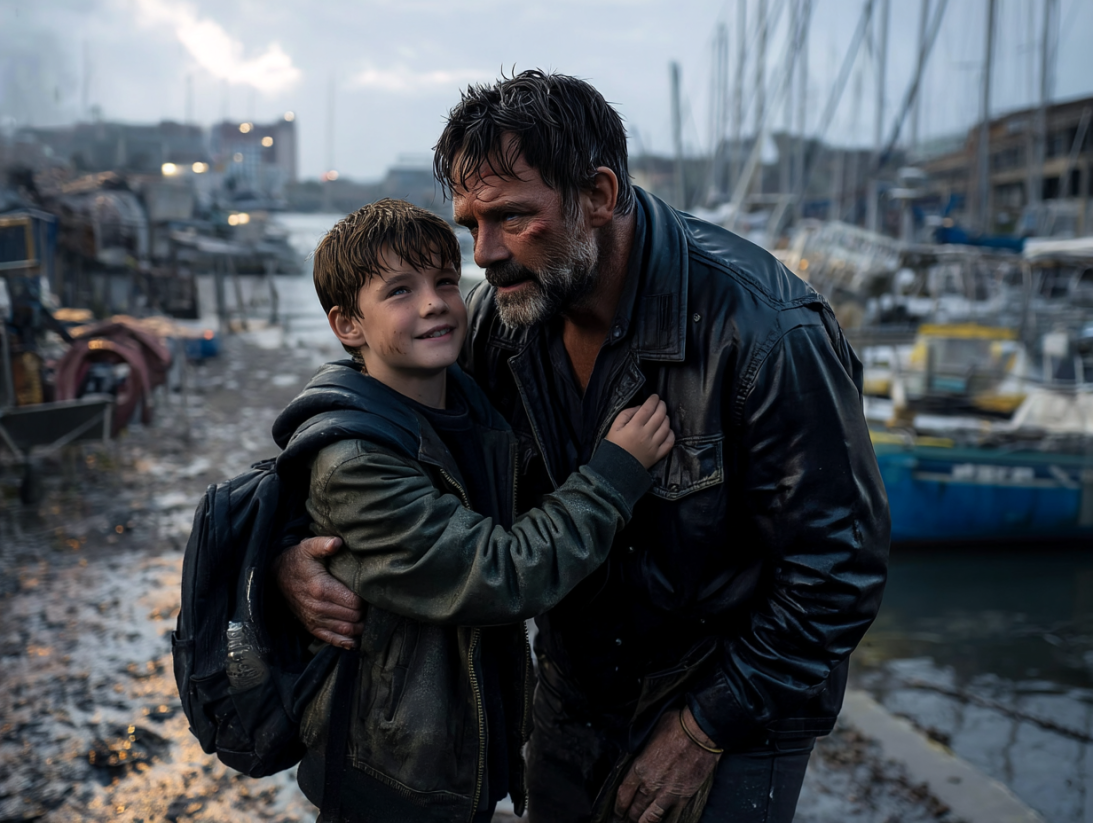
When Leo finally ran out of words, his father reached for him slowly, giving the boy room to pull away if he wanted. Leo didn’t. He stepped forward, and the man wrapped both arms around him, pulling him in with the desperate force of a man who had once let go and never forgiven himself for it. He cried into the child’s wet jacket without trying to hide it, while Leo clung to him like he was still afraid the moment might disappear.
Sean had seen grief before, and relief, and regret. He had never seen all three arrive in the same breath. Something in him gave way. Maybe it was the sight of this boy crossing half the city alone because he still believed his father might come through when it mattered most. Maybe it was the man holding on as if losing Leo again would finish him. Whatever it was, Sean turned his face aside and wept silent tears in the rain before finally stepping forward and saying, very gently, “Sir? I need to talk to you.”
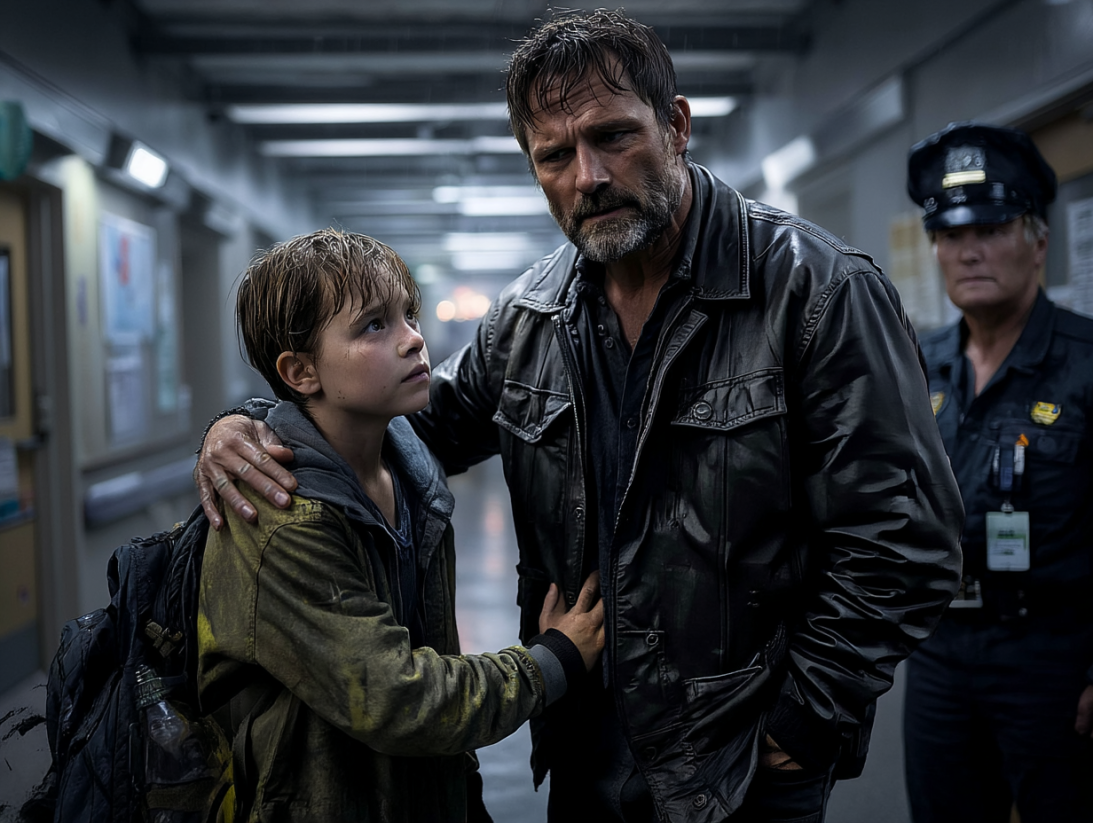 The man stood when Sean approached, but he didn’t let go of Leo’s shoulder. Shame showed up on his face before any explanation did. He admitted his name was Aaron Harper. He admitted he had disappeared years earlier when pills and debt had taken over his life. He said he had been sober for fourteen months now, renting a tiny room above a bait shop and working six days a week at the marina. He had tried to send letters once, and a little money when he could, but he had lost track after his wife and the boy’s mother, Maya, moved. Sean didn’t know yet how much of that was repairable and how much would never be. But the immediate facts were simple: a child had crossed half the city alone, a family was in crisis, and a father had just been handed one chance to show whether he meant any of this.
Sean called dispatch and asked them to locate Leo’s mother. Maya Harper had arranged for a neighbor to pick up Aaron from school. The little boy had given the neighbor a slip and gone out in search of his dad. Finally, when Maya came on the line, there was a long silence after he told her who he was with. Then she said, tired and careful, “Thank you for keeping my son safe, officer. Could you bring him to me? If Aaron wants to come, he can come too, but with you.” At the hospital, Maya looked like a woman running on fear and no sleep. She hugged Leo first, hard enough to make him squeak, then looked at Aaron with years of anger sitting between them. Aaron didn’t ask for absolution. He just said he was sorry, that he would meet any social worker, any counselor, any judge, and that he would not disappear again. Maya nodded once, tightly. Not everything was fixed, but perhaps she saw the glimmer of genuine remorse.
In the days that followed, Sean checked in more than once, partly because the case required it and partly because he couldn’t quite forget that rainy evening at the marina. A hospital social worker helped Maya arrange emergency support for the younger child, Nora’s treatment, and connected the family to counseling services. Aaron showed up to every meeting on time, quiet and nervous, carrying a small notebook where he had written down appointment dates, phone numbers, and the things Leo liked to talk about. It couldn’t erase the past, but it seemed like he was trying to build something steadier than mere promises.
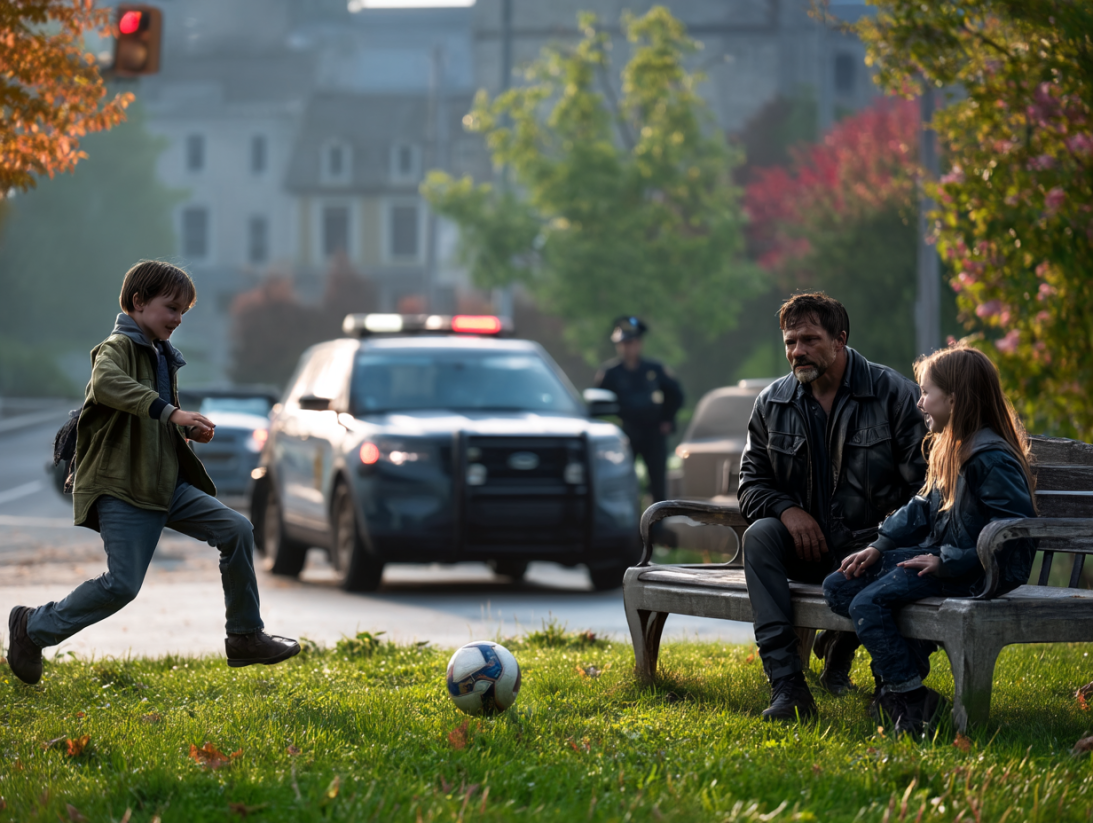
Two months later, Sean happened to drive past the small city park on a Saturday morning and saw Leo kicking a soccer ball toward Aaron while Nora laughed from a bench beside Maya. It wasn’t perfect. You could tell that from the careful distance Maya still kept. But Sean felt lighter.
At the red light, the officer watched for a moment longer, then picked up his phone and texted his own daughter: Dinner this week? The swift reply made him smile: I’d like that. When the light changed, he drove on.