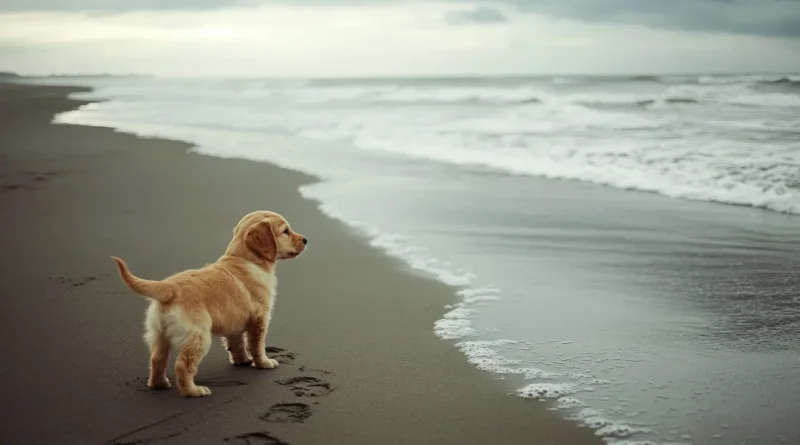
Puppy Lost at the Shore – His Mysterious Return Leaves the Whole Town Talking
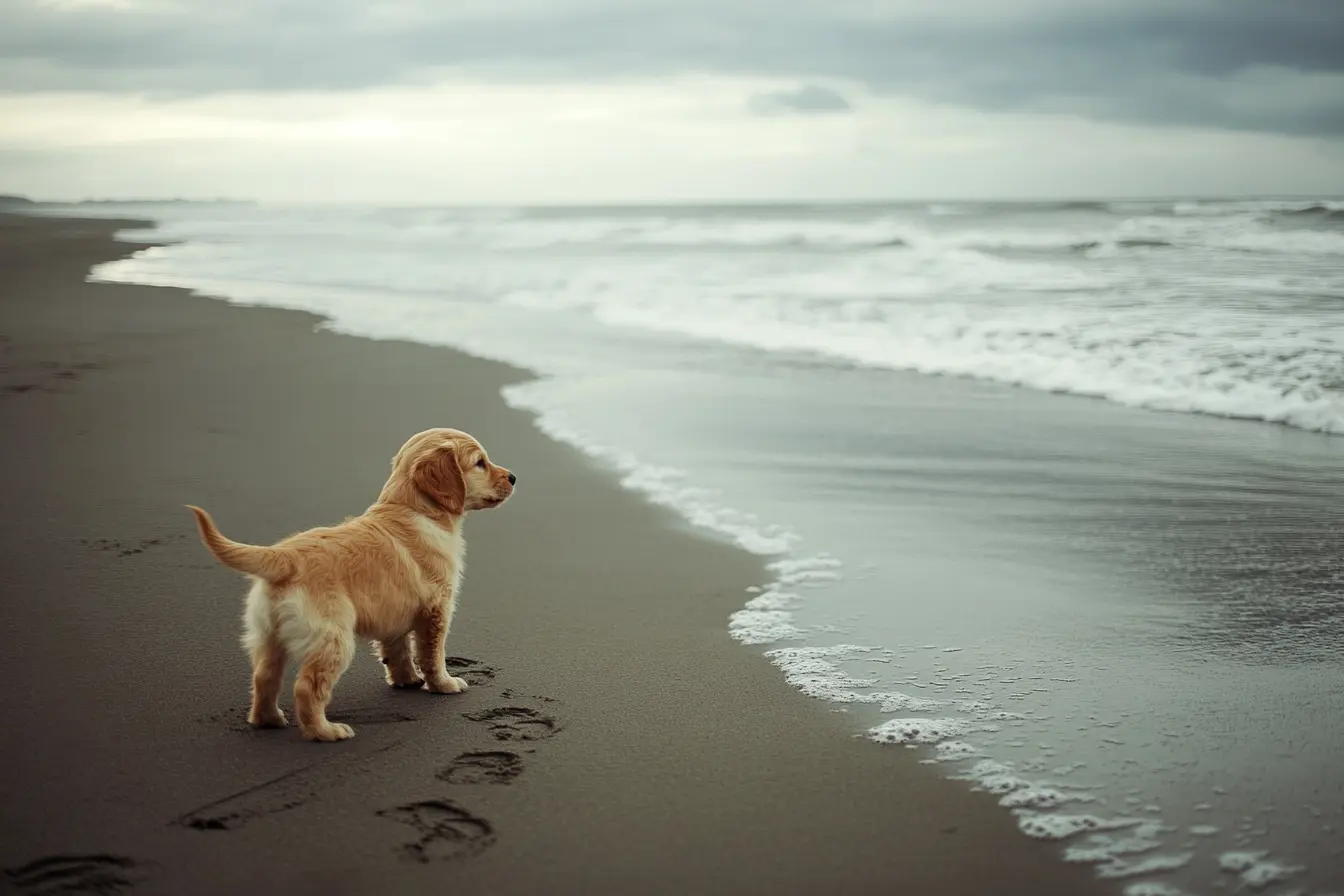
It started like any other weekend by the sea. Families were setting up umbrellas, kids were building sandcastles, and the Taylor family’s dog, Max, was splashing happily in the shallows. The golden retriever was well known around the beach—a friendly, playful pup who loved chasing waves and digging for shells. That morning, the beach was alive with laughter, seagulls, and sunscreen-scented breezes. Nothing seemed out of the ordinary.
But within seconds, everything changed. Max swam out a little farther—chasing what looked like a floating stick—and then vanished beneath the waves.
At first, the Taylors thought he was just playing. He often dove under, only to pop up seconds later with seaweed dangling from his mouth. But this time, he didn’t resurface. Not in five seconds. Not in ten. Not in a minute. Panic set in. Mrs. Taylor screamed his name. Mr. Taylor sprinted into the water, scanning the choppy surface, heart racing.
Lifeguards were quick to act, launching jet skis and alerting nearby boaters. People on the beach stopped what they were doing. Some grabbed binoculars. Others started walking the shoreline, hoping to spot a splash or hear a bark.
But as the sun dipped lower and the tide rolled in, there was still no sign of Max. It was as if the sea had simply swallowed him. Some feared he had been pulled out by a riptide or caught in an underwater current. Others whispered darker possibilities—predators, underwater caves, exhaustion. It was every pet owner’s worst nightmare unfolding in real time.
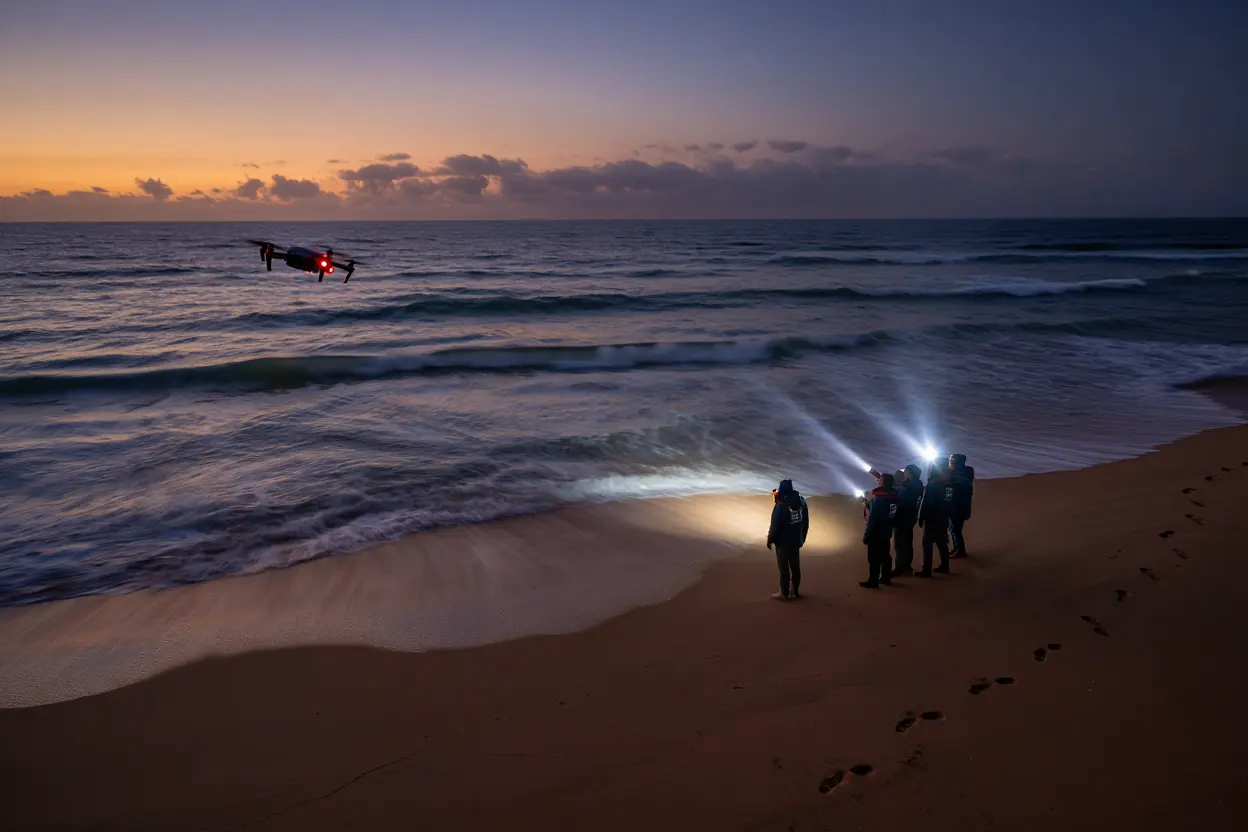
The search continued well into the night. Flashlights danced across the dark water. Drones with thermal imaging scanned from above. But there was no trace—no collar, no bark, not even a pawprint in the sand.
The following morning, the beach felt eerily quiet. Even the kids who returned didn’t play as loudly. Word spread fast—“The dog that disappeared.” Some locals remembered Max from previous summers, how he’d chase crabs or steal unattended sandwiches. Now, they looked out at the waves and wondered: could he still be alive?
The Taylors didn’t give up. They posted flyers. They offered a reward. They walked miles along the shore, calling his name over and over again. By the second day, the hope had started to fade.
Then, on the third morning, something remarkable happened.
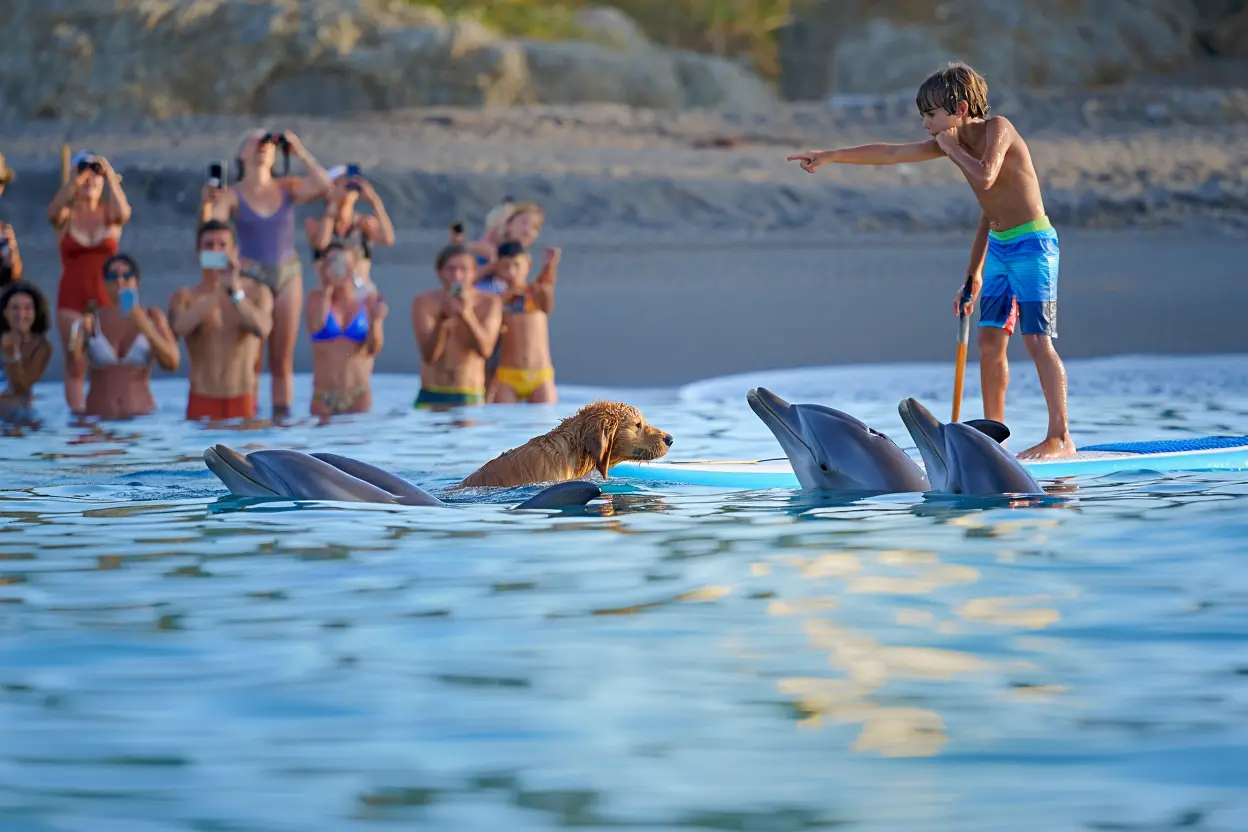
A boy on a paddleboard—13-year-old Lucas Redding—was gliding near the rocky cove on the north end of the beach. He went there often to watch sea birds and pretend he was an explorer. As he approached the rocks, he spotted movement in the water. At first, he thought it was a school of fish. Then he saw a fin. Then another. And then… a flash of golden fur.
He screamed for help, paddling frantically back to shore. “It’s the dog! It’s Max! And he’s not alone!”
Crowds gathered. Binoculars were raised. Phones started filming. Out in the waves, Max was swimming slowly but surely toward land—flanked by three dolphins. They moved like guardians, one at each side and one behind, creating a loose triangle around him. They didn’t push him or carry him, but they stayed close, nudging him gently if he strayed or slowed down.
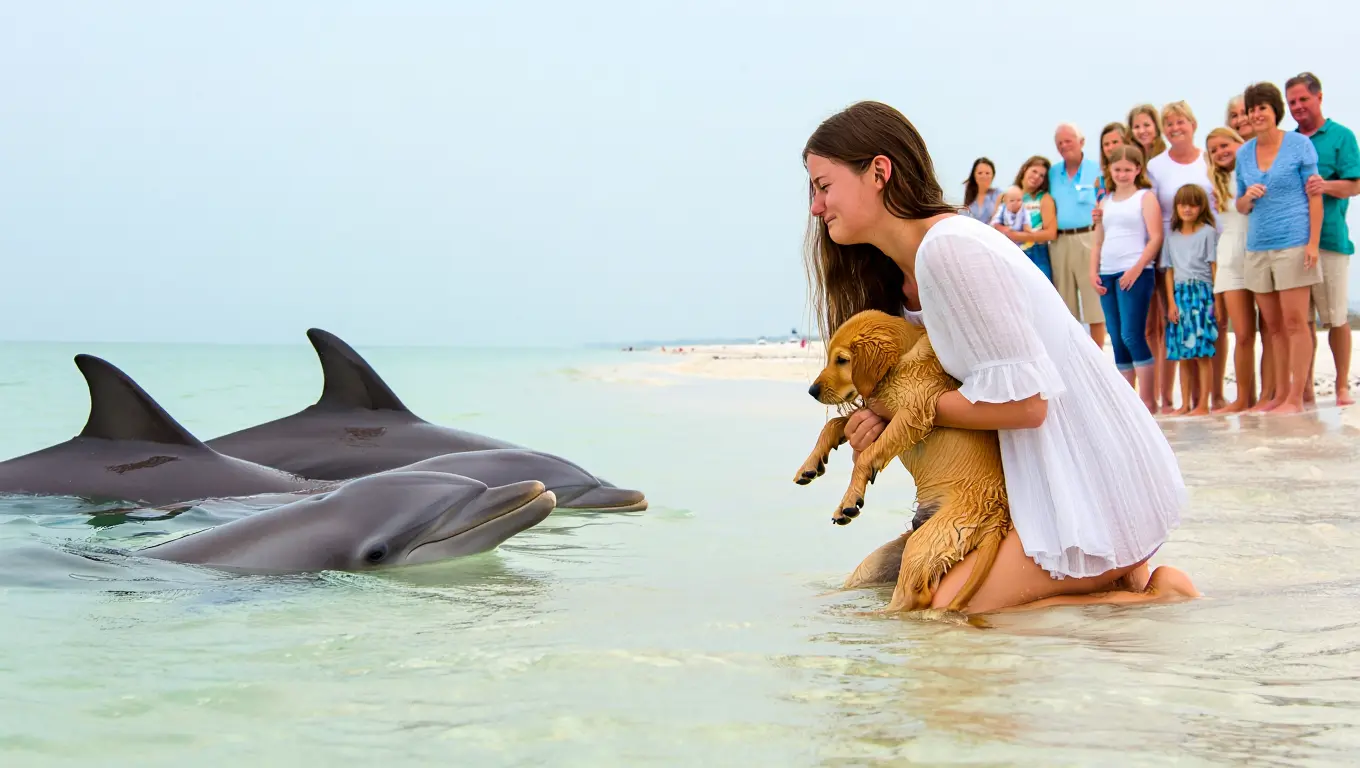
When Max reached the surf, the dolphins paused. Max stumbled in the shallow waves, clearly exhausted, and wagged his tail weakly as he collapsed into his owner’s arms. The dolphins hovered for a few seconds longer, bobbing just past the breakers, almost as if waiting to make sure he was safe. Then, as quietly as they had arrived, they turned and vanished into the sea.
The beach was stunned. Some people cried. Others just stood in silence. Children clutched their parents’ hands. The sight was something out of a storybook.
Max was thin and dehydrated, but otherwise unharmed. A quick check from the local vet confirmed he had no broken bones, no serious injuries—just exhaustion and hunger. He licked the vet’s face, tail thumping softly against the table.
But the biggest question remained: how had he survived? The sea had been rough those last few days. Max wasn’t a trained rescue dog—he was a family pet. How did he avoid drowning, starvation, or predators?
Marine biologists quickly arrived to study the footage and speak to witnesses. “This kind of behavior is incredibly rare,” said Dr. Alana Pierce, a researcher who had studied dolphin behavior for over twenty years. “We’ve seen dolphins assist injured animals or protect humans from sharks. But guiding a dog to shore? That’s something else entirely.”
Dr. Pierce speculated that Max may have been kept afloat or protected by the dolphins over the past few days. Perhaps he clung to a floating piece of debris, or maybe he found a calm pocket of sea where he could rest. “What we do know,” she added, “is that these dolphins seemed to recognize his distress—and they chose to help.”

The Taylors didn’t need any further explanation. Their dog was home. Safe. Alive. As they wrapped him in a towel and pressed kisses into his wet fur, their relief was too overwhelming for words.
In the days that followed, Max became something of a local celebrity. News crews arrived. The story trended online. People brought him treats, toys, even hand-painted portraits. One local artist created a mural of Max swimming with dolphins on the side of the local surf shop. Tourists stopped just to take selfies with it.
But beyond all the attention, something else had changed—how people looked at the ocean. What was once just a fun summer escape now held a deeper mystery. The waves whispered something more ancient. More sacred.
Some called it a miracle. Others called it an incredible stroke of luck. A few insisted the dolphins had done it out of pure instinct, while others believed it was something more—something we may never truly understand.
But one thing’s for sure: no one will ever look at the sea the same way again.