Why Do Japanese People Sit on the Toilet Facing Forward?
If you have ever heard that Japanese people “sit on the toilet facing forward,” you are not alone. It is one of those travel myths that sounds too strange not to be true. But the real answer is much simpler. The idea mostly comes from traditional Japanese-style squat toilets, not from the modern seated toilets that most people in Japan use today. Those older toilets are used while facing the raised front section, which can make it look, from the outside, as if people are using the toilet “the wrong way.”
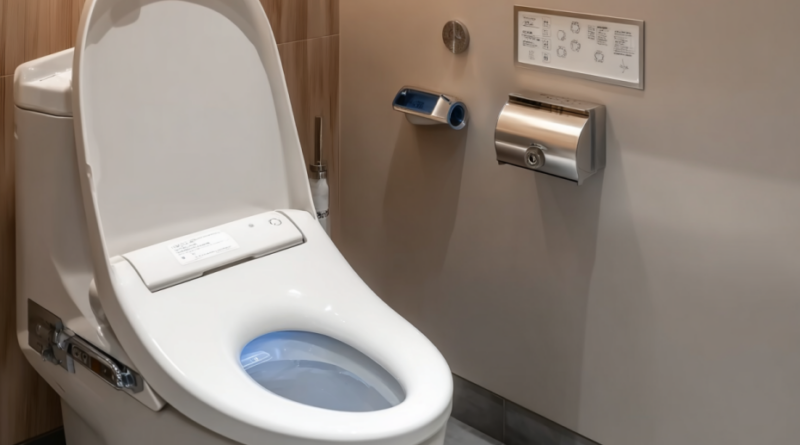
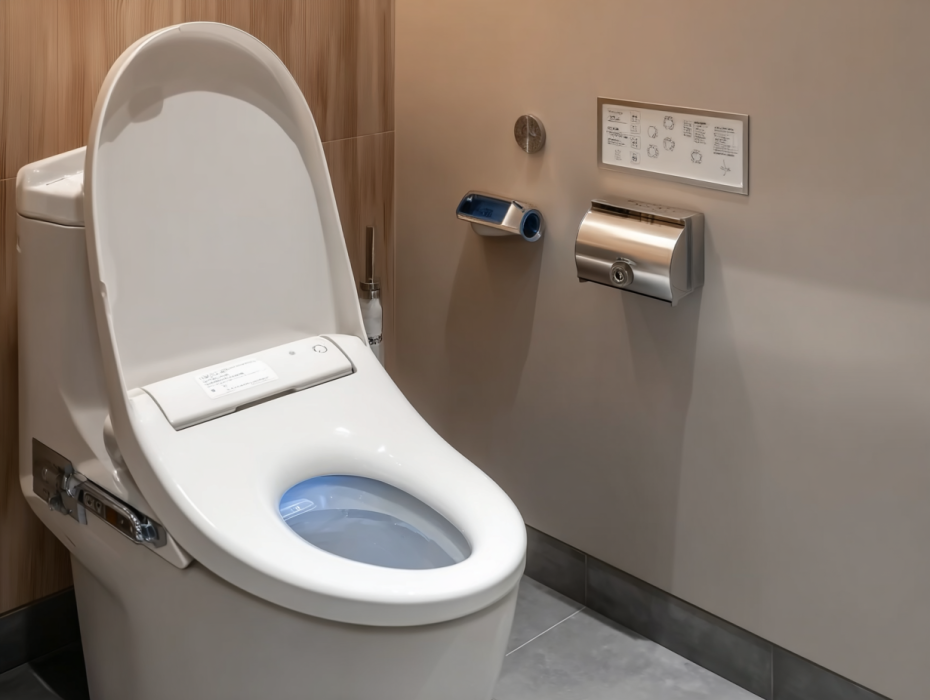
Japan is now far more famous for its Western-style toilets with bidet functions, heated seats, and elaborate controls than for squat toilets. Traditional squat toilets still exist in some older locations, such as older train stations and bars, but they are much less common than they once were. In other words, the image survives longer in travel stories than it does in everyday Japanese life.
So the better question is not, “Why do Japanese people sit facing forward?” It is, “Why were older Japanese toilets designed to be used that way?” Once you understand that, the mystery disappears. What looks unusual to outsiders is really just a practical way of using a toilet built for squatting rather than sitting. And once you place that old design next to Japan’s modern toilet culture, the story becomes even more interesting: it is about how a country moved from tradition to innovation without completely erasing the past.
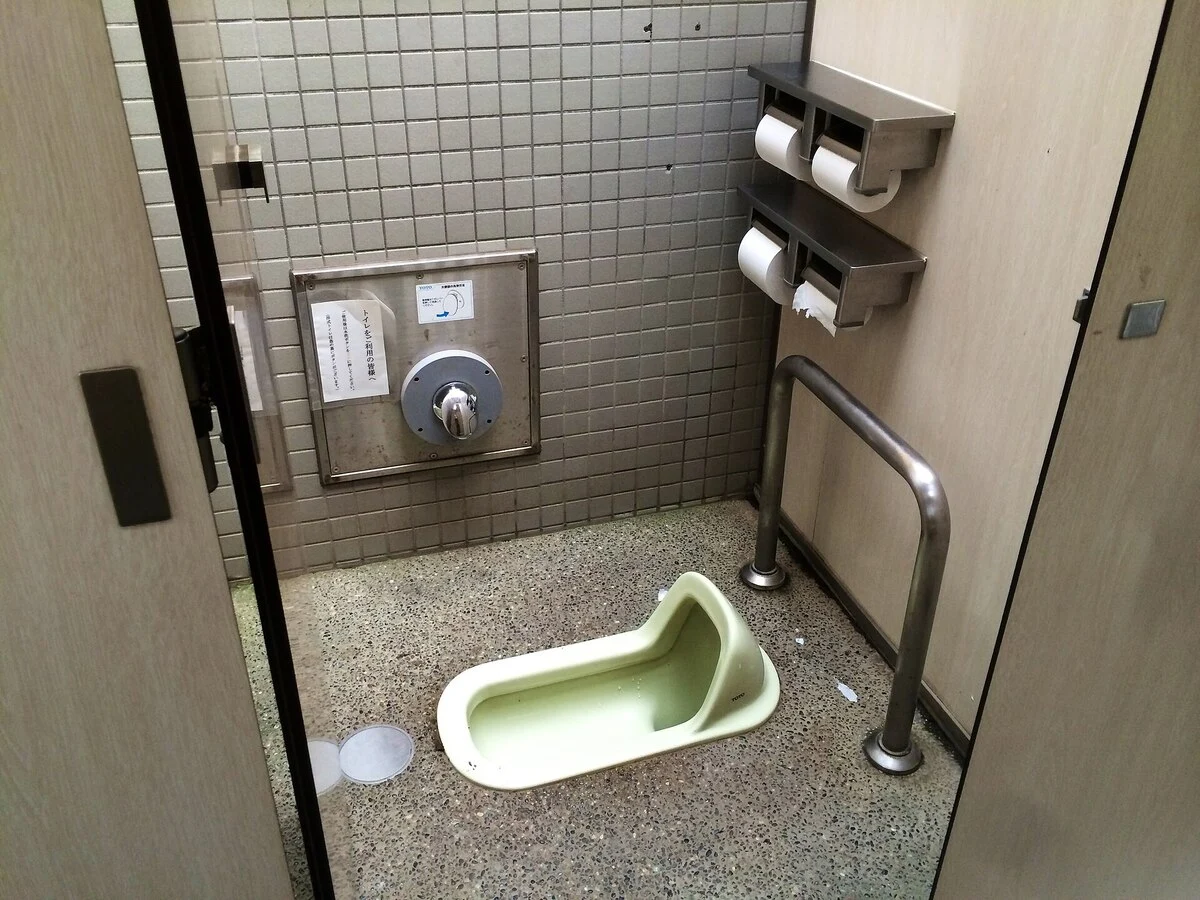
Photo Credit: Steven-L-Johnson/ Wikimedia Commons
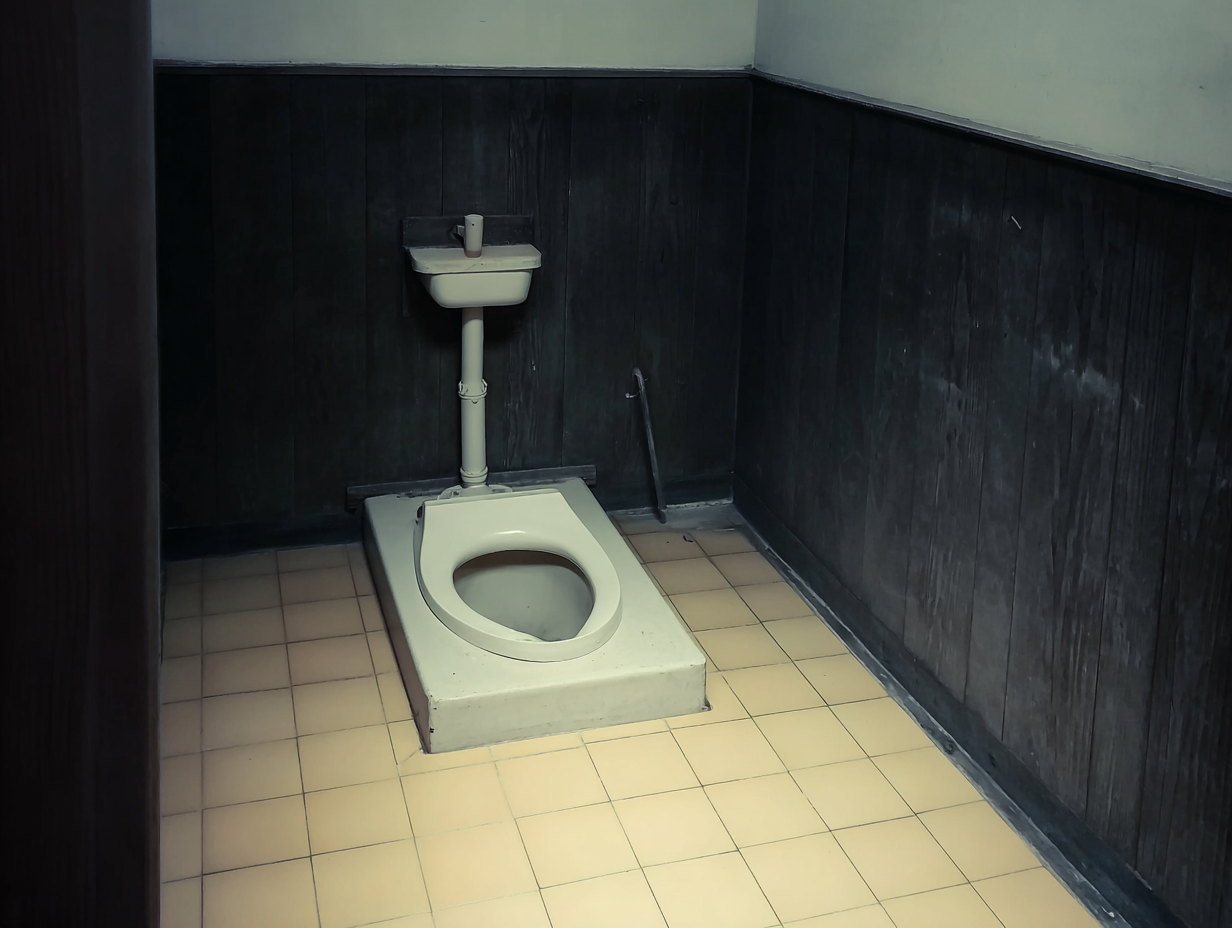
The traditional toilet at the center of this myth is called a “washiki,” or Japanese-style toilet. It is set into the floor rather than built like a chair. Instead of lowering yourself onto a seat, you squat over it, facing the front or the hooded end. Travel guides explaining how to use one are very clear on this point: you face the front, lower yourself into a squat, and keep close to the front end of the fixture. That is where the whole “facing forward” idea comes from.
To someone who grew up only with seated toilets, that position can look confusing at first. But the logic of the design makes sense. The toilet was made to work with a squatting posture and not a sitting one. The user simply uses the fixture in the direction it was designed for, so that they are positioned over the deepest part of the bowl. Travel sources aimed at visitors even warn people not to face the wrong way, a common beginner’s mistake, which can make the cleaning afterward more tedious.
There is also a practical side to why some people long preferred this style. When used properly, a squat toilet can feel more hygienic to some because the body does not touch any part of the toilet. That does not mean everyone prefers it now, but it helps explain why the design lasted for so long.
To understand why this toilet is no longer as popular, read on!
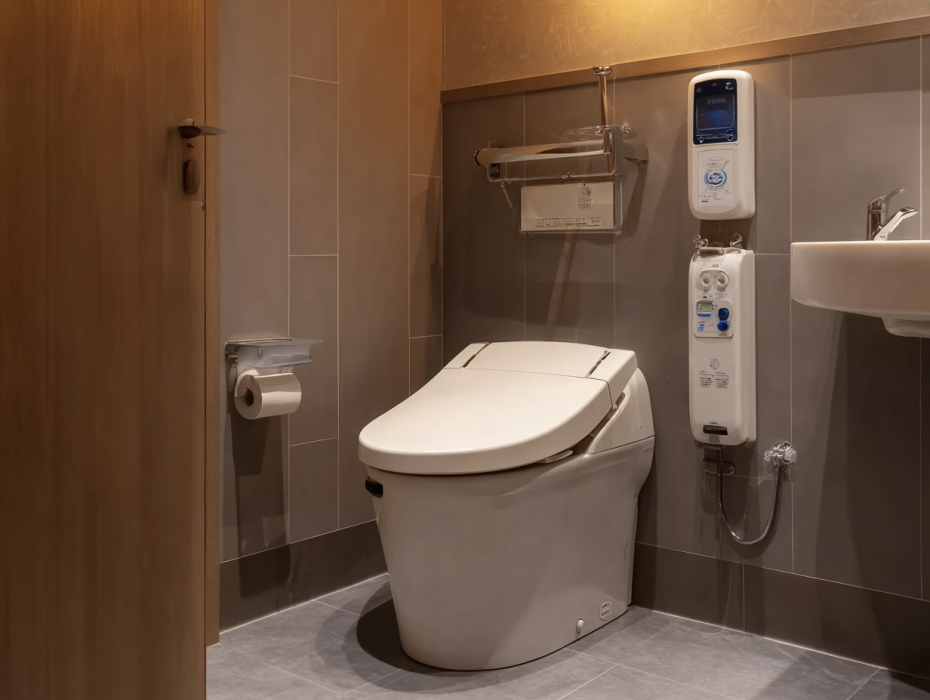
For much of modern Japanese history, squat toilets were not unusual at all. In fact, up to the 1960s, traditional squat toilets were more common, and Western-style toilets only gradually spread after that. A major push came when public housing began installing seated toilets, normalizing them for everyday use. What now looks old-fashioned was once simply the standard. The “forward-facing” posture was not a curiosity. It was just how many people used the bathroom.
Then Japan changed quickly. Toilet makers introduced seated models on a larger scale, and later the country became known worldwide for electronic bidet toilets. The production of Western- and Japanese-style toilets was roughly equal in 1976, but after that, Western-style production rose rapidly. By 2015, squat toilets accounted for just 1% of all toilets produced by Toto, one of Japan’s major manufacturers.
Schools show how this old-new overlap still plays out in real life. In a 2016 education ministry survey, around 60% of toilets in public elementary and junior high schools were still Japanese-style. But that share has dropped sharply over time. In other words, traditional toilets are still around, but their place in daily life is shrinking.
To know more about why the popularity of traditional toilets is decreasing, click the next page.
Younger Japanese people are not always comfortable with the traditional toilets. A Japan Times report in April 2025 said that roughly one in four students was unable to use the traditional style. That flips the stereotype on its head.
There is also something fitting about the way this story lingers. Japan is a country where tradition and modernization often sit side by side. The old squat toilet now exists beside sleek electronic models that have become famous around the world. Modern Japanese toilets are famous for warm-water bidets with adjustable pressure, heated seats, and air dryers. High-tech models offer automatic open/close lids, sensor-activated flushing, odor removal, and music/sound masking. The controls, usually on a side panel or wall, are often in intuitive pictograms.
A 2026 survey found that among people with warm-water bidet seats at home, 53% said they used the rear spray function almost every time, and more than 83% said the warm-water bidet toilet seat was something Japan could be proud of. That is a very different image from the old forward-facing myth.
So the next time someone asks, “Why do Japanese people sit on the toilet facing forward?” the honest answer is: most do not. What outsiders sometimes mistake for a strange national habit is really the legacy of a particular toilet design that is fast getting replaced by more modern designs. People were simply adapting to the bathroom technology available to them. Once that is clear, the mystery becomes much less exotic and much more human.
Source: https://www.tips-and-tricks.co/other/japanesetoilet/