6 DIY Pain Relief Oils You Can Make at Home
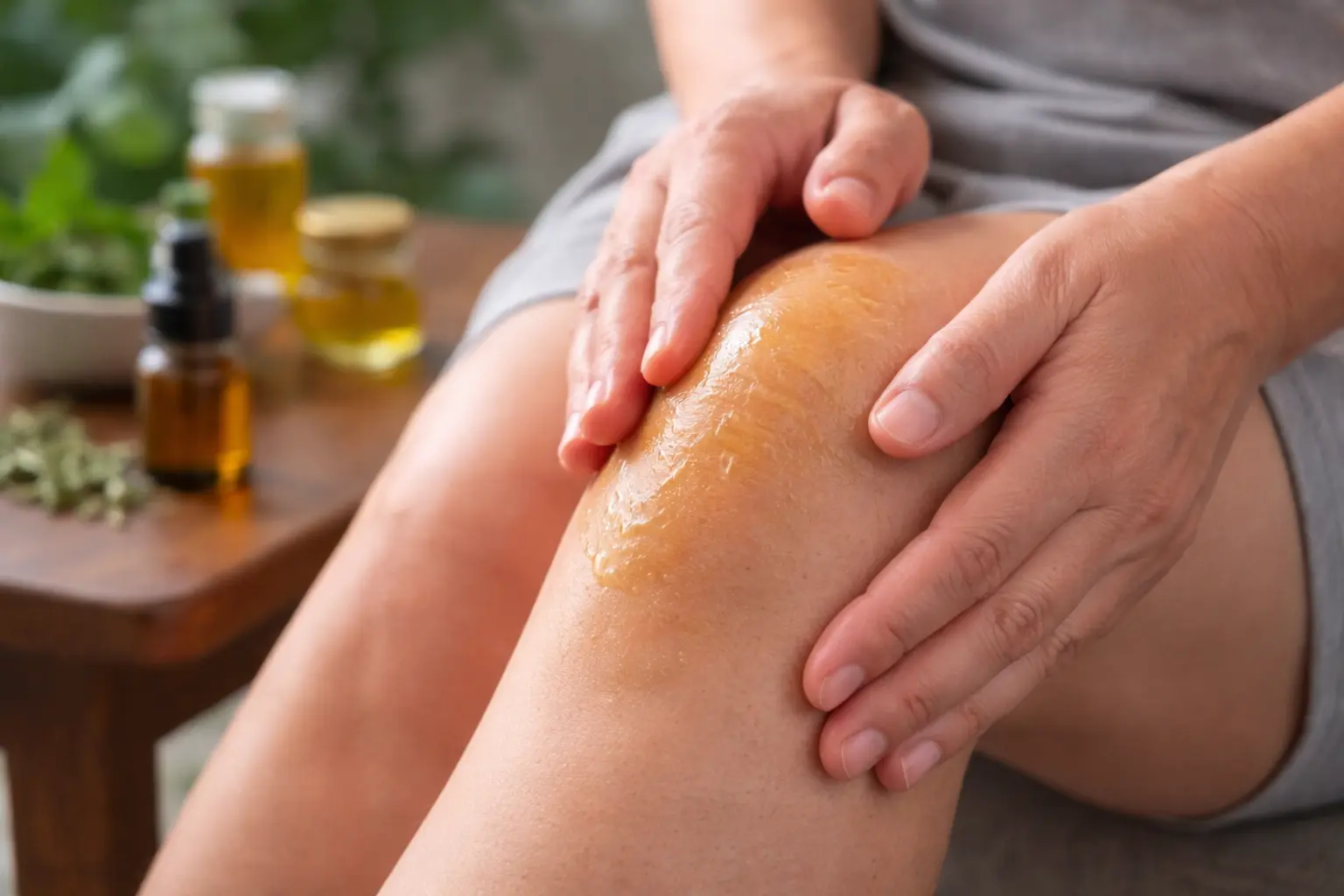
When your body feels sore, stiff, or worn down, a simple massage oil can sometimes go a long way. Whether it is post-workout muscle tension, lower back discomfort, or the kind of everyday aches that build up after long hours sitting or standing, many people turn to warm oil massage as a simple at-home ritual to feel more comfortable. The good news is that you do not need to be an herbal expert or a DIY pro to make your own pain relief oil. Most homemade blends are surprisingly simple and only require a few ingredients.
Disclaimer: These oils are best thought of as comfort-support remedies, not replacements for proper medical treatment. Essential oils should always be diluted before they touch the skin, and patch testing matters because irritation and allergic reactions can happen.
Experts such as NCCIH and the Arthritis Foundation also recommend using topical remedies thoughtfully and being especially careful if you have sensitive skin, broken skin, pregnancy concerns, or ongoing pain that is getting worse instead of better. Used carefully, though, homemade massage oils can be a relaxing and practical addition to your self-care routine.
1. Dashmool Pain Relief Oil
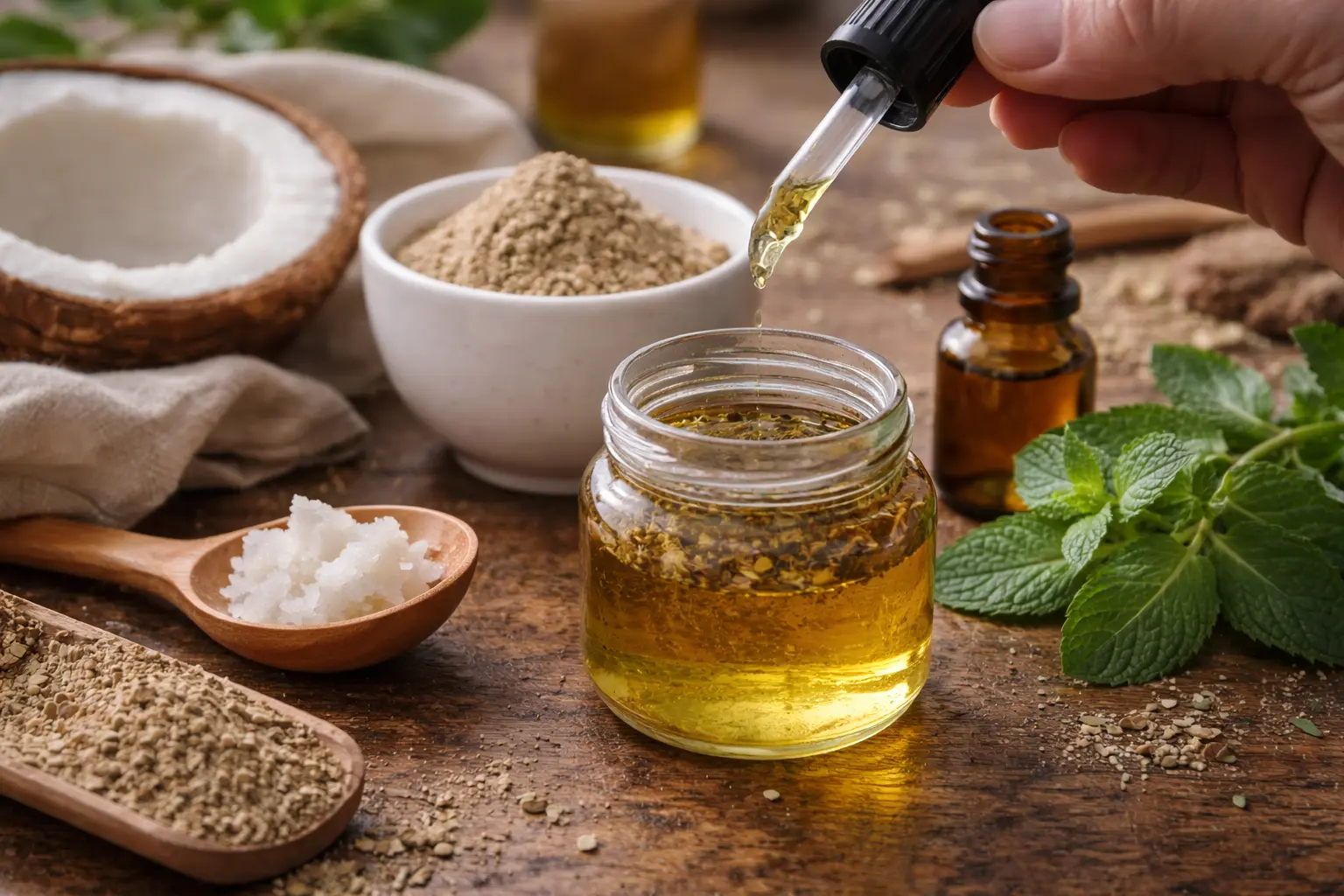
Dashmool oil is rooted in traditional Ayurvedic wellness and is often used in massage routines for stiffness, body soreness, and that heavy, worn-down feeling that tends to settle into the muscles after long days or poor posture. The herb blend is traditionally associated with grounding and soothing the body, which is why it fits so naturally into a homemade massage oil recipe.
For a beginner-friendly version, use 2 teaspoons of dashmool powder, 4 teaspoons of coconut oil, and 2 to 3 drops of peppermint essential oil. Warm the coconut oil gently, stir in the dashmool powder, and let it sit for a few minutes before adding the peppermint oil. Once it is cool enough to use, massage a small amount into the areas that feel most tense. Coconut oil gives the blend a smooth, skin-friendly base, while peppermint adds that familiar cooling sensation many people associate with temporary relief.
Just keep in mind that peppermint oil can irritate sensitive skin if overused, so a little goes a long way. This is the kind of blend that works best when used slowly and consistently rather than all at once.
2. Ajwain Pain Relief Oil
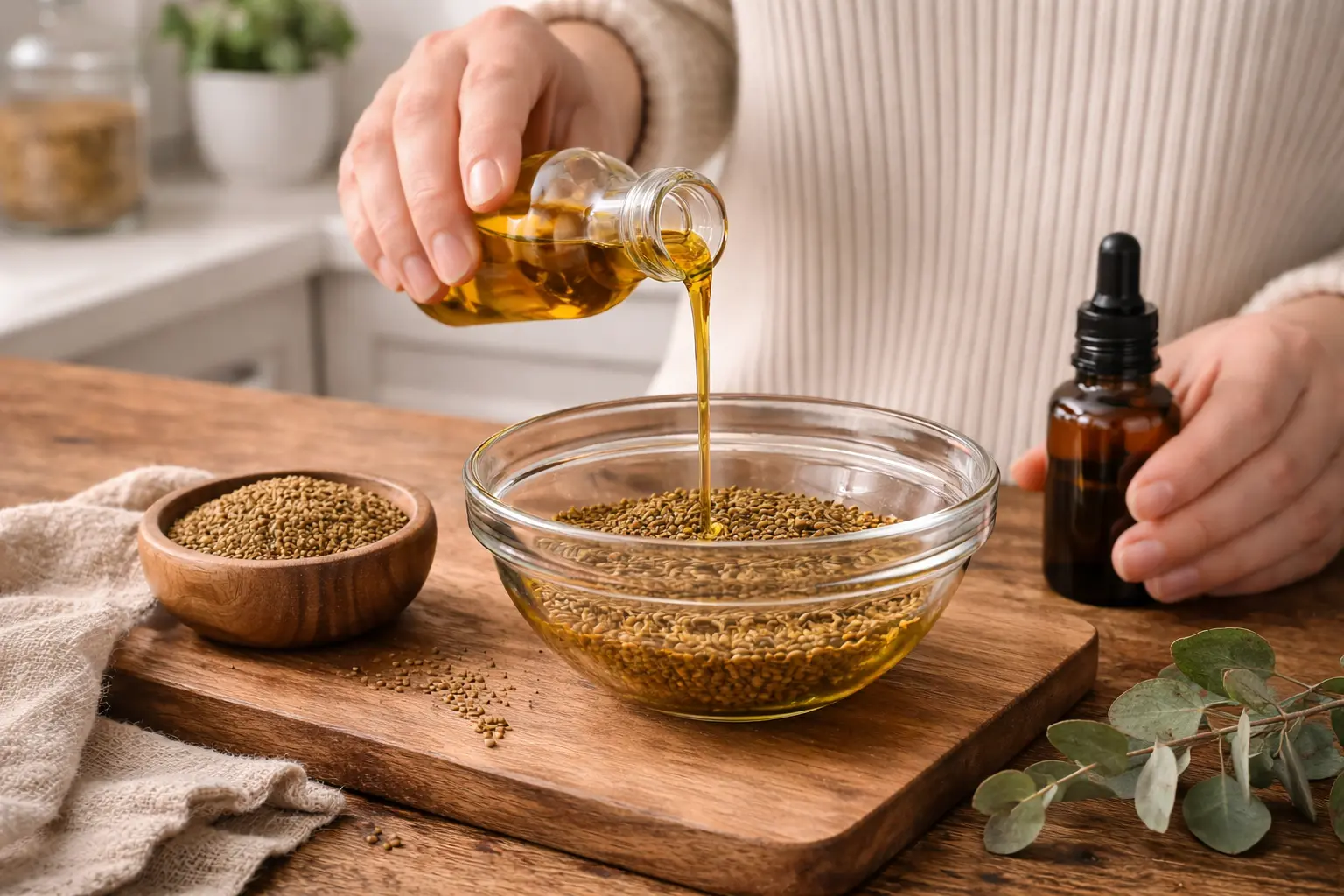
Ajwain, also known as carom seeds, is one of those kitchen ingredients that quietly has a reputation for doing more than people expect. While it is commonly used for digestion in traditional home remedies, it also shows up in body care for its warming, comforting feel — especially in homemade oil blends used for stiffness and everyday aches.
To make a simple version at home, combine 2 teaspoons of ajwain seeds or powder, 4 teaspoons of mustard oil, and 3 to 4 drops of eucalyptus oil. Warm the mustard oil gently, then mix in the ajwain and eucalyptus once the oil is no longer too hot. Massage it into sore muscles, the lower back, or other areas that feel tight. This blend tends to feel especially good in cooler weather, when the body often feels stiffer and less relaxed. The mustard oil gives it warmth, while eucalyptus adds a cooling, refreshing edge that can make the blend feel more soothing on contact.
Like all essential oil blends, it is best to patch test first and avoid applying it to irritated or freshly shaved skin.
3. Ashwagandha Pain Relief Oil
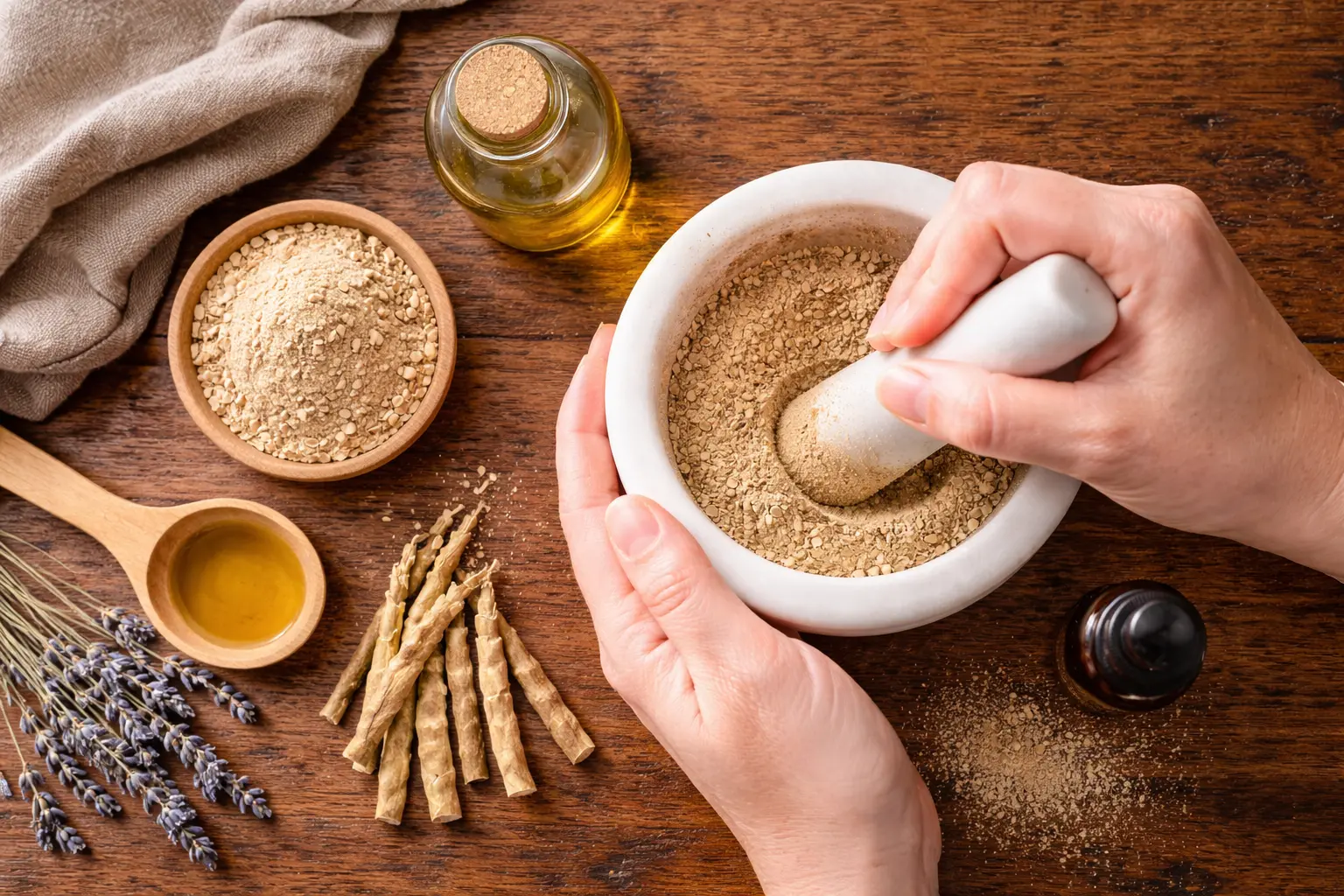
Ashwagandha is one of the best-known herbs in Ayurvedic wellness and is often associated with stress support, recovery, and helping the body feel more balanced overall. That makes it a natural fit for massage oils, especially when soreness seems tied not just to physical tension, but also to fatigue, stress, or that “everything feels tight” kind of discomfort.
For a simple homemade version, use 2 teaspoons of ashwagandha powder, 4 teaspoons of sesame oil, and 3 to 4 drops of lavender essential oil. Warm the sesame oil lightly, stir in the ashwagandha powder, and finish with lavender once the mixture has cooled slightly. Sesame oil is a great base here because it has a naturally warming, massage-friendly texture, while lavender adds a calming aroma that makes the whole routine feel more restorative. This is the kind of oil that works especially well at night, after a long day, or before bed when your shoulders, neck, or legs feel overworked.
It is less about instant intensity and more about creating a soothing ritual your body starts to respond to over time.
4. Turmeric Pain Relief Oil
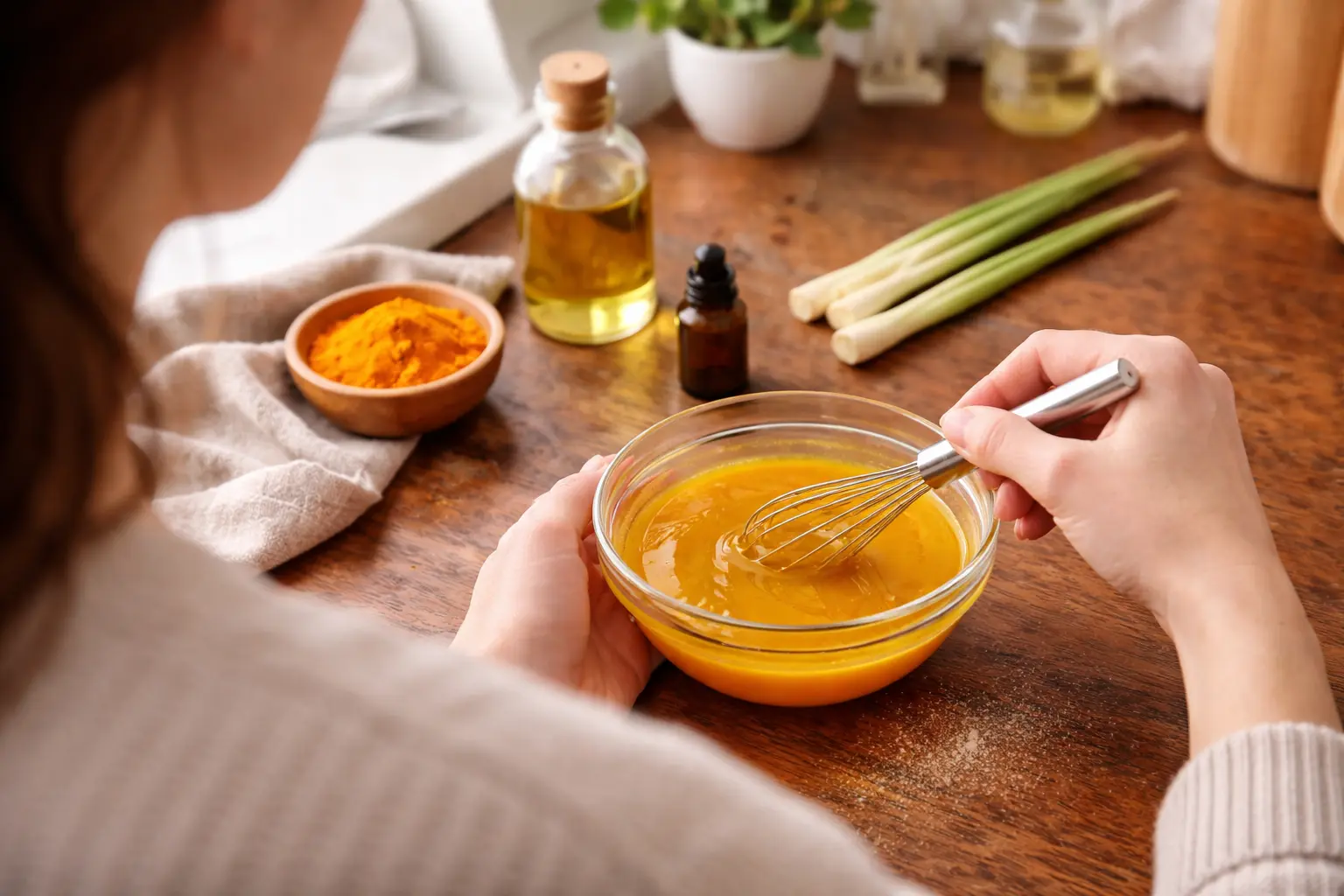
Turmeric is one of the most familiar natural ingredients people turn to when they think of inflammation, stiffness, or joint discomfort. It has been used in wellness traditions for generations, and even today, it remains one of the most popular ingredients in homemade remedies for body soreness and mobility support.
To make a simple turmeric massage oil, combine 2 teaspoons of turmeric powder, 4 teaspoons of almond oil, and 2 to 3 drops of lemongrass oil. Mix everything well in a bowl and apply it directly to the area you want to massage. One important note: turmeric can stain, so it is best used carefully and not right before putting on light-colored clothing. Almond oil works well here because it has a soft, gentle feel on the skin, while lemongrass adds a fresh, slightly invigorating edge to the blend. This oil tends to be a nice option for knees, shoulders, and other areas that feel stiff after a long day. It is simple, effective-feeling, and easy to work into a routine without much effort.
Just remember to keep the mixture away from broken skin and always wash your hands after using it.
5. Ginger Pain Relief Oil
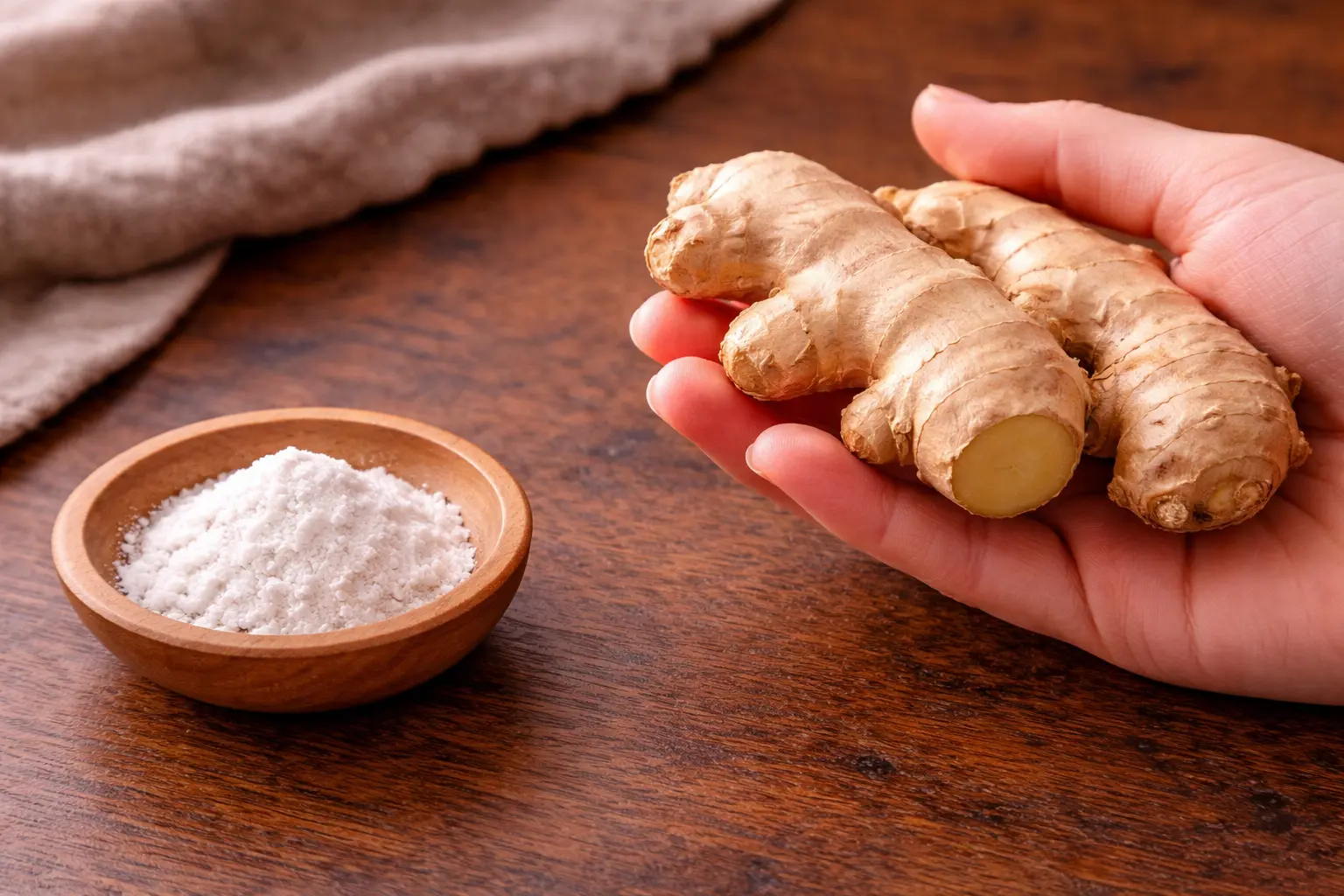
Ginger is one of those ingredients people usually associate with tea, sore throats, or digestion — but it also has a long history in warming body care. In massage oil form, ginger is often used when the goal is to create a comforting, heat-like sensation that helps the body feel looser and more relaxed.
For a homemade version, use 3 to 4 drops of ginger essential oil, 4 teaspoons of black seed oil, and 1 crushed camphor tablet. Mix everything together carefully, but do not heat the blend once camphor is added. Camphor can be flammable and should always be handled cautiously. This oil is especially suited to areas that feel stiff, cold, or stubbornly tight, such as the knees, calves, or lower back. Ginger gives the blend a warming feel, while black seed oil provides a rich, smooth base for massage. Camphor adds that strong, familiar “pain balm” quality many people find instantly comforting.
This one has a more intense feel than some of the other oils on the list, so it is best used sparingly and always patch tested before full use.
6. Camphor Pain Relief Oil
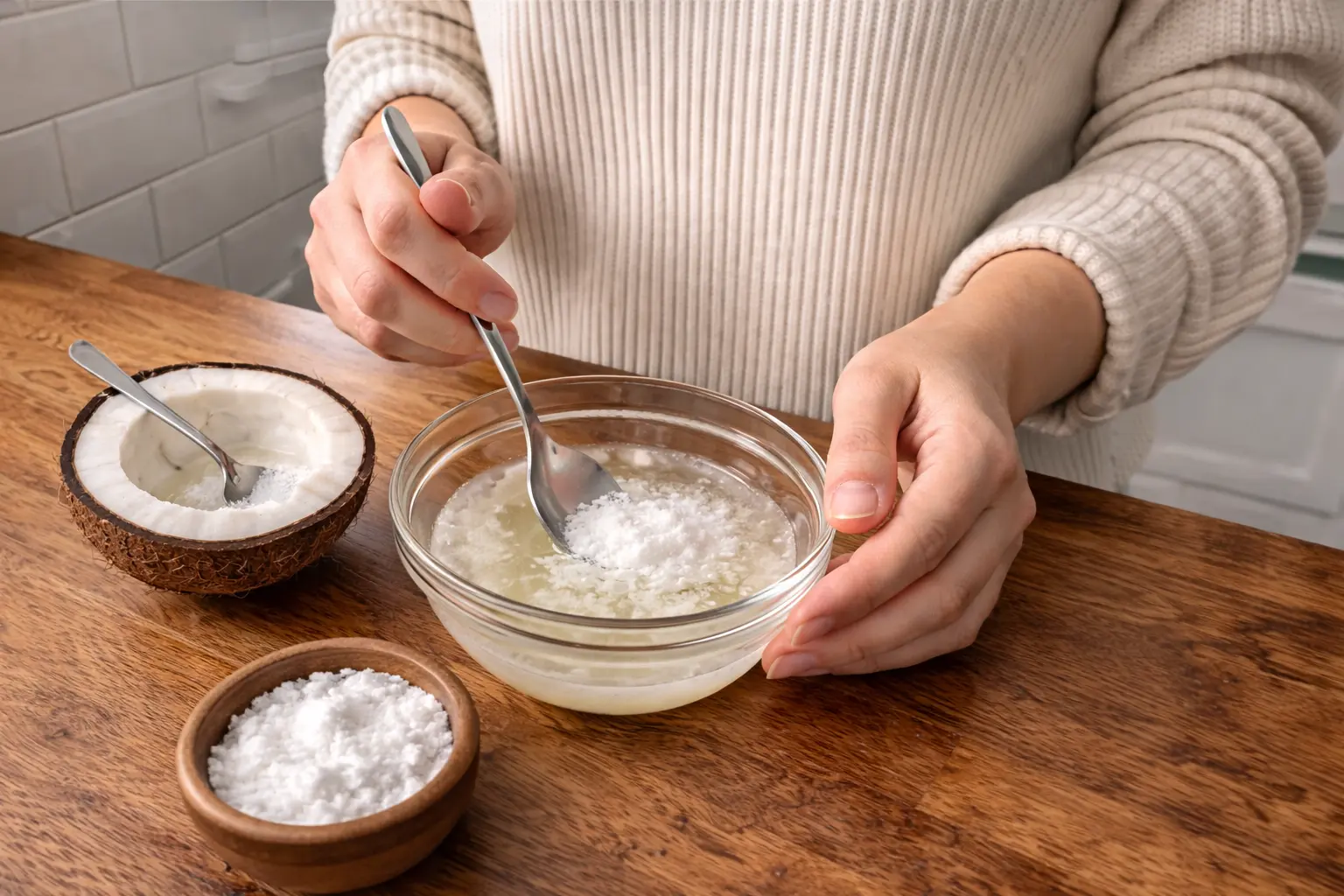
Camphor is one of the most classic ingredients used in old-school pain balms, chest rubs, and muscle-soothing products. It has that strong, instantly recognizable aroma and a cooling-warming effect that many people associate with relief. That is exactly why it works so well in a simple homemade massage oil.
To make it, use 1 tablespoon of camphor and ½ cup of coconut oil. Crush the camphor into a fine powder, then stir it into warm — not boiling — coconut oil until it dissolves. Once it cools, massage a small amount into the affected area. This is a very simple recipe, but it can feel surprisingly effective for everyday body aches, especially after long workdays, cold weather, or periods of inactivity. The coconut oil helps soften the strength of the camphor while making it easier to spread across the skin. One thing to be careful about here is concentration.
Arthritis Foundation guidance notes that camphor and menthol topicals work more like “counterirritants,” meaning they create a cooling or warming sensation rather than treating the underlying cause of pain. That still makes them useful — just best used with realistic expectations.
Source: https://www.tips-and-tricks.co/do-it-yourself/painreliefoils/