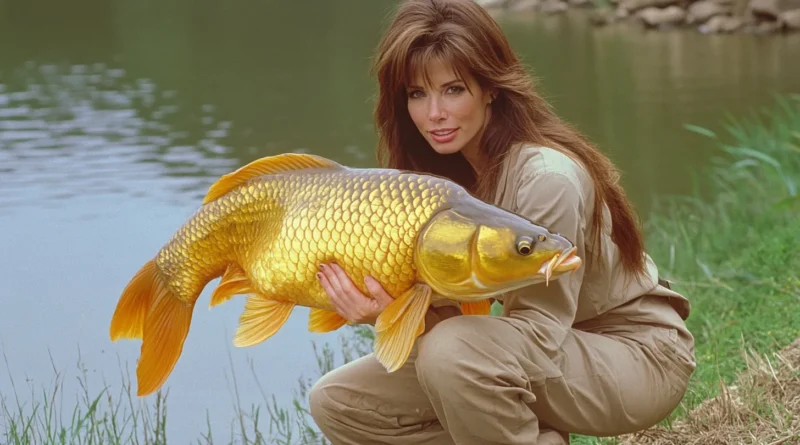
She Found a Golden Carp – What the Scientists Discover Will Blow Your Mind
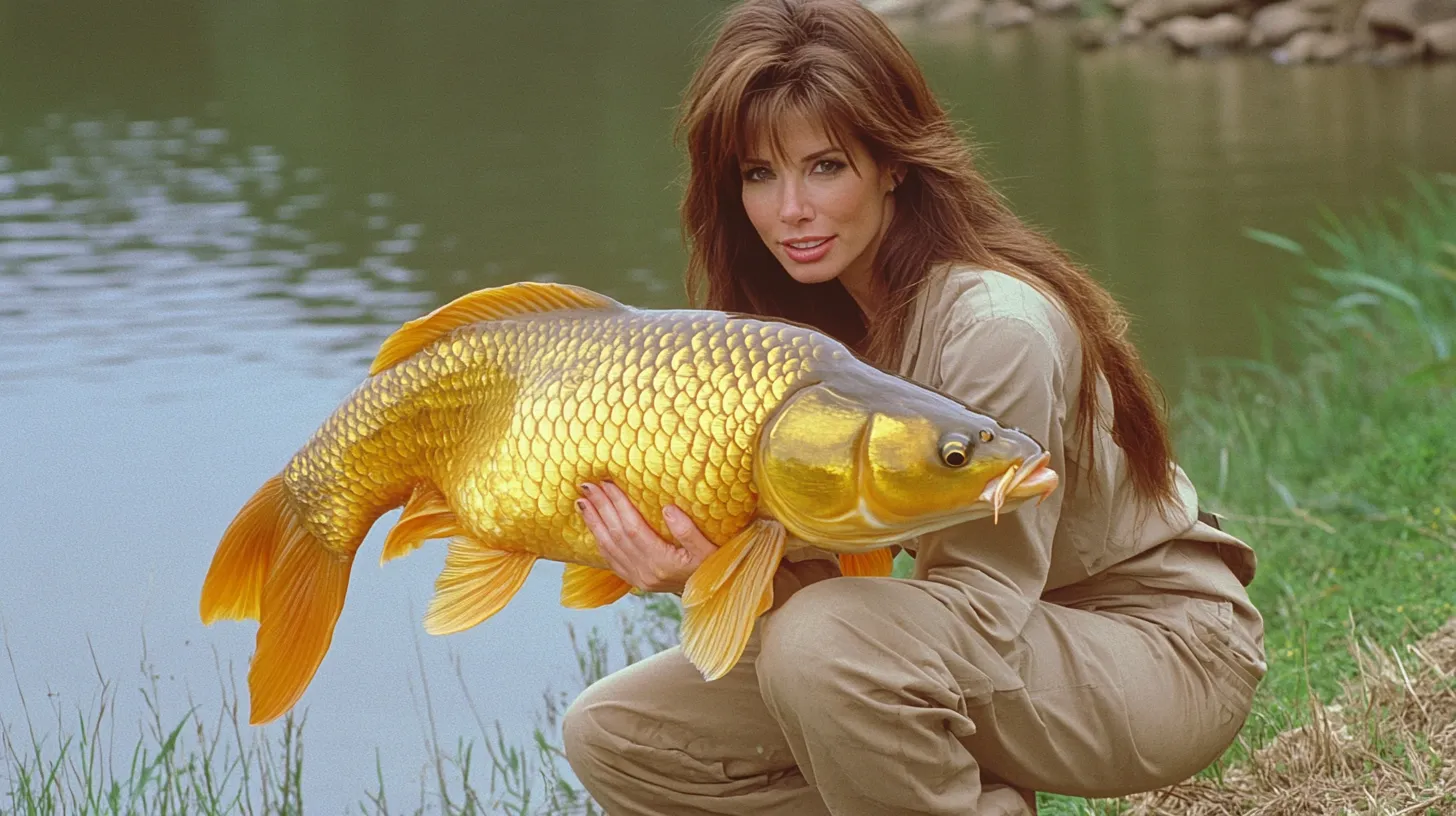
It was a peaceful afternoon by the lake. Birds chirped lazily in the distance, and the water shimmered beneath the soft sunlight. An elderly woman named Olivia had come to the water’s edge with a small basket of bread, something she did every week without fail. As she tossed the crumbs into the water, something glimmered beneath the surface.
She blinked and leaned in closer. There it was again—a flash of gold, darting just below the surface. Thinking it might be a trick of the light, Olivia took a step forward. But then the fish rose. It was unmistakable. A carp—brilliant gold from head to tail—hovered before her, as if observing her just as she was observing it.
She gasped, dropping the basket. The fish didn’t swim away. It moved slowly, deliberately, circling the edge of the lake. It had large, expressive eyes and shimmering scales that caught the sunlight like polished metal. “It’s beautiful,” Olivia whispered. Acting quickly, she retrieved a small net she always kept nearby and, with one swift scoop, brought the golden carp out of the water.
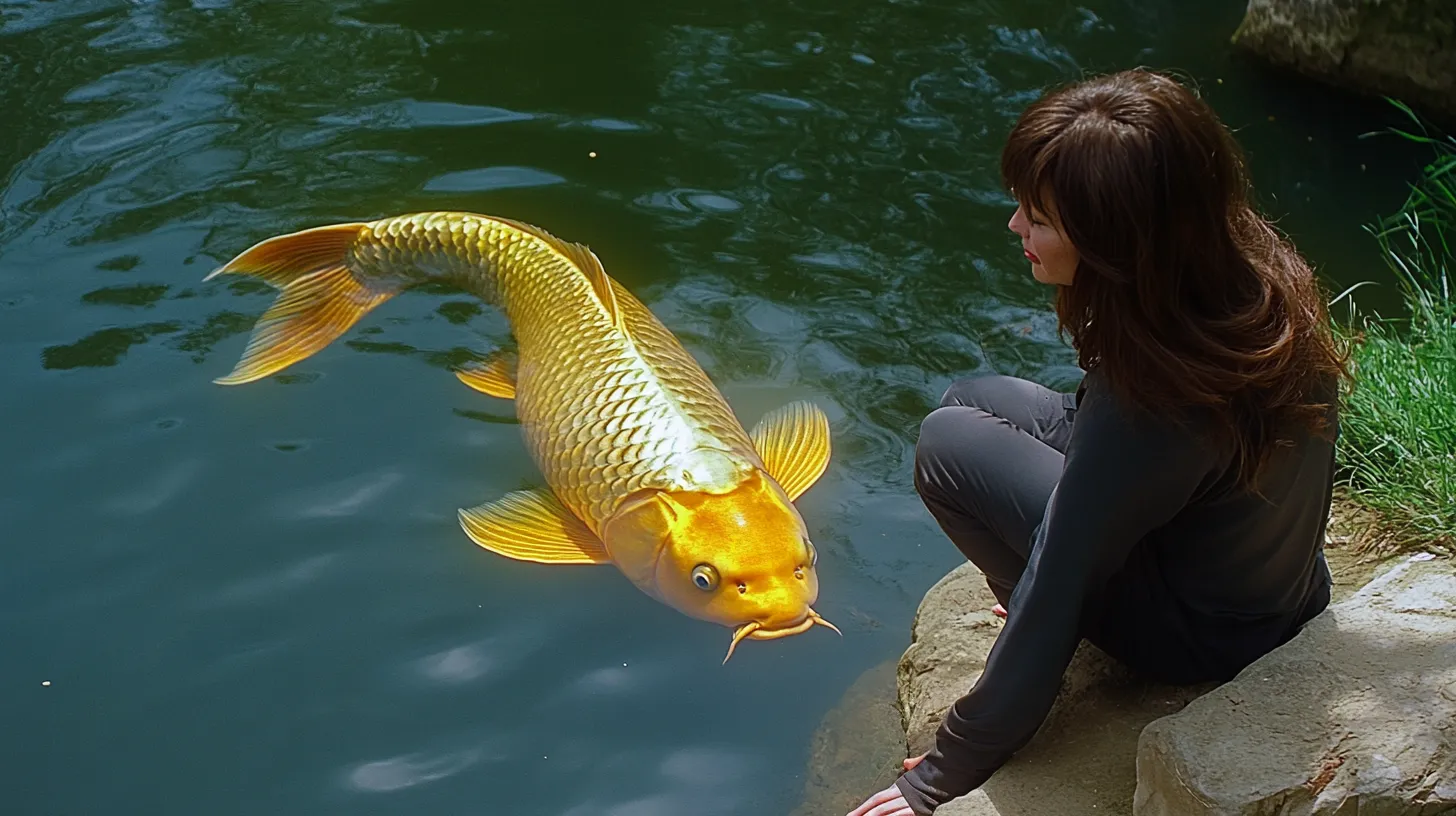
She carried it home in a large bucket and placed it gently into her backyard pond. There, under the dappled sunlight, it swam calmly, occasionally rising to the surface to inspect its new surroundings. Olivia sat beside the pond for hours, watching it glide through the water like a living ornament.
Curious about the fish’s golden color, Olivia contacted a nearby university. Within a few days, a small team of biologists led by Dr. Kessler came to observe the unusual specimen. They brought testing kits, cameras, and notebooks, eager to find out what made the fish so dazzling.
Dr. Kessler examined the fish closely and took a few scale samples. After running tests, his team discovered tiny fragments of metal embedded in the carp’s scales—specifically, particles of gold foil. “We think someone may have dumped ceremonial gold paper into the lake,” he explained. “Over time, this fish could’ve absorbed trace elements, leading to its golden appearance.”
The team continued their analysis and found no signs of artificial coloring or tampering. It appeared the carp’s stunning color had developed naturally, albeit under strange circumstances. Olivia was amazed. She had simply gone to feed the ducks—and now, she had a pond with what scientists were calling a one-of-a-kind fish.
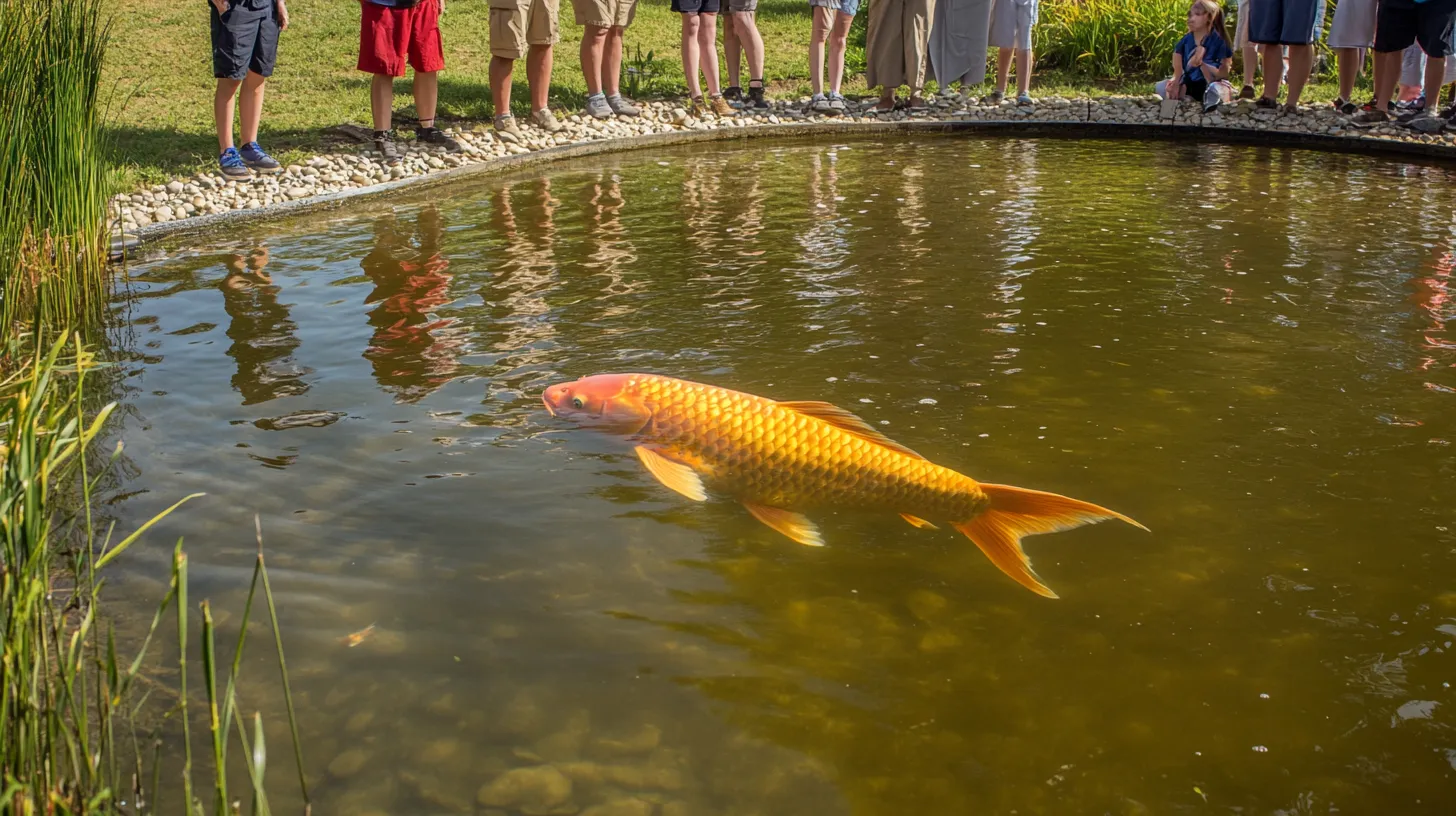
Dr. Kessler later gave a brief interview: “This is a rare but fascinating example of how environmental exposure can create unique effects in nature. It’s not magic—but it’s definitely special.” The news quickly caught on, and soon people from nearby towns came just to catch a glimpse.
Olivia remained modest. “I didn’t do anything,” she’d say with a shrug. “It just showed up.” But the golden carp had become part of her life now, and she treated it like an old friend. Every morning she sat by the pond, and every morning it came to greet her.
The story of the golden carp spread far and wide. A mystery? Perhaps. But more than anything, it reminded people that sometimes, nature still has the power to surprise us when we least expect it.