
This is what a foot bath with vinegar can do for you
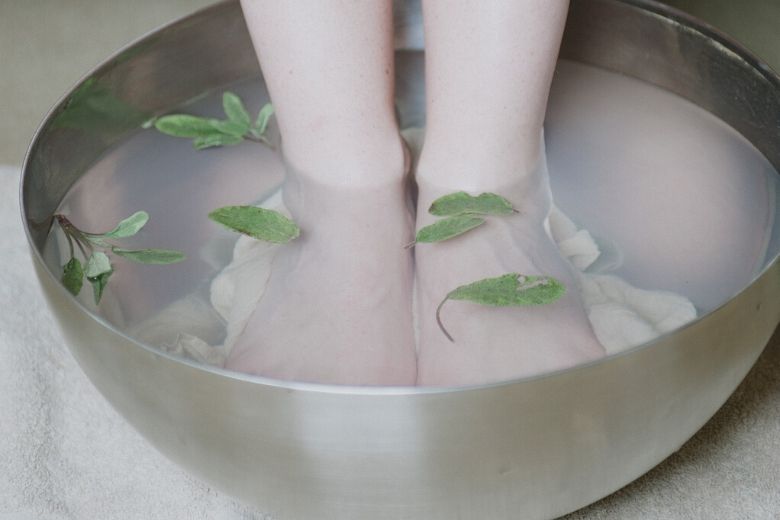
Using a vinegar bath may help relieve common skin and foot issues at home
We often do not give our feet much thought until the warmer months arrive or we begin to feel discomfort between our toes. If you feel like your feet have been neglected for a while, a simple foot soak using water and vinegar might be a helpful home treatment. Below, you will find how to do this step by step.
Support for athlete’s foot
Athlete’s foot is a fungal skin infection that appears most often between the toes or on the sole of the foot. Despite the name, it does not only come from swimming pools. You can also pick it up in other places where you walk barefoot. This infection often leads to dry, flaky, itchy skin and can sometimes cause blisters or inflammation. Because vinegar has properties that are known to fight fungal growth, a vinegar soak may help manage mild symptoms. Repeated use might support the healing process.
Managing foot odor
The smell of sweaty feet is usually caused by a combination of moisture and bacteria. Since vinegar may help reduce both fungi and bacteria, a vinegar bath might be a good addition to your routine if you deal with foot odor. Giving your feet an occasional soak can help with freshness. Be sure to rinse and dry your feet well afterward, as not everyone enjoys the scent of vinegar itself.
Dry feet and cracked heels
Cracked heels and dry patches on your feet are not only uncomfortable but can also become painful over time. The natural acidity of vinegar may help soften dry skin and leave your feet feeling smoother after regular soaks. It is not a replacement for medical care, but it can offer a gentle moisture boost.
How to make a vinegar foot bath
Creating a foot bath at home is simple. Add one full glass of vinegar to a bucket or tub and mix in two glasses of warm water. Keep adding in the same proportions until there is enough water to submerge your feet. The type of vinegar does not matter. Soak your feet for ten to twenty minutes and dry them completely afterward. This process can be repeated daily until your symptoms begin to improve.
Source: PureWow | Image: Pixabay
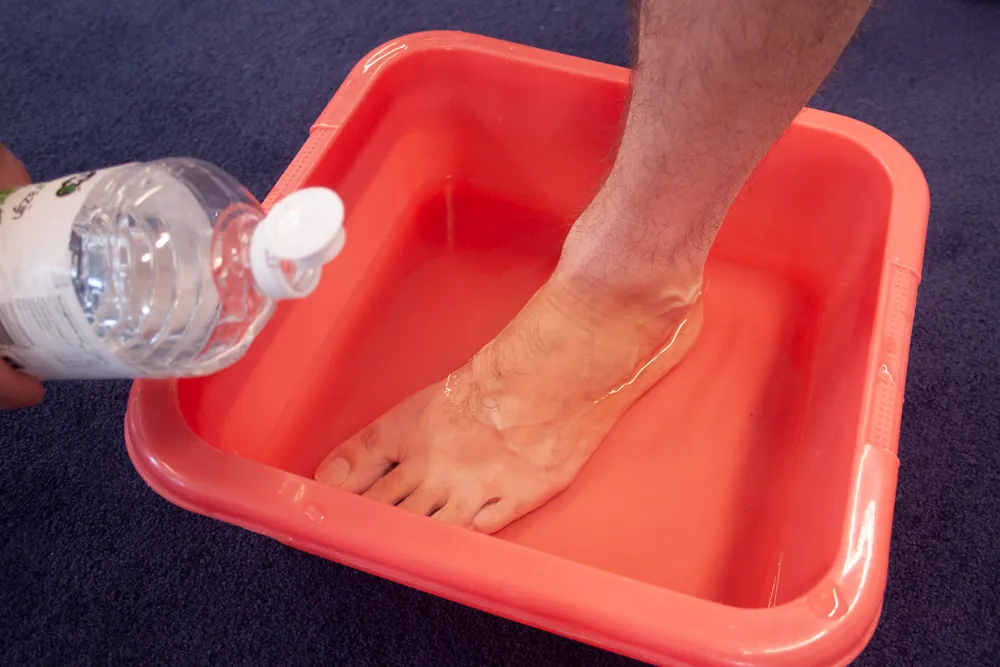
Regularly immersing your feet in a vinegar solution serves as a simple yet effective practice to combat the fungal infection. The acetic acid in vinegar acts as a natural fungicide, working to eliminate the fungal overgrowth responsible for the skin issues. This routine not only helps alleviate the discomfort associated with dry and itchy skin but also aids in preventing the progression of the infection, potentially reducing the formation of blisters and inflammation.
To integrate this remedy into your self-care regimen, consider preparing a foot soak with a mixture of vinegar and warm water. Soaking your feet in this solution for a designated period, preferably on a regular basis, can contribute to the mitigation of eczema symptoms and promote overall foot health.
As with any home remedy, it’s crucial to be mindful of individual sensitivities and consult with a healthcare professional if symptoms persist or worsen. However, for those seeking a natural and accessible solution, vinegar emerges as an unexpectedly effective ally in the battle against foot eczema.
Goodbye sweaty feet odor
The notorious odor emanating from sweaty feet is often the result of a potent combination of perspiration and the proliferation of bacteria within both your shoes and on your feet. This unpleasant olfactory experience can not only be socially awkward but may also lead to discomfort and embarrassment. However, an unexpectedly simple and effective solution lies in the versatile properties of vinegar.
Vinegar, known for its potent antibacterial and antifungal characteristics, emerges as a formidable ally in the battle against foot odor. Given that both bacteria and fungi contribute to the malodorous situation, vinegar’s dual-action against these culprits makes it a practical and accessible remedy. Incorporating occasional vinegar baths for your feet into your hygiene routine can significantly mitigate and prevent the unpleasant aroma associated with sweaty feet.
By immersing your feet in a vinegar solution, you introduce an environment that is inhospitable to the bacteria and fungi causing the unpleasant odor. This practice not only neutralizes the smell but also serves as a preventive measure against future occurrences. The acetic acid in vinegar acts as a natural deodorizer, breaking down the compounds responsible for the unpleasant scent and creating an environment where bacteria struggle to thrive.
After indulging in a refreshing vinegar foot bath, it’s crucial to thoroughly rinse your feet. While the benefits are undeniable, the smell of vinegar may not be everyone’s preference. A thorough rinse ensures that any lingering scent is diminished, allowing you to enjoy the positive effects without the need to endure the distinct aroma of vinegar.
This simple yet effective foot care routine not only addresses the immediate concern of foot odor but also promotes good hygiene practices. It’s important to note that individual responses to remedies may vary, and if foot odor persists, it’s advisable to consult with a healthcare professional to rule out any underlying issues. However, for those seeking a natural and affordable solution, a vinegar foot bath proves to be a practical and accessible remedy for combating sweaty feet and the associated unpleasant odor.
A boost for dry feet and cracked heels
Beyond the cosmetic concerns of unsightly chaps and dry feet lies a more discomforting reality – the potential for pain and irritation. Dry, cracked skin on the feet not only detracts from their appearance but can also result in painful sensations and persistent discomfort. However, an unexpected remedy for this common issue lies in the simple yet potent attributes of vinegar.
The acidity present in vinegar offers more than just a solution for removing unwanted odors or tackling fungal infections; it also provides a well-deserved moisturizing treatment for dry and chapped feet. Incorporating vinegar into your foot care routine can be a game-changer, offering a natural and affordable alternative to commercial moisturizers.
By regularly treating your feet to a vinegar bath, you introduce a mechanism that helps restore moisture to dry and cracked skin. The acetic acid in vinegar aids in breaking down dead skin cells, facilitating their removal and creating an environment conducive to the absorption of moisture. As a result, the skin on your feet is likely to feel significantly smoother, and any discomfort associated with chapping may be alleviated.
The moisturizing benefits of vinegar extend beyond the surface, penetrating deep into the layers of dry skin. This dual-action approach not only addresses the immediate aesthetic concerns but also provides a therapeutic touch, potentially relieving pain and discomfort associated with chapped feet.
To incorporate this foot care remedy into your routine, consider preparing a warm vinegar soak. Soaking your feet in this solution for a designated period, preferably on a regular basis, allows the acetic acid to work its magic, providing a hydrating treatment that goes beyond the surface. After the foot bath, be sure to rinse your feet thoroughly to remove any residual scent of vinegar.
While this vinegar-based foot treatment offers promising benefits, it’s important to remember that individual responses may vary. For persistent issues or concerns, consulting with a healthcare professional is advisable. Nevertheless, for those seeking a natural and cost-effective solution for dry and chapped feet, a regular vinegar soak may prove to be a soothing and transformative addition to your foot care routine.
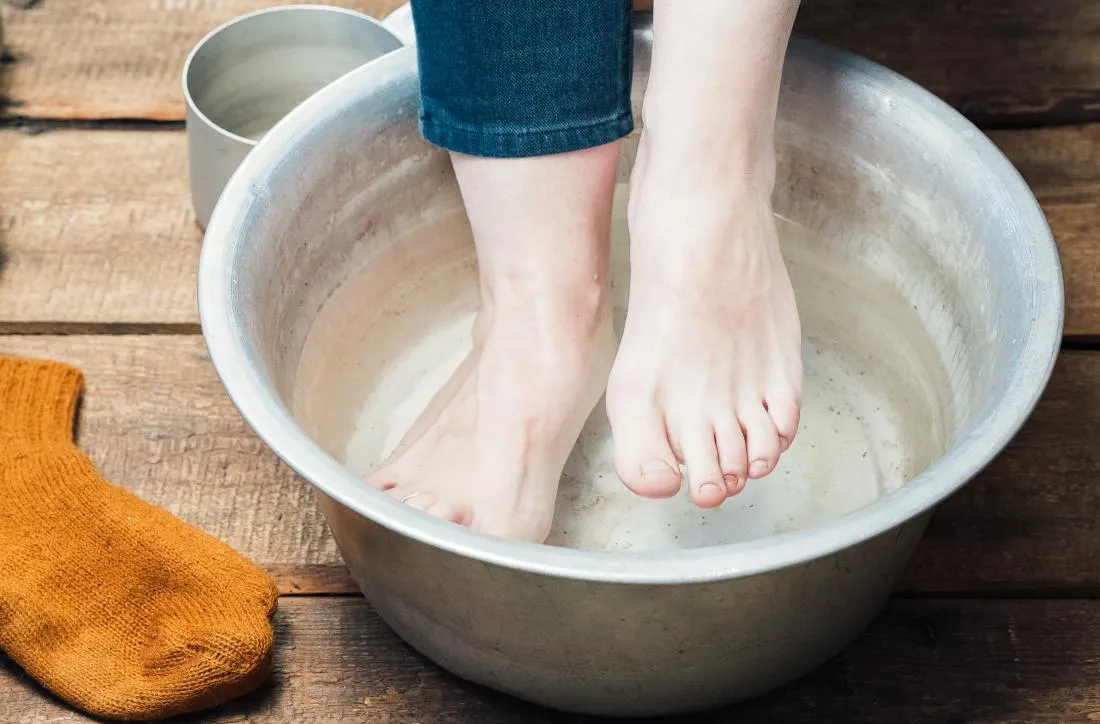
Vinegar bath for your feet
Indulging in a rejuvenating vinegar foot bath is not only a simple and effective solution for various foot concerns but also an easily accessible and cost-friendly self-care practice. Here’s a step-by-step guide to ensure you get the most out of this pampering experience:
Ingredients:
- 1 large glass of vinegar
- 2 large glasses of warm water
Procedure:
- Prepare the Basin or Bucket: Begin by filling a basin or bucket with 1 large glass of vinegar. The type of vinegar is not a critical factor in this foot care routine, providing flexibility in choosing the variety that suits your preference or availability.
- Adjust Proportions: Add 2 large glasses of warm water to the vinegar-filled basin. Repeat this process until the tub is adequately filled for you to comfortably immerse your feet. The warmth of the water adds a soothing element to the foot bath, enhancing the overall experience.
- Soak Your Feet: Immerse your feet in the vinegar bath and allow them to soak for a duration of 10 to 20 minutes. This timeframe provides ample opportunity for the acetic acid in the vinegar to work its magic on your skin, helping to exfoliate dead cells and moisturize the dry, chapped areas.
- Dry Thoroughly: After the designated soaking period, carefully remove your feet from the bath and pat them dry thoroughly. It’s essential to ensure that your feet are completely dry to prevent any residual moisture that could exacerbate existing skin issues.
- Repeat Daily: For optimal results, make it a habit to repeat this foot care routine daily until you observe a subsiding of the symptoms. Consistency is key in reaping the full benefits of the vinegar foot bath.
This straightforward yet effective routine not only addresses dryness, chapping, and discomfort but also offers a moment of relaxation and self-care. The versatility and simplicity of this foot bath make it a convenient addition to your daily routine, requiring minimal effort and resources.
While this vinegar-based foot care regimen is generally safe for most individuals, it’s advisable to consult with a healthcare professional, especially if you have specific skin conditions or concerns. Enjoy the luxurious experience of pampering your feet with a vinegar bath and witness the transformative effects on your foot health and overall well-being.
Image: Videostill – YouTube Naked Stories
Source: https://www.tips-and-tricks.co/health/footvinegar-nocb/