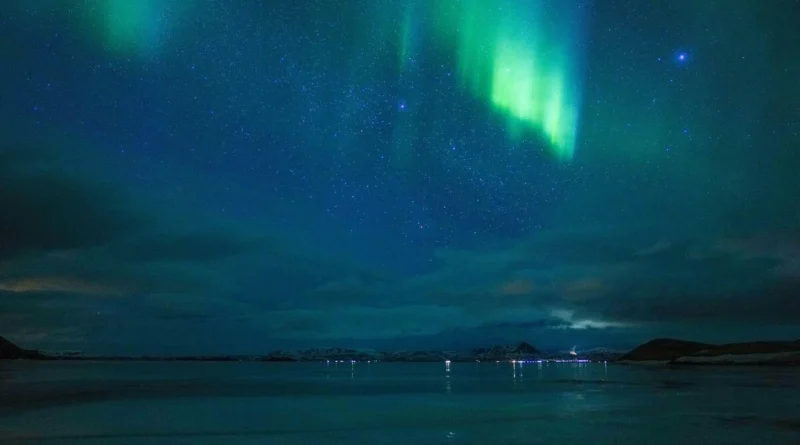
Facts About Iceland That Sets It Apart From Other Countries
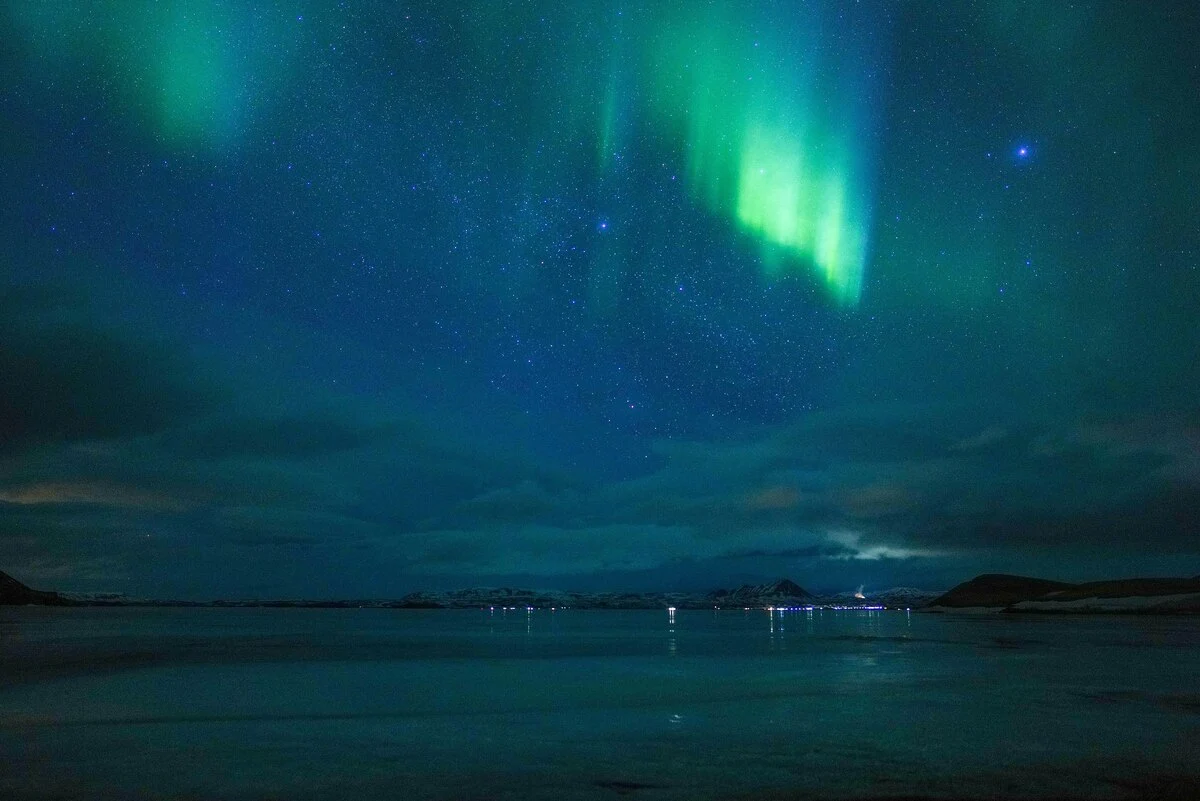
Photo Credit: Giles Laurent/ Wikimedia Commons
Iceland, the Land of Fire and Ice, as it is called, may look small on a map, but it has a talent for making an outsized impression. As of January 1, 2025, the country’s population was just 389,444, which means the whole nation has fewer people than many mid-sized cities, and a population density of less than four people per square kilometer.
This North Atlantic island manages to pack in glaciers, volcanoes, geothermal baths, black-sand beaches, and a culture with roots stretching back more than a thousand years. That alone would make it interesting. What really sets Iceland apart, though, is the way everyday life there often feels slightly unlike anywhere else on Earth. The country’s energy system, naming traditions, political history, and even its public hangout spots all have their own Icelandic twist.
That is what makes Iceland such a fun subject. This is not just a place of dramatic scenery and postcard views. It is a place where hot water flows from the ground into homes and pools, where one of the world’s oldest parliamentary institutions was founded, and where an entire new island formed within living memory and was then left mostly untouched so scientists could watch nature begin from scratch.
Get ready for a tour of the quirks, systems, and stories that make Iceland stand out in the best possible way.
 Fact 1: Iceland Has No Standing Army
Here is a fact that tends to make people blink twice: Iceland has no standing armed forces. That makes it highly unusual, especially because it is also a NATO member. Iceland is one of only a handful of countries in the world with no military of its own. There is no army, navy, or air force. The Icelandic Coast Guard handles maritime patrol and search-and-rescue operations, and there’s a small Viking Squad police unit for counter-terrorism. For a country that takes its Viking heritage seriously, this is perhaps a little surprising. And yet, Iceland has been one of the most peaceful, safest, and stable nations on the planet for a very long time.
Of course, “no standing army” does not mean “no role in security.” Iceland still contributes through civilian personnel, financial participation, infrastructure, and host-nation support. NATO has highlighted Iceland’s role in providing facilities and support at Keflavík, and the Icelandic government has described contributions to alliance operations even without a traditional military establishment. Still, compared with countries where military institutions are highly visible in public life, Iceland stands apart. It reflects a different national setup, one shaped by geography, alliances, and history. There is something very Icelandic about this, too: a country that does not always fit the standard category, yet still makes the system work in its own way.
 Fact 2: Icelandic Names Often Follow Parents, Not Family Lines
One of the first things that surprises visitors is that Icelandic names do not always work the way many people expect. In many countries, surnames are passed down as fixed family names from generation to generation. In Iceland, many people instead use patronymics or matronymics. That means the second name is often built from a parent’s first name rather than a shared family surname. A son of Jón might have a name ending in -son, while a daughter might have one ending in -dóttir. Registers Iceland also explains that matronymics are used, too, and in some situations, a child may receive a matronymic surname by default unless paternity has been formally declared. So instead of a name acting mainly like a family label, it often tells you something direct about parentage.
This has some delightfully practical consequences. Icelanders almost universally refer to each other by first name, even in formal settings, with strangers, or in the phone book. The Icelandic phone directory lists people alphabetically by first name, not surname, because that’s the name that actually identifies you. When Iceland participates in international events, its athletes are listed by first name. It’s a society that, by structural necessity, operates on a first-name basis.
That system gives Icelandic names a wonderfully personal feel. Iceland also has an official committee—the Icelandic Naming Committee—that approves new names to make sure they fit the rules of the Icelandic language and can be properly declined in its grammar system. Icelandic is a highly inflected language, meaning names change form depending on their grammatical role in a sentence, so a name that doesn’t work grammatically simply won’t be approved. It’s one of the few places in the world where naming your child is, quite literally, a matter of national linguistic policy. And honestly, something is charming about a country where names are not just labels, but little clues to family stories.
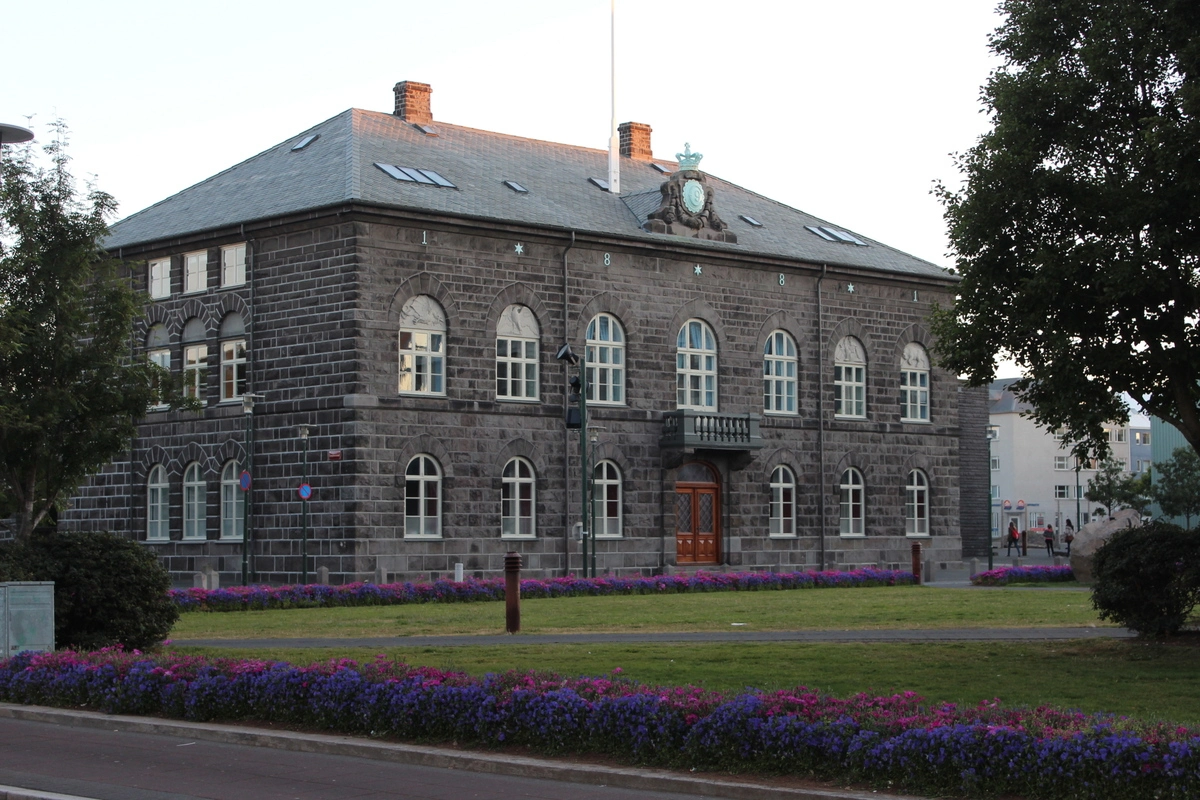
Photo Cedit: Zinneke/ Wikimedia Commons
Fact 3: Iceland Has The Oldest Parliament
Plenty of countries are proud of their political traditions, but Iceland gets to say something few nations can: its parliament, the Althing, was founded in AD 930. Official documents state that the foundation of Althing at Þingvellir in 930 marked the beginning of the old Icelandic Commonwealth. It continued to meet at Þingvellir until 1798, which means Iceland’s political life has roots that reach far back into the early medieval world. Viking settlers from Norway would gather annually to settle disputes, pass laws, and make collective decisions for the community. No kings, no feudal lords running the show—just a gathering of free men (and, yes, the democratic shortcomings of the era noted) working out the rules of their society together.
What makes this even more remarkable is the setting. Þingvellir is also geologically extraordinary, which gives Iceland the rare ability to combine ancient politics with jaw-dropping landscape in one place. Long before modern capitals, office towers, and televised debates, Icelanders were gathering there to make laws and settle disputes. That gives the country a special kind of continuity. Iceland is often talked about as futuristic because of geothermal power, digital services, and sleek Nordic design, but in this area, it is proudly ancient. The contrast is part of the charm: a nation that feels modern in many ways, while carrying a political memory that reaches back over a millennium.
 Fact 4: Iceland Powers Daily Life with Heat from the Earth
If Iceland seems unusually good at making dramatic geology useful, that is because it really is. Official government sources say renewable energy provides almost all of Iceland’s heating and electricity generation, mainly through hydropower and geothermal energy. The government’s energy pages note that renewable sources account for nearly all electricity production, while geothermal energy heats about 85% of houses. In other words, Iceland is not simply a country with volcanoes and hot springs for tourists to photograph. It is a country that figured out how to channel its natural forces into the plumbing, heating, and power supply of ordinary life. That is a pretty spectacular flex.
The everyday result is what really sets Iceland apart. In many places, energy is something people barely think about until the bill arrives. In Iceland, it is woven into the national identity because the landscape itself helps keep homes warm and lights on. Government and financing documents have described the country as producing about 99.98% of its electricity from renewable energy and supplying the vast majority of heating through geothermal systems. That helps explain why geothermal water shows up everywhere from household heating to public pools.
Iceland also uses its abundant geothermal energy for some wonderfully practical things: heating greenhouses to grow tropical fruits, warming outdoor swimming pools that stay open year-round even in the dead of winter, and powering aluminium smelting operations that attract energy-hungry industries from around the world. It’s a reminder that geography, when you work with it rather than against it, can be the greatest asset a nation has. It also gives Iceland a slightly science-fiction quality: a place where steam rising from the ground is as practical as scenic. Many countries talk about the energy transition as a goal. Iceland, in several key ways, has been living that reality for years.
 Fact 5: Iceland Sits on a Rift Between Tectonic Plates
Some countries have mountains. Some have volcanoes. Iceland is even more dramatic: it sits directly on the Mid-Atlantic Ridge, where tectonic plates are pulling apart. Official information from Þingvellir National Park explains that the ridge runs through Iceland and that the plates are moving away from each other. UNESCO has described the faults and fissures at Þingvellir as exceptionally clear evidence of continental drift and plate tectonics. That means Iceland is not just near an important geological feature, but built right into one of the planet’s great slow-motion construction zones.
This helps explain why Iceland feels so geologically overachieving. It is a place where rifts, lava fields, geysers, earthquakes, glaciers, and volcanoes all seem to be competing for attention. The contrast between fire and ice is not just marketing copy either. South Iceland shows off Europe’s biggest glacier, Vatnajökull, while the Icelandic Meteorological Office constantly monitors volcanic systems across the country. Iceland is one of those rare places where a geography lesson can sound like fantasy, except it is all stubbornly real. Few countries let you think simultaneously about drifting continents, active volcanism, and giant glaciers.
 Fact 6: Heated Swimming Pools Are Part of Everyday Social Life
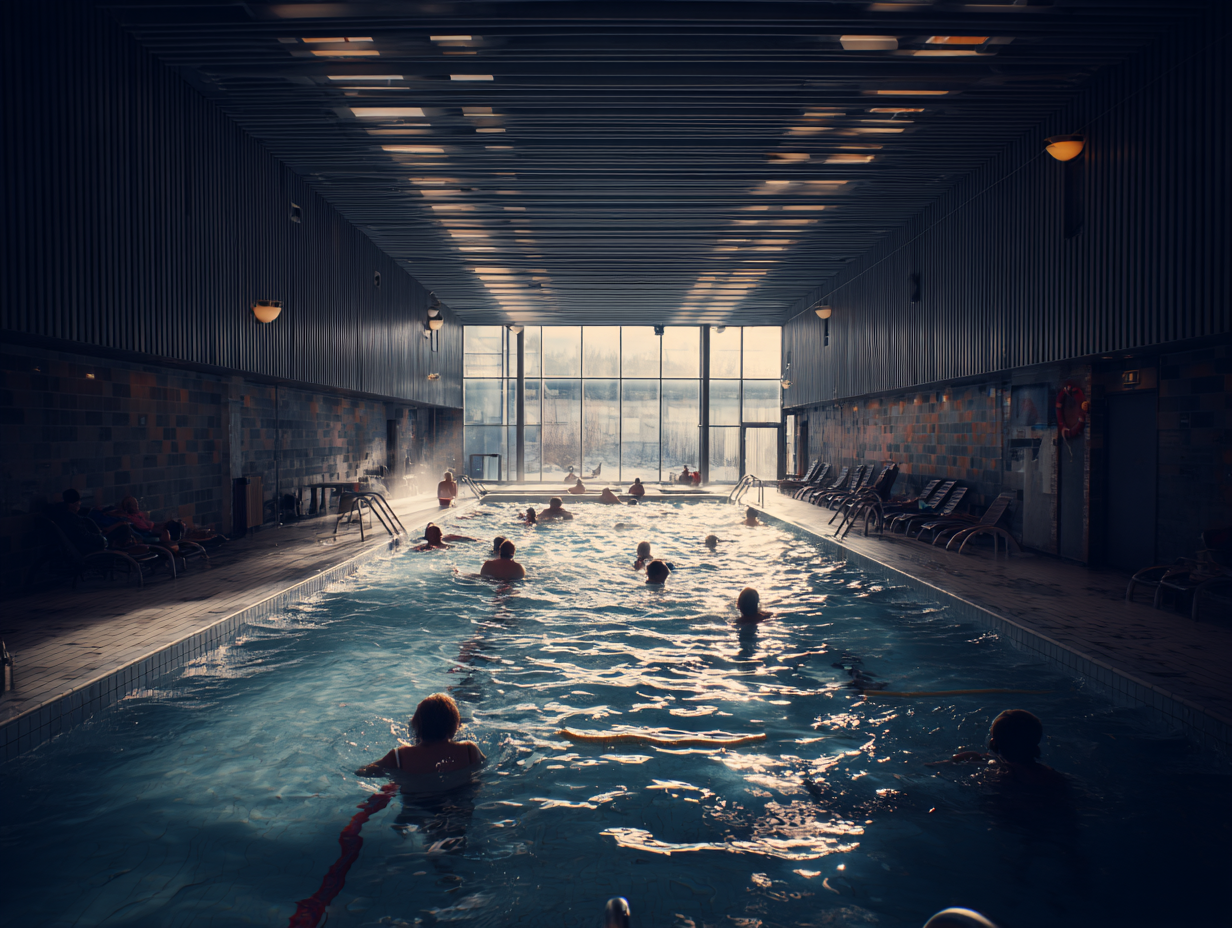
In many countries, swimming pools are a vacation activity, a gym perk, or a luxury. In Iceland, they are much more like community living rooms with steam. Geothermal energy heats nearly every swimming pool in the country, and in many towns, you will find warm public pools as part of daily life. The country’s bathing tradition goes back to the settlement era, and geothermal water is treated as a social habit. That means an Icelandic pool can also be a place to chat, unwind, and catch up on neighborhood life while surrounded by cold air and warm water. That contrast alone is wonderfully Icelandic.
What makes this fact especially charming is that it reveals something deeper than scenery. Iceland is often imagined as rugged and dramatic, but pool culture shows its softer side. The hot pot, the communal soak, and the all-season visit to a geothermally heated pool are part of the rhythm of life. In a land famous for raw nature, the public pool becomes a warm, human counterbalance: practical, welcoming, and surprisingly central. Some countries gather around cafés. Some gather around pubs. Iceland, very often, gathers in warm water under an open sky, and that may be one of its most lovable distinctions.
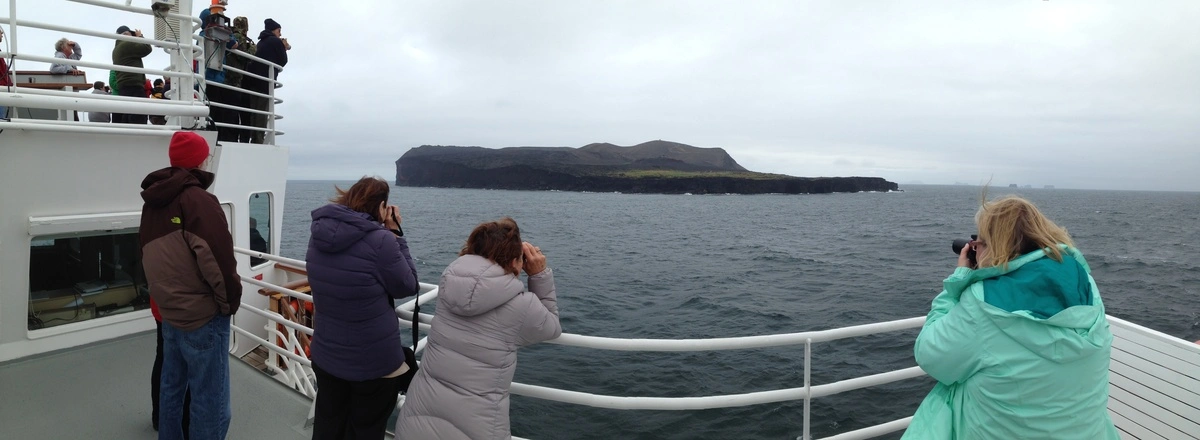
Photo Credit: Brian Gratwicke/ Wikimedia Commons
Fact 7: Iceland Has a “New” Island Scientists Still Study
Most countries are not in the habit of casually acquiring new land, but Iceland is not most countries. Between 1963 and 1967, a volcanic eruption created the island of Surtsey off Iceland’s south coast. UNESCO describes it as a new island formed by volcanic eruptions and notes that it was legally protected from its birth. That alone would make it memorable. But the truly remarkable part is what happened next: humans largely stepped back. Because Surtsey was protected from normal human interference, scientists gained an extraordinary chance to observe how plant and animal life began to colonize brand-new land. It is not every day a country ends up with a natural experiment rising out of the sea.
Surtsey has produced long-term information on the colonization process of new land by plant and animal life, precisely because it has remained protected. In a world where so much nature is studied after it has already been heavily shaped by people, Surtsey offers something rare: a chance to watch ecological succession unfold with minimal interference. It also feels like the perfect final note for Iceland.
Of course, the country with volcanic eruptions, tectonic rifts, ancient parliament, geothermal pools, unusual naming traditions, and no standing army would also have a scientifically priceless island that did not even exist before the 1960s. Iceland does not merely stand apart from other countries. It keeps finding new ways to prove it.
 Fact 8: Iceland has the most books published per capita
Iceland publishes more books per person than any other country on Earth. With its tiny population, it produces an extraordinary number of titles every year—roughly one book for every ten people. Reading is embedded in Icelandic culture at a deeply structural level, not just as a leisure activity but as a national identity.
Christmas in Iceland is wrapped up in a tradition called “Jólabókaflóð” — the “Christmas Book Flood.” Every year in the weeks leading up to Christmas, publishers release a flood of new books, and Icelanders buy and give books as Christmas gifts at a scale that is almost unparalleled anywhere else. On Christmas Eve, it’s traditional to open your book gifts and spend the rest of the evening reading, often accompanied by chocolate. The concept has become well-known globally in recent years as something of an aspirational holiday tradition, but in Iceland, it’s simply how Christmas has always worked.
The literary culture connects deeply to Iceland’s older tradition of the Sagas—epic medieval prose narratives written in the 12th and 13th centuries, detailing the lives of Viking Age Icelanders with remarkable dramatic sophistication. The Sagas are still widely read in Iceland today, in their original Old Norse, which is quite close to modern Icelandic.
Source: https://www.tips-and-tricks.co/other/icelandicfacts/