This Young Woman Converted an Abandoned Train Carriage into Her Home – See the Photos
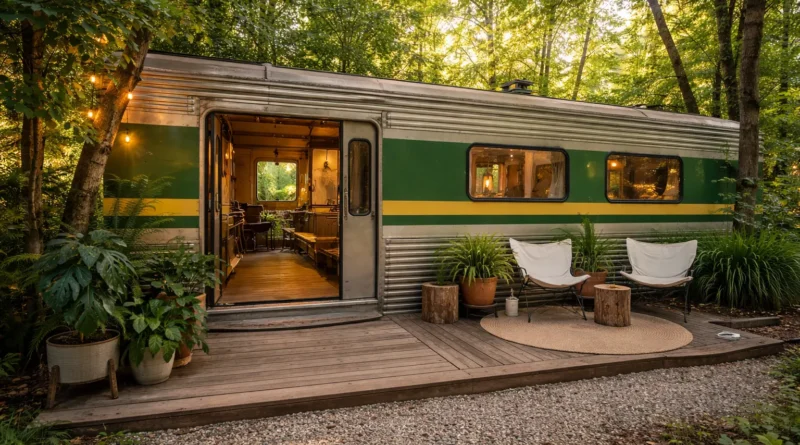
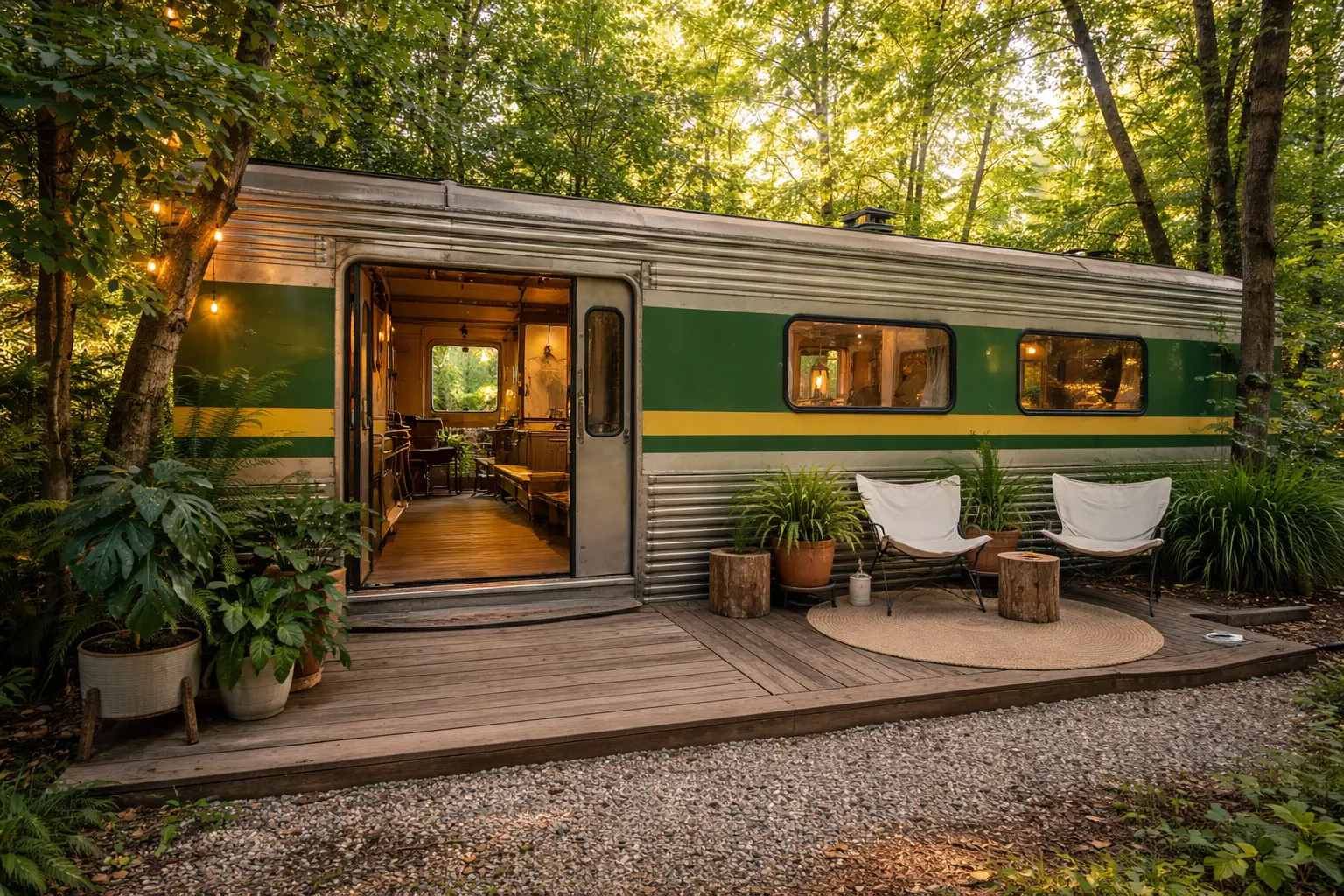 When 27-year-old Mila Hart first saw the abandoned train carriage sitting on a patch of overgrown land, most people would have laughed and kept driving. The paint was faded, the windows were dusty, and the whole thing looked like it had been left behind by another century. But Mila had spent years living in rentals that never felt like hers, working long hours only to come home to plain white walls and neighbors she could hear breathing through the plaster. She didn’t dream about a mansion, or even a trendy apartment in the city. What she wanted was something stranger, warmer, and more memorable. She wanted a home with character. A place that would make her feel something the moment she stepped inside.
So instead of signing another lease, Mila took a chance on the old carriage and began turning it into a home. She kept the narrow shape instead of fighting it, letting the train itself decide the flow of the space. Where others saw limitations, she saw charm: long sightlines, old doors, original details, and the delicious challenge of making every corner count. She leaned into the romance of it all, filling the home with soft lighting, warm wood, thrifted pieces, and small signs that someone young and imaginative lived there.
Now, from the outside, the train still feels surprising. But inside, it tells a completely different story. It feels calm, cozy, and deeply personal, as though the carriage had always been waiting for someone like Mila to come along and bring it back to life. And the best part is that each section reveals a little more about how she made this unusual dream actually feel like home.
Click the next page button to follow Mila as she gives you a tour of her home…

The Front End Became Her Bedroom Retreat
Mila started with the far end of the carriage, transforming it into a bedroom that feels tucked away from the rest of the world. She liked the idea of sleeping at the “end of the line,” as she jokingly calls it, and turned the compact space into the softest room in the house. Instead of trying to cram in too much furniture, she kept the layout simple: a bed framed by layered blankets, a narrow side table, a reading lamp, and a vintage mirror she found at a flea market. The walls were finished in warm, earthy tones that made the room feel less like a train carriage and more like a tiny retreat hidden in the woods. She even kept some of the original structure visible, letting the train’s history remain part of the atmosphere rather than covering up every trace of it.
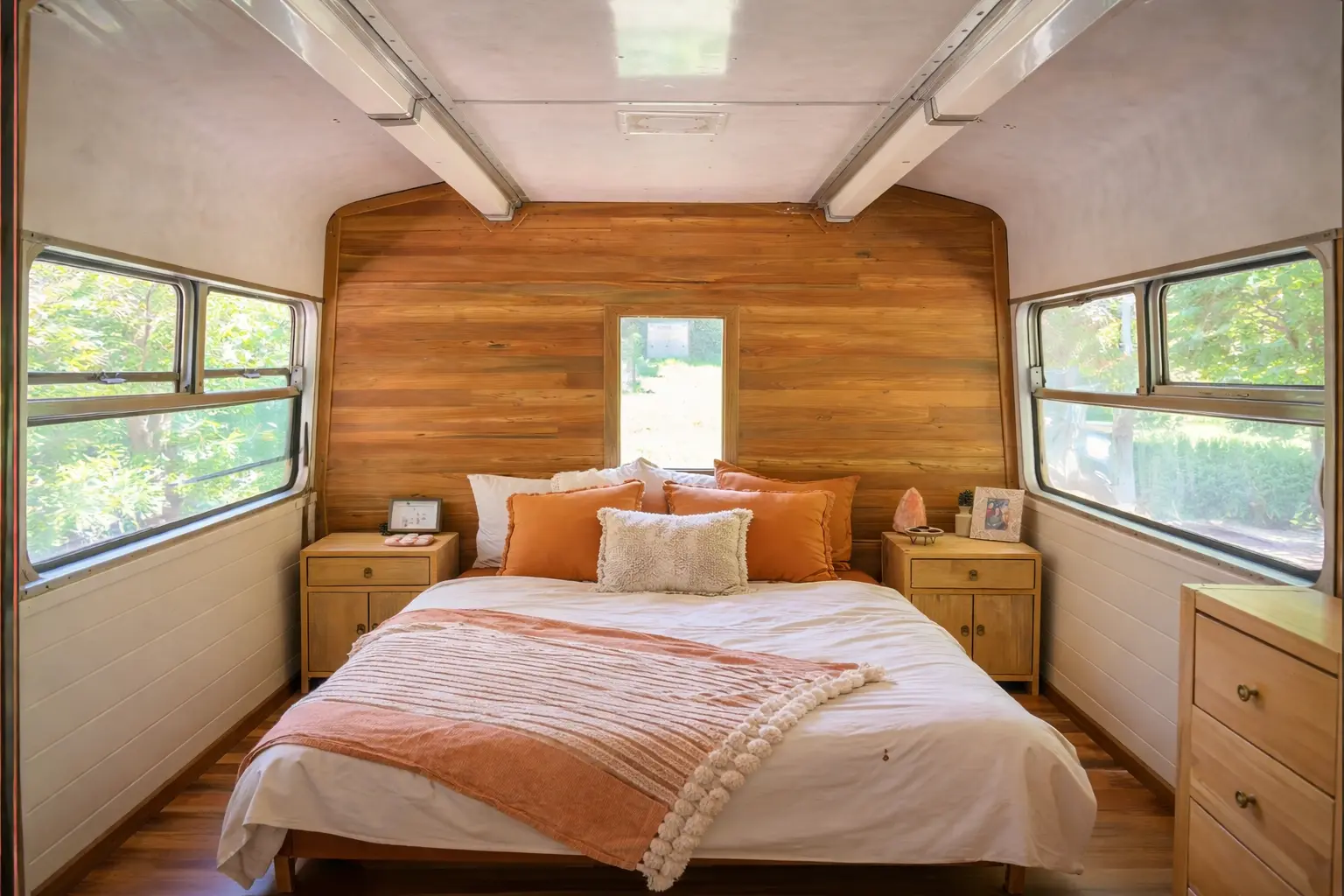 What makes the room work is not its size, but its mood. Mila understood early on that this house would never feel luxurious in the traditional sense, so she focused on making it feel intimate instead. Linen curtains soften the windows. Hooks for jewelry and scarves double as decoration. A little bench at the foot of the bed holds books, candles, and a folded knit throw. Nothing feels random. Every object looks as if it belongs there, and that careful curation is what gives the space its quiet magic.
She says this room changed the way she thinks about comfort. In her old apartments, she kept buying more furniture, more storage, more things to fill empty corners. Here, she had to be pickier. And in the process, she discovered that a room can feel fuller when it contains less, as long as what remains has a purpose and a bit of soul.
The Kitchen and Dining Area Became the Heart of the Home
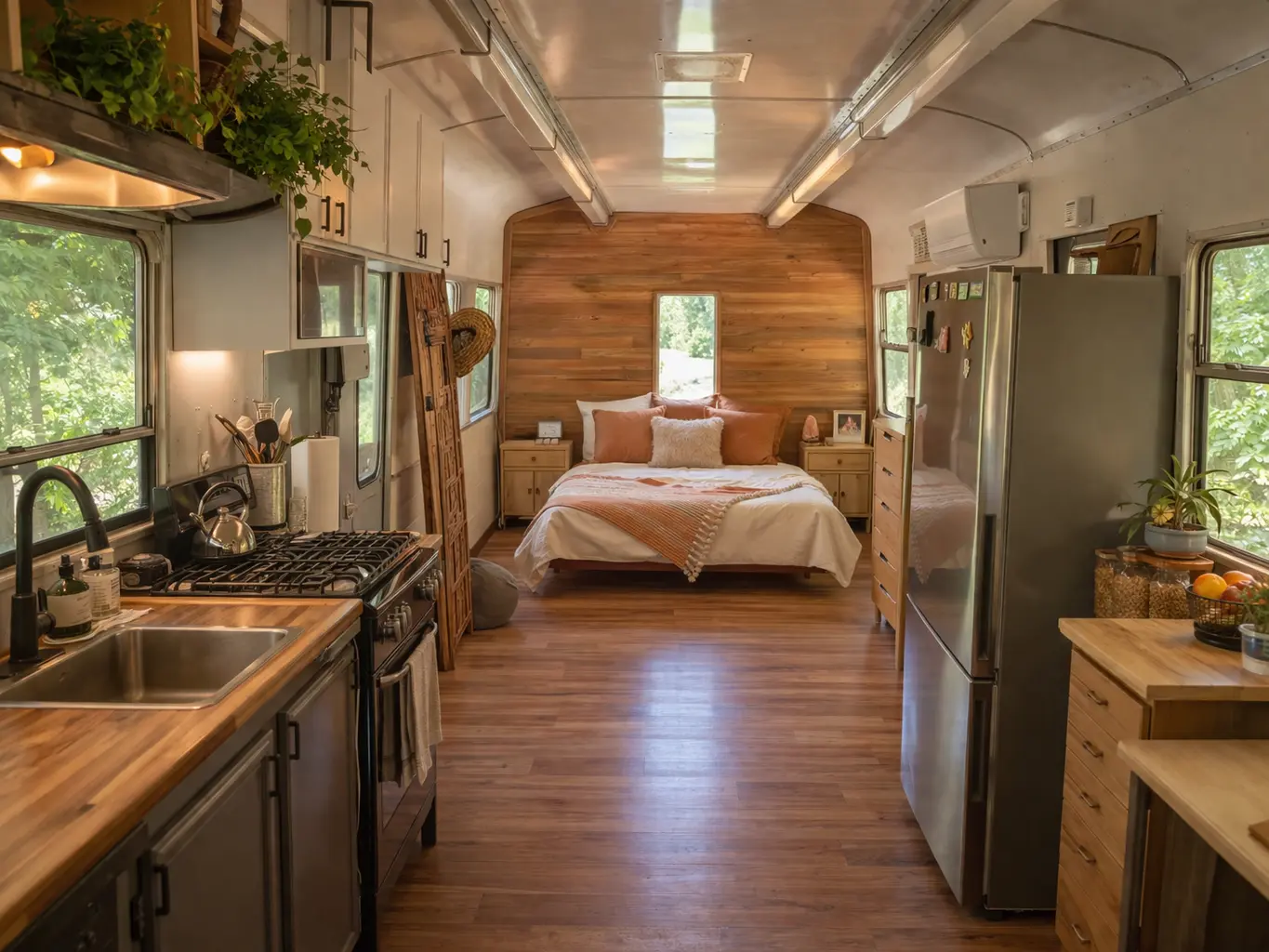
Further into the carriage, Mila created the part of the home she now uses most: a long kitchen and dining space that brings warmth into the center of the train. Rather than going sleek or ultra-modern, she chose a more lived-in look, using wood surfaces, open shelving, and a mix of old and new pieces that feel collected over time. The counters have a slightly rustic finish, the shelves hold mismatched mugs and glass jars, and the small appliances are tucked away so the room still feels calm. She didn’t want the kitchen to look like a showroom. She wanted it to feel like the kind of place where soup could simmer for hours while rain tapped against the windows. That sense of ease is exactly what she managed to create.
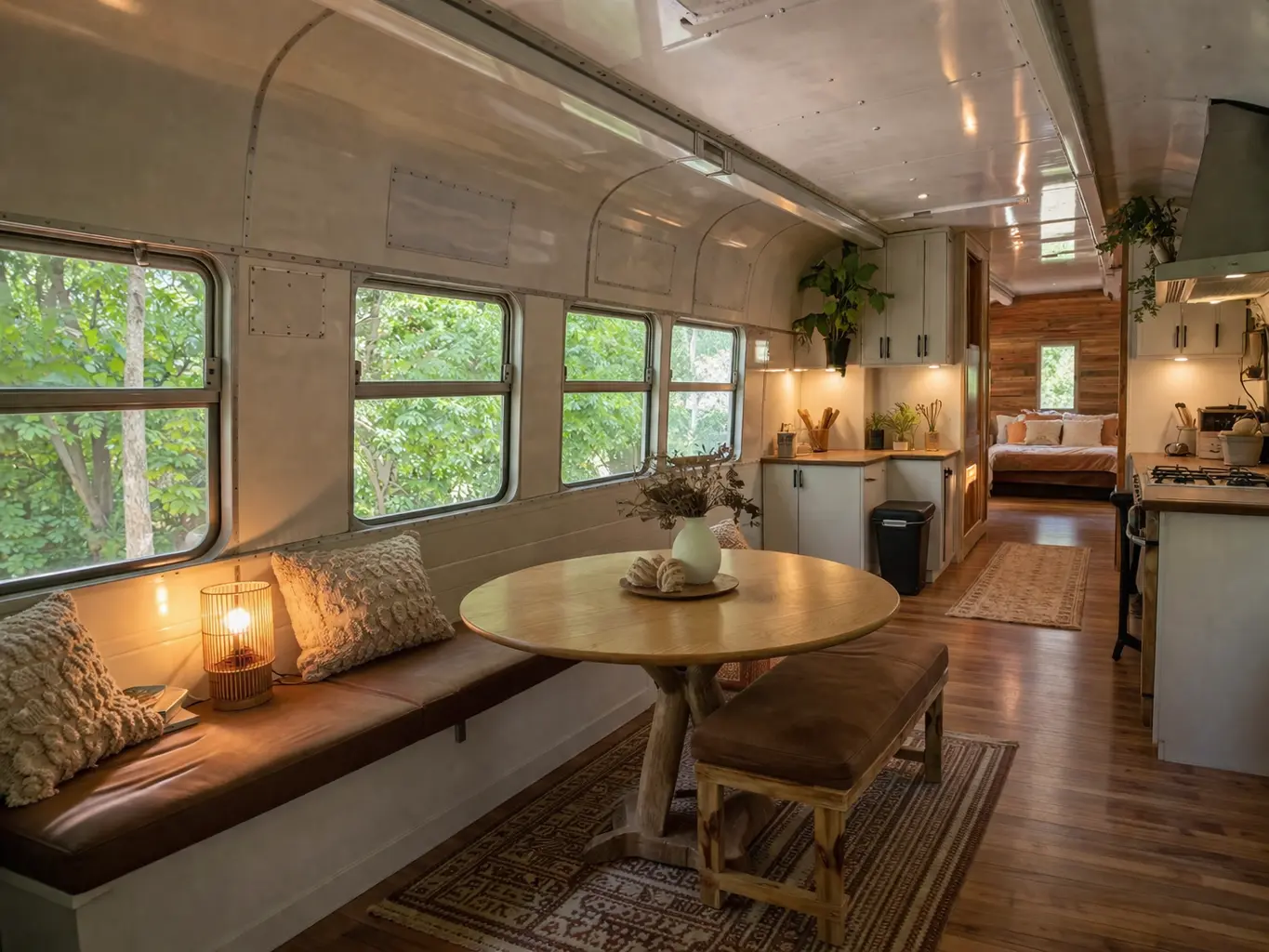 Because the train is narrow, Mila made sure the dining table earned its place. It isn’t just for meals. On some days, it’s her desk; on others, it’s where she sketches ideas, trims flowers, or sits with friends over coffee. A built-in bench on one side saves space, while the other side has a pair of chairs she repainted herself. A pendant lamp hanging low above the table gives the whole area a golden glow in the evenings, turning a simple dinner into something that feels unexpectedly special.
This middle section is where the home stops feeling like a novelty and starts feeling truly livable. You can picture mornings here, sleepy and slow. You can imagine someone chopping herbs, flipping through a notebook, or opening the door to let in fresh air. It is not just beautiful for the sake of being beautiful. It works, and that is what makes it convincing.
The Lounge Proved a Train Could Feel Surprisingly Cozy
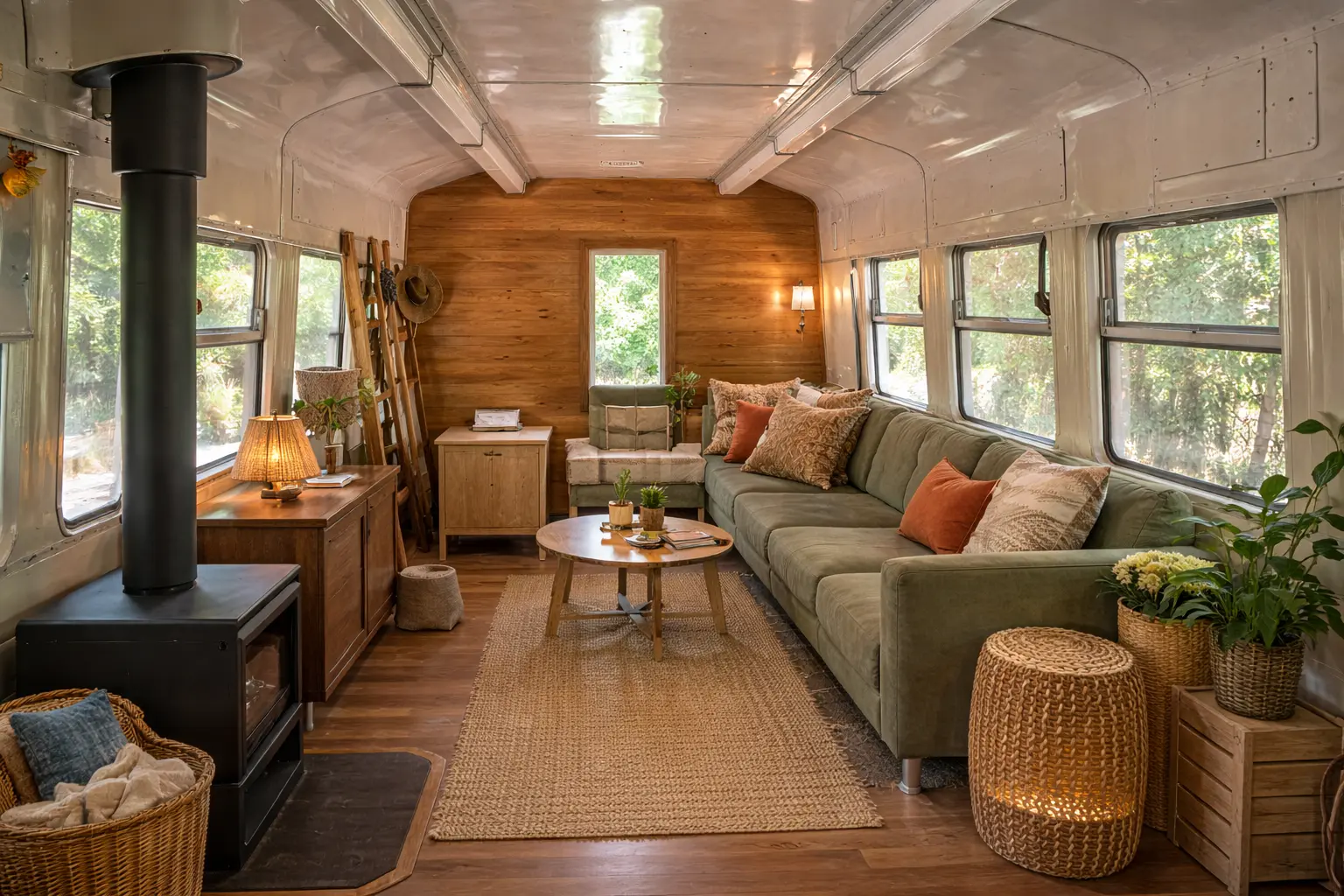
If the bedroom is the quietest part of Mila’s home, the lounge is the most inviting. She knew this section had to do a lot of work. It needed to feel comfortable enough for long evenings, stylish enough to match the rest of the carriage, and relaxed enough that visitors wouldn’t feel like they were sitting in a gimmick. So she built the room around comfort first. A deep sofa runs along one side, piled with textured cushions and soft blankets. Across from it, a compact shelf holds books, plants, and a small television, though Mila says the view outside usually wins. One of her favorite details is the little stove-style heater that gives the room its anchor. It instantly changes the mood, making the space feel less like a converted object and more like a proper home.
The genius of the room is in how natural it feels. Mila did not over-theme the train idea. There are no railway signs on the walls, no obvious jokes, no attempt to turn the place into a quirky set piece. Instead, she treated it like a real living room that just happens to sit inside a former carriage. That decision keeps the room grounded. It feels thoughtful rather than performative, which is probably why people respond to it so strongly when they see it for the first time.
At night, this part of the home becomes especially atmospheric. Lamps replace overhead lighting, the windows reflect the room back like dark mirrors, and the whole carriage takes on a cocoon-like quality. Mila says this is when she feels most grateful for the train. It doesn’t feel small then. It feels sheltered, close, and wonderfully separate from the noise of ordinary life.

Outside, She Finished the Story Without Losing the Charm
Mila quickly realized that living in a train meant thinking beyond the train itself. The outdoor area became essential, not as an afterthought, but as an extension of the home. She arranged a seating space just outside the carriage with a weathered bench, a few sturdy chairs, and planters filled with herbs and wild-looking greenery. There is something intentionally relaxed about it all. It doesn’t look heavily designed. It looks discovered, as if the home slowly spilled outdoors over time. On warm evenings, this is where she eats dinner, reads, or sits with friends as the light fades. The train gives the property its personality, but the outdoor space is what lets it breathe.
What makes Mila’s home so appealing is that it never feels like a stunt. Yes, the idea is unusual. Yes, people are immediately curious when they hear she lives in a converted train. But once they see the details, the story shifts. It becomes less about shock and more about choices. She chose warmth over size. Personality over convention. A memorable life over a standard one. And that is what makes the home linger in people’s minds. It is not just strange in an entertaining way. It is strangely believable. You can actually imagine living there.
For Mila, that might be the biggest success of all. She didn’t turn a train into a museum piece or a social media trick. She turned it into a place where mornings begin with sunlight through old windows and evenings end in a room full of soft light and familiar objects. In a world full of houses that look the same, she built one that feels impossible to forget.
Source: https://www.tips-and-tricks.co/home-and-garden/abandonedtrainhome/