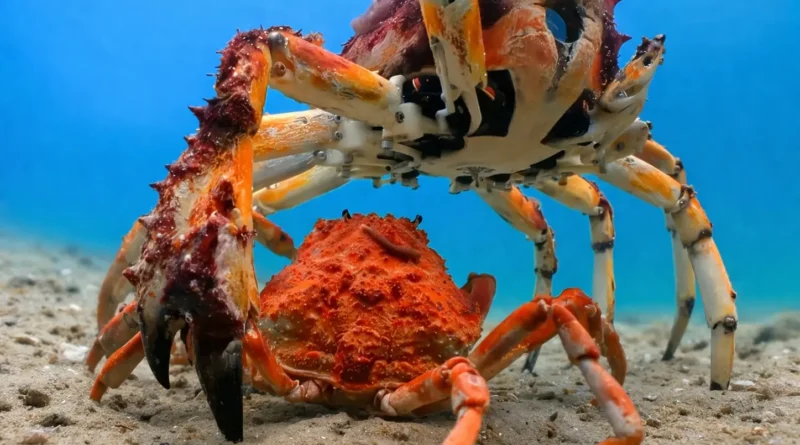
Scientists Placed a Single “Crab” Among Thousands—Then Something Bizarre Happened
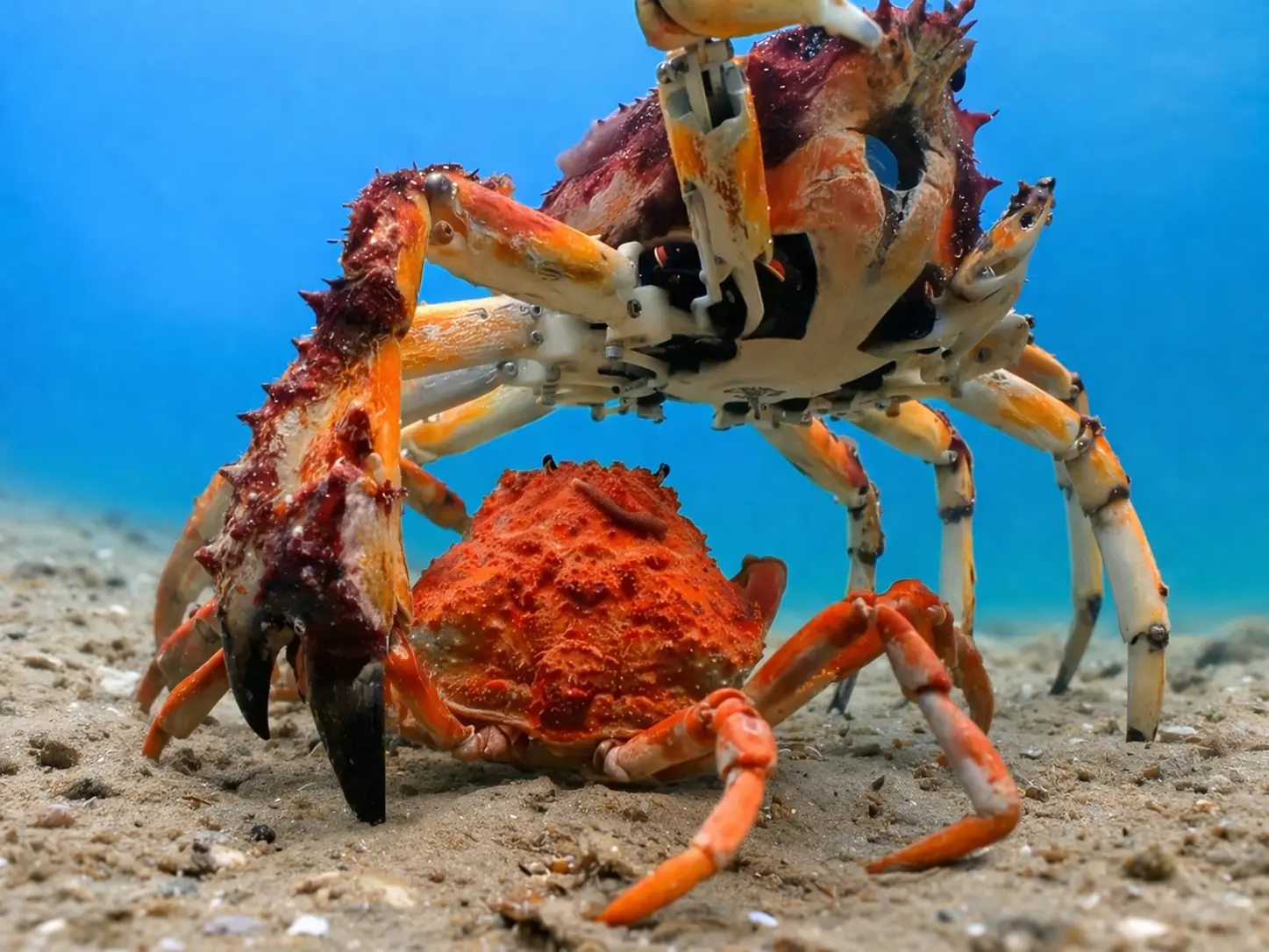
At first, the robot didn’t seem like anything too unusual. It was small, crab-shaped, and designed to move through the seafloor in a way that would let researchers quietly observe what wild crabs were doing without disturbing them too much. The idea was simple enough: if the robot could blend in just enough, it might help scientists get a closer look at how crabs behave when they think no one is watching.
And at first, that seemed to be exactly what was happening. The other crabs clearly noticed it almost immediately. Some approached cautiously. Others seemed to circle around it, pausing just long enough to inspect it before moving again. It didn’t seem like they were panicking or trying to attack it. If anything, they appeared… curious. That alone was already interesting. Because instead of ignoring the robot completely, the crabs seemed to accept it as something worth checking out.
But what happened after that was where the footage became much harder to explain. Because the moment things in the water started to change, the behavior of the entire group changed with it. And suddenly, all of the crabs started doing something no one expected.
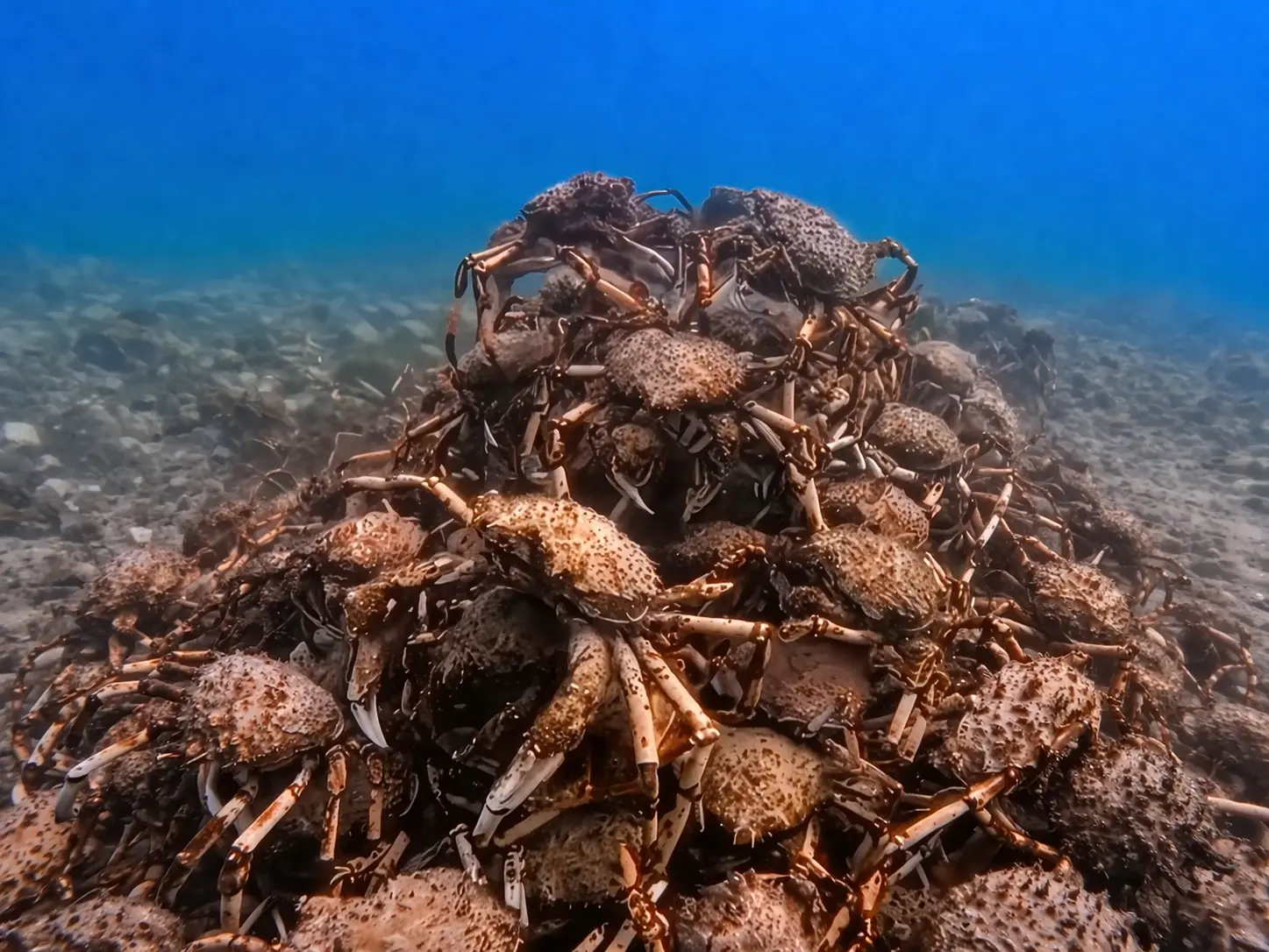
Without much warning, the crabs began clustering together in a way that looked strange at first — almost chaotic. Instead of scattering or trying to flee, they started piling on top of one another in a dense living mass across the seafloor. Legs, shells, movement everywhere. At a glance, it almost looked like panic. But the longer researchers watched, the more it seemed like something much more deliberate was happening.
This wasn’t random. It appeared to be a form of protection. Some crabs, especially those with softer or more vulnerable shells, seemed to be tucking themselves underneath the others while harder-shelled crabs remained more exposed on top. In other words, the pile may not have just been a crowding response — it may have been a survival strategy. And then the reason for it became obvious. A stingray had entered the area.
That changed the entire scene immediately. Because now what had looked strange a few seconds earlier suddenly started to make sense. The crabs weren’t piling together by accident. They were reacting to danger.
And the robot crab, unlike the others, had been left completely outside the pile. Which turned out to be a very bad place to be.
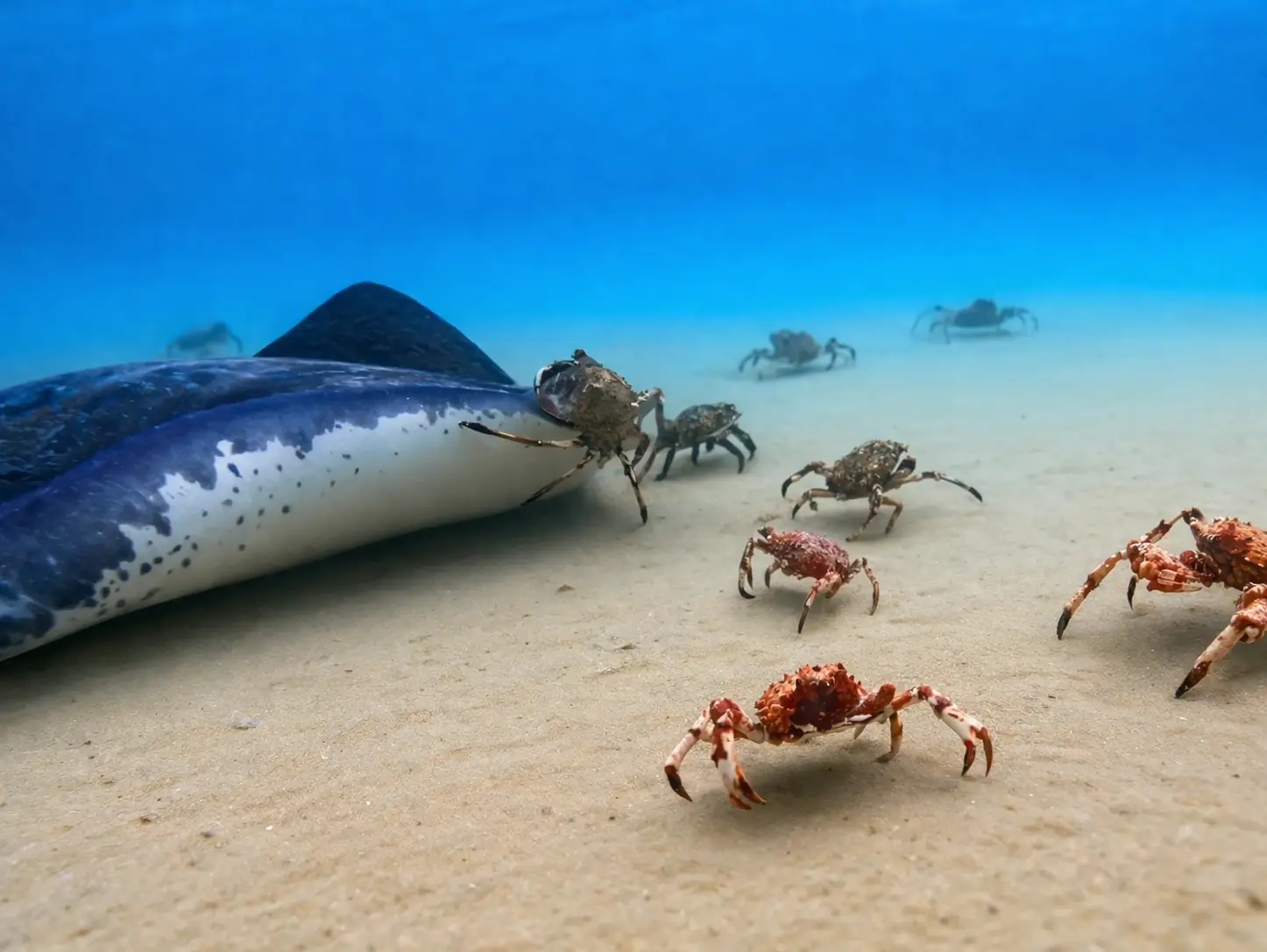
Once the stingray moved in, the difference between the real crabs and the robot became impossible to miss. The living crabs stayed tucked into their defensive pile, layered over one another in a way that made them much harder to reach. But the robot crab had no such protection. It remained exposed, separated from the group, and directly in the path of the predator. And almost immediately, the stingray went for it.
The footage showed the ray targeting the robot crab, nudging it, pushing at it, and eventually flipping it onto its back. For a moment, it looked like that was it. The robot had essentially been singled out and abandoned while the real crabs protected themselves. And honestly, that would’ve made perfect sense. Because why wouldn’t they? To them, this thing wasn’t really one of them. It was just some strange crab-shaped object that had wandered too close at the wrong time. But then something happened that changed the entire feel of the experiment.
Because the pile of crabs didn’t stay still. As the robot lay overturned and vulnerable, the others seemed to notice what was happening. And then, incredibly, they started moving toward it.
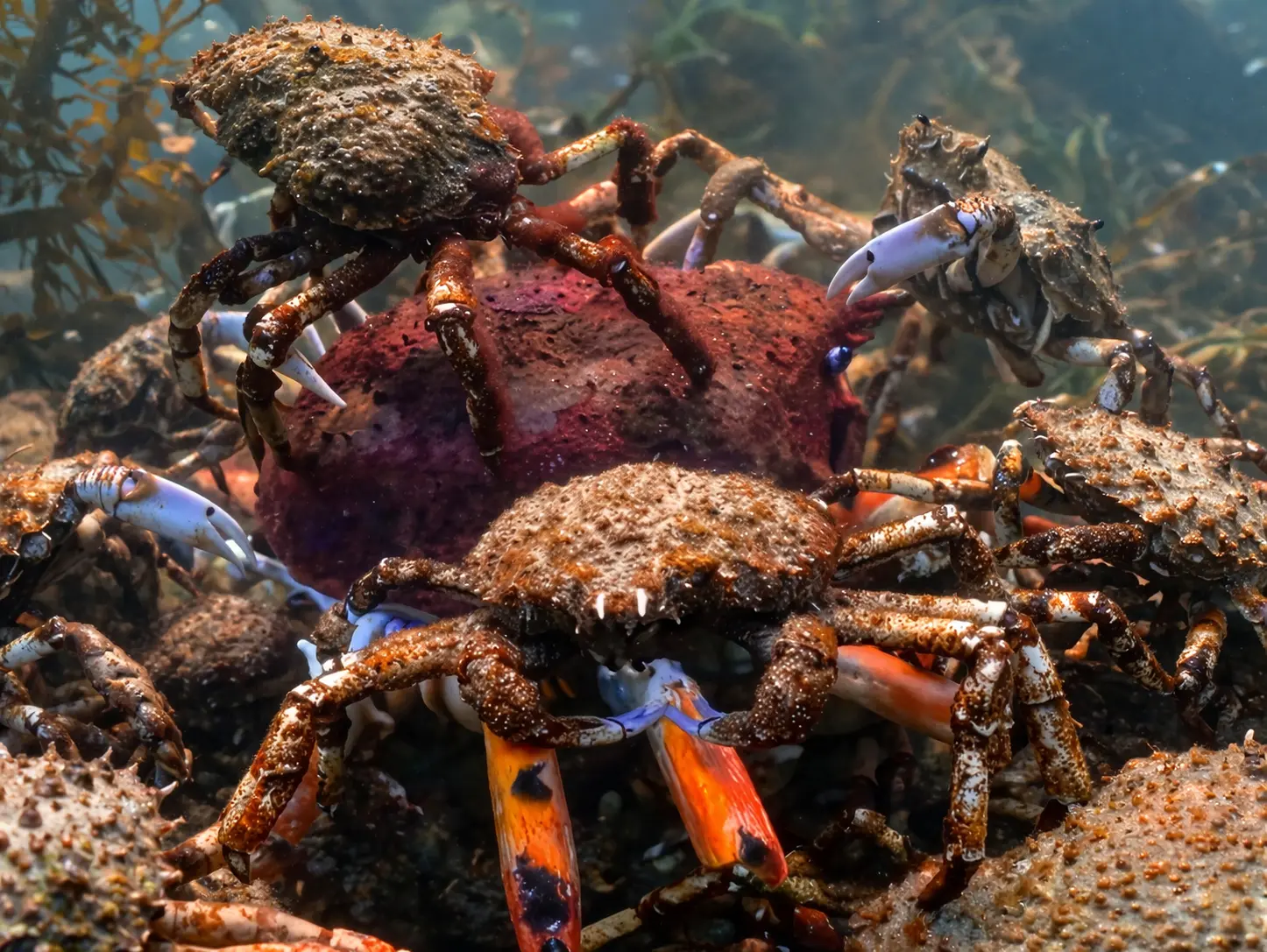
What happened next is the part that made the footage so surprising. Instead of continuing to ignore the robot crab, the other crabs appeared to break formation and rush toward it — almost as if they were responding to the same danger signal they would for one of their own. The same crabs that had piled together for protection now seemed to be extending that response outward, surrounding or moving toward the stranded robot after it had been attacked.
And that’s what made the moment so strange. Because whatever they were reacting to, it didn’t seem to matter that the crab wasn’t real. At least not in that moment. Whether it was movement, shape, instinct, or something about the situation itself, the real crabs appeared to respond as though the robot still belonged inside that protective behavior. And for researchers, that kind of reaction says something fascinating about how these animals may recognize vulnerability and danger underwater. It started as a simple attempt to study crab behavior more closely.
But by the end of it, the robot crab wasn’t just observing the group anymore. Somehow, it had become part of it. And that was the part no one expected.