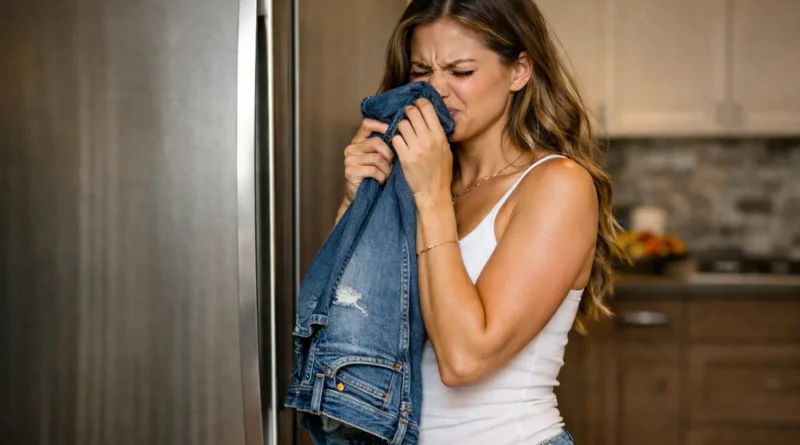
She Puts a Pair of Jeans in the Freezer Overnight – See What Happens the Next Morning
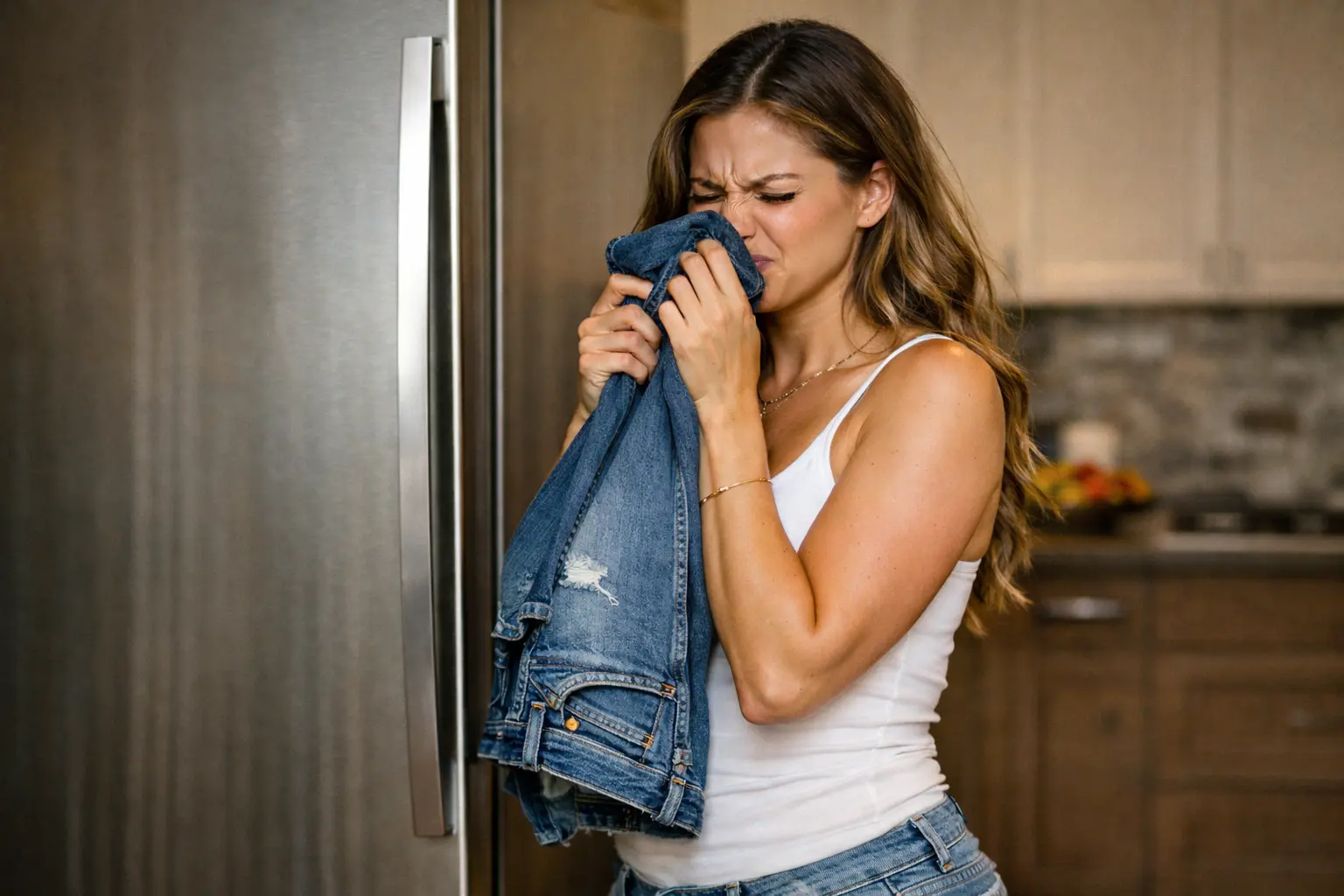
She had heard all kinds of strange laundry advice before, but this one sounded too odd to ignore. Instead of tossing her favorite jeans into the washing machine, she folded them neatly, slipped them into the freezer, and left them there overnight. By the next morning, she was eager to find out whether this unusual trick could really freshen up her denim, save her from an unnecessary wash, and maybe even change the way she cared for her clothes altogether…
Face it, there is something wildly appealing about the idea. Instead of tossing your favorite jeans into the washing machine and risking fade lines, stiffness, shrinkage, or that slightly off fit they sometimes get afterward, you slide them into the freezer and call it “care.” It sounds clever, a little rebellious, and just practical enough to feel like insider fashion wisdom. Besides, in skipping unnecessary wash cycles, the frozen jeans trick might help you save water, electricity, detergent, and the time and effort that come with doing a full load of laundry. And that is exactly why the frozen-jeans trick has stuck around for so long.
But here is where the story gets more interesting: washing less often is not the same thing as never washing, and it definitely is not the same thing as “freezing equals clean.” The real sweet spot lies somewhere between obsessive washing and freezer folklore. This article will walk you through why the trick is popular, what it actually does, what it definitely does not do, how to keep denim fresh between washes, and the unmistakable moments when a real wash can no longer be avoided.
What the Freezer Actually Does — And What It Absolutely Doesn’t
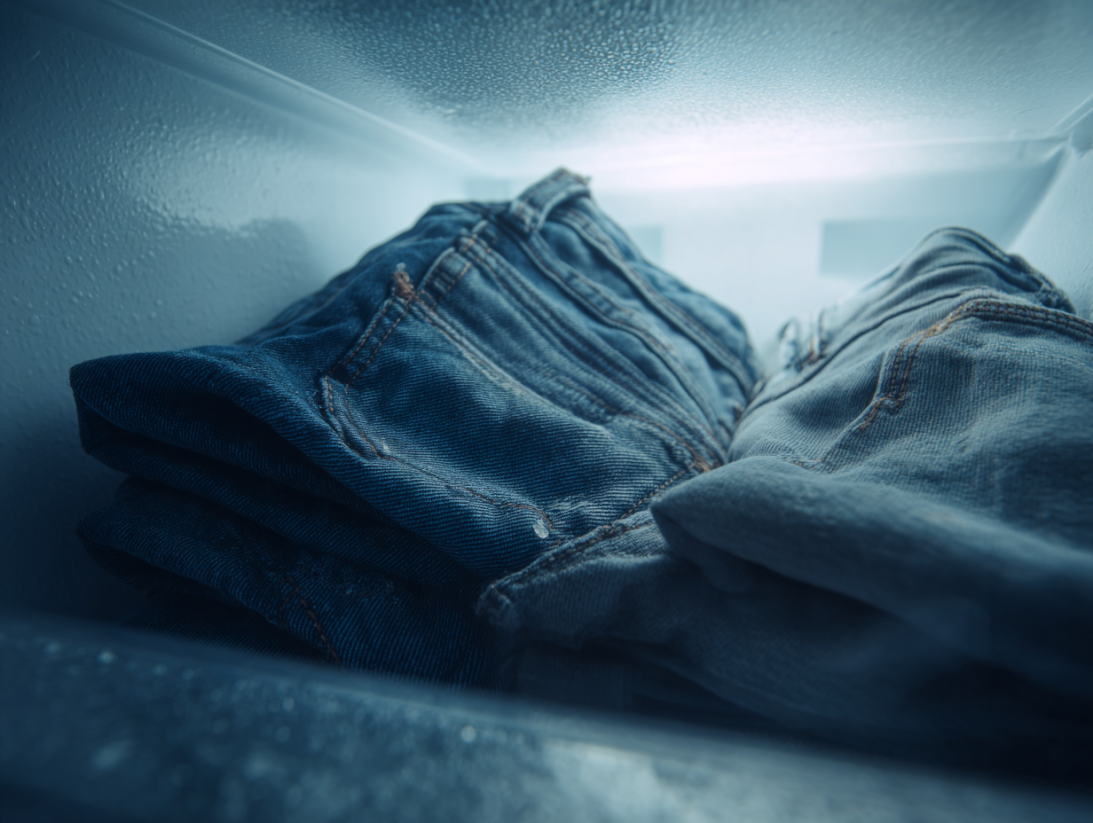
Let’s give the freezer trick its fairest possible hearing. If you put jeans in the freezer overnight, they may come out feeling crisp and briefly “refreshed.” The cold can temporarily dull odors, and that short-lived effect is probably one reason some people swear it works. But that is not the same as actually cleaning the denim. Odor-causing compounds and the grime that feeds future smells do not disappear just because the jeans got cold. Denim care experts note that freezing does not remove the molecules already embedded in the fabric, which is why any improvement tends to vanish once the jeans warm back up.
The bigger issue is hygiene. Freezing is not a substitute for soap and water. Experts say household freezers are nowhere near cold enough to sanitize jeans the way people imagine, and emphasize that freezing does not remove the debris that builds up through wear: dead skin cells, oils, sweat, dirt, and food residue. Those things do not just make denim feel grubby; they also create the conditions that allow odor and irritation to keep coming back. So even if the freezer gives your jeans a temporary pause button, it does not give them a genuine clean start.
That is the key distinction people miss. The frozen-jeans trick is not completely pointless in the sense that cold can momentarily mute the stink. But it is deeply overrated if you treat it like a washing machine replacement. Think of it as a theatrical pause, not a cleaning method. The denim may feel revived for a moment, but the wear, residue, and odor sources are still there waiting. If your jeans are genuinely dirty, the freezer is just delaying the obvious. Eventually, the machine wins.
If you want to learn of some general ways to keep your jeans clean without machine washing them frequently, click the next page.
General Ways to Keep Jeans Fresh Between Real Washes
If your goal is to make denim last longer without overwashing it, there are some other options apart from freezing. Start with the simplest one: air your jeans out properly between wears. Do not peel them off and throw them into a crumpled heap on a chair. Hang them up. Let moisture escape. Give the fabric room to breathe. Fabric-care guidance specifically recommends washing jeans less often, spot-treating stains, and airing them out between wears to extend their lifespan.
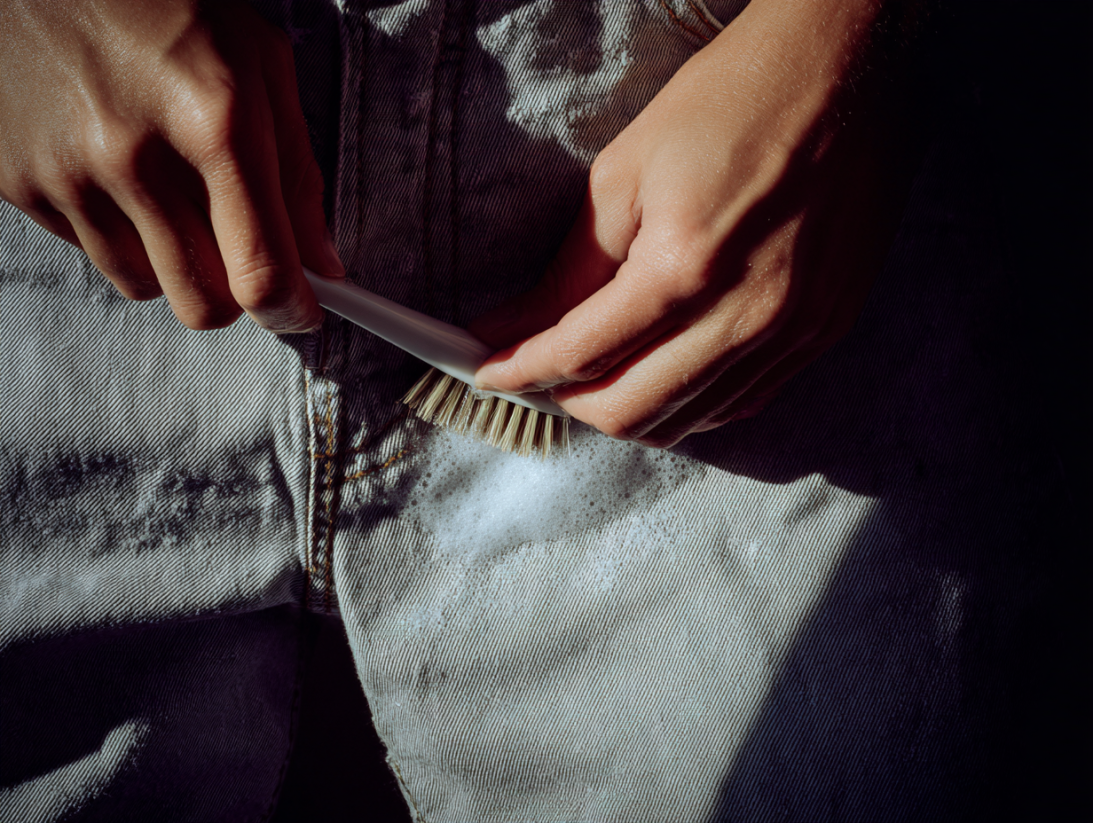
Spot cleaning is the real hero move. If you got a dab of sauce, a little coffee, or one mystery mark on the thigh, that does not mean the entire pair needs a full wash. Denim brands and care guides have long encouraged people not to over-wash jeans, because frequent washing can wear down color and affect the fit. Levi’s, for example, recommends washing denim sparingly and spot-cleaning small stains between washes. They ask wearers to use a damp cloth or an old toothbrush with mild soap to tackle small stains between washes. It is targeted, quick, and very logical, helping you avoid unnecessary machine wear while still dealing with the part that is actually dirty.
The mindset shift is simple: stop thinking in extremes. Your jeans do not need to be either “fresh from the washer” or “sealed in a freezer bag.” Most of the time, they need somewhere in between. Air them out. Brush off dry surface dirt. Spot-clean small marks. Save full washes for when the whole garment actually needs one. That approach preserves color and structure more effectively than frequent laundering, while also avoiding the hygiene fantasy that freezing somehow counts as cleaning. It is the grown-up version of denim care, and your best pair will probably look better for it.
Click the next page to learn when and how to wash your jeans to make them last longer.
 When a Real Wash Cannot Be Avoided Anymore
Experts recommend washing jeans when they are visibly soiled or stained, and also when you have been sweating enough that moisture has wicked into the fabric. That makes sense. A calm afternoon of desk work is one thing; a humid commute, festival day, long walk, or spill-heavy dinner is another. Not all “wears” are equal, so counting uses is less important than noticing what actually happened in them. Jeans that sit close to the skin for hours, collect more than just harmless dust. Denim can pick up oils, food particles, dead skin, and sweat. Excess bacteria on the skin can contribute to irritation, such as folliculitis. Fungal organisms, too, can transfer through clothing in some situations. You don’t need to panic-wash denim constantly, but “I don’t want the color to fade” should not outrank basic hygiene forever.
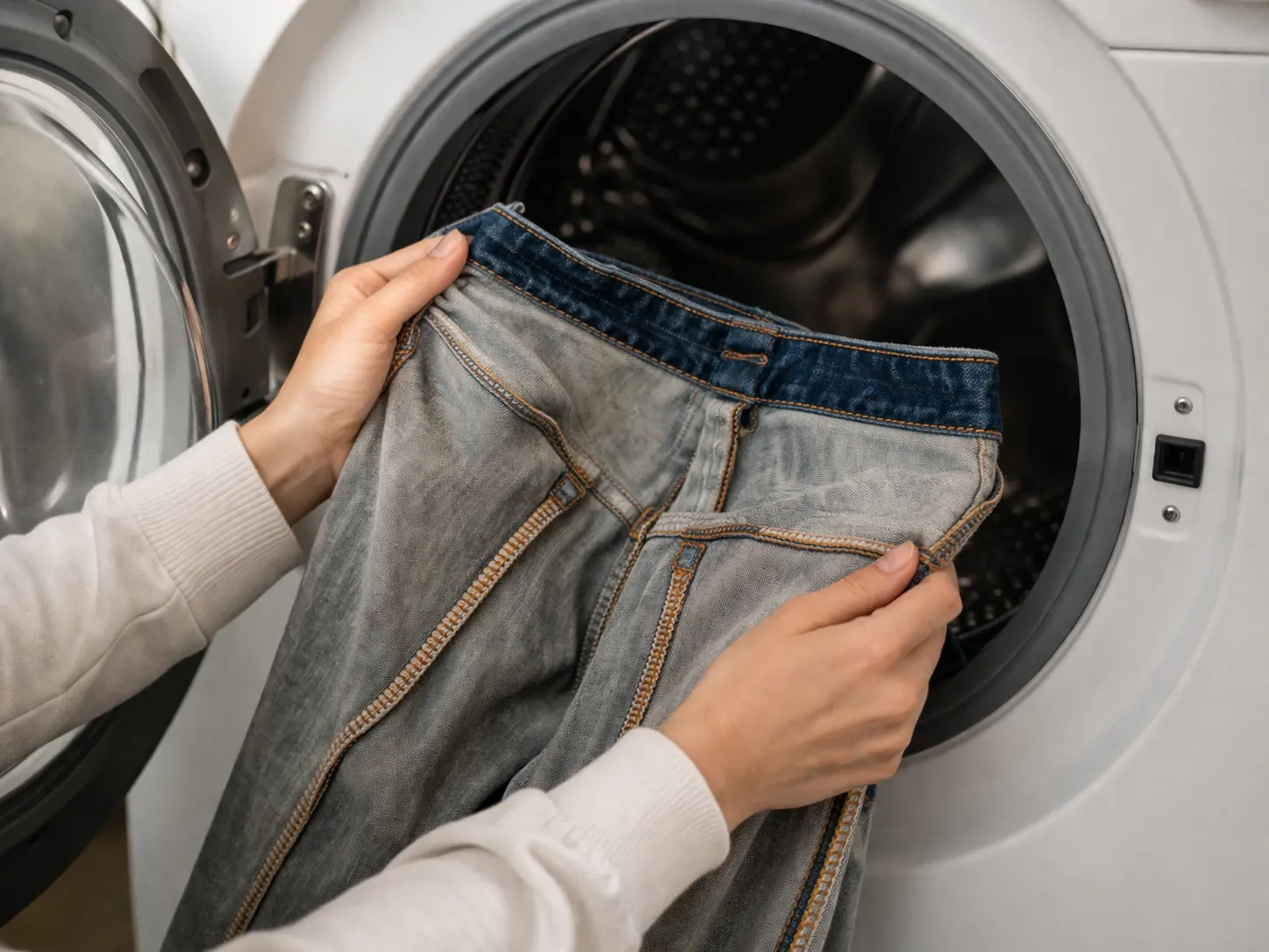
Current care guidance is pretty consistent on the basics of how to wash jeans: turn jeans inside out, close zippers and fastenings, use cold water, choose a gentle cycle, and air-dry whenever possible. Skip fabric softener to reduce fading and wear. If your jeans are dark, washing them inside out helps protect the outer surface from abrasion and color loss. Cold water is easier on the fibers and helps reduce bleeding. Air-drying is ideal because high heat can be harsh on denim and increase the chance of shrinkage or fiber damage. If you must use a dryer, use low heat and remove the jeans while they are still slightly damp. That small step can make a big difference in preserving the exact fit you love.
So what is the real answer to “How often should I wash my jeans?” It depends on how you wear them. Levi’s suggests sparse washing, around every 10 wears at most, to preserve fit and minimize sagging, while skin experts recommend a wash every two to three wears as a hygiene-minded rule of thumb. Those aren’t as contradictory as they sound. One is garment care advice; the other is skin-health advice. The sensible takeaway is this: wash less, yes, but do wash when your jeans have earned it.
Source: https://www.tips-and-tricks.co/lifehacks/frozenjeans/