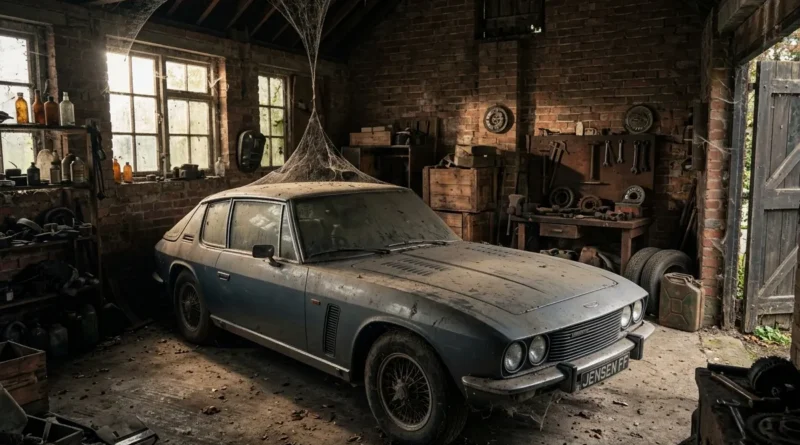
Rare Barn Find: This Revolutionary Car is Back After 30 Years of Inactivity!
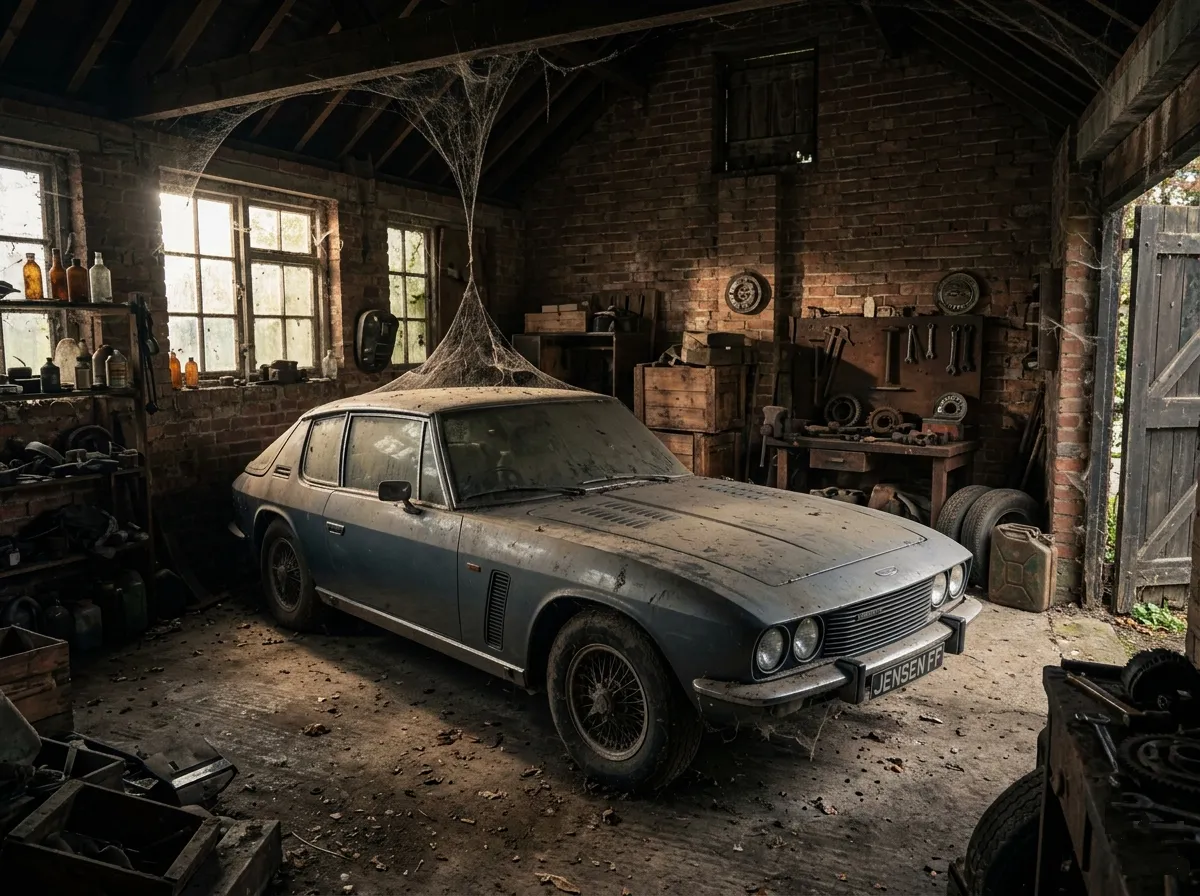
Some barn finds are exciting because of the dust, the mystery, and the feeling that a forgotten machine has somehow slipped through time. This one is exciting for another reason, too: the car itself was years ahead of its era. Hidden away since the late 1990s, a rare Jensen FF MkI has now re-emerged after roughly three decades of inactivity, still wearing its original finish, carrying its history, and reminding enthusiasts just how bold British engineering could be in the 1960s. When the owner, Mr. Pickard, passed away in 1997, his family made a simple decision. They parked the car in a garage, shut the doors, and left it untouched. That quiet choice turned the Jensen into a true time capsule.
To understand why this matters, you have to go back to 1966. At the London Motor Show, Jensen introduced the stylish Interceptor, a grand tourer shaped by Touring of Milan and blessed with real presence. But while the Interceptor drew admiration, the true technical showstopper was its lesser-known sister model, the Jensen FF. On the surface, the FF looked closely related to the Interceptor. Underneath, though, it was doing something the industry had barely dared to attempt in a production road car. The “FF” stood for Ferguson Formula, and that name signaled one of the most important breakthroughs of its time.
The Jensen FF became the world’s first production car with four-wheel drive, a remarkable achievement that arrived around fifteen years before Audi would turn Quattro into a household name. Its system sent power to both axles, with a roughly 37/63 front-to-rear split, helping the big GT deliver its performance with more control and confidence. And that was not the end of the story. The FF also introduced Dunlop Maxaret anti-lock braking to a production car, making it one of the earliest road-going pioneers of ABS technology. In the late 1960s, that was borderline science fiction. Today, features like all-wheel drive and anti-lock brakes are taken for granted. Back then, Jensen was building the future and wrapping it in a handsome British body with Italian flair.
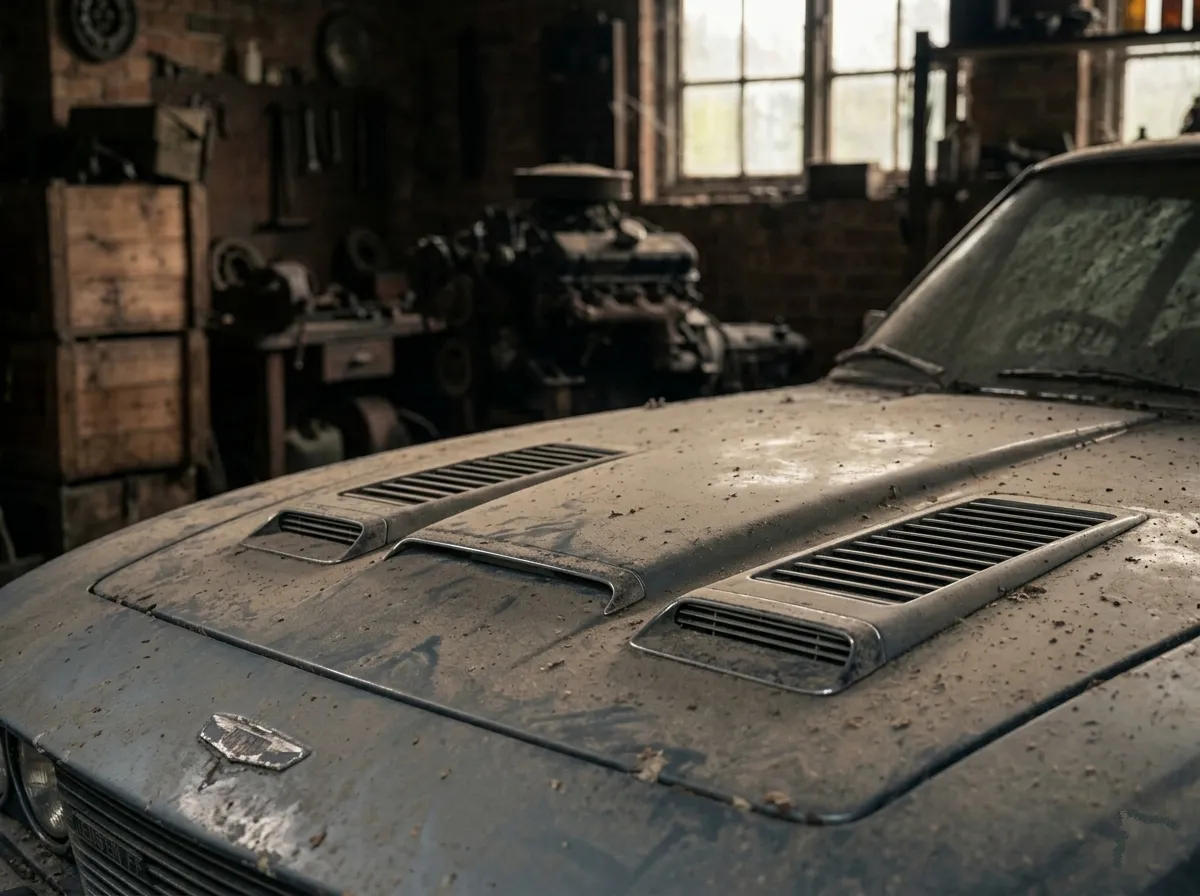
The mechanical package only made the Jensen FF more fascinating. Beneath its long, slightly extended bonnet sat a mighty 6.3-liter Chrysler V8, also known as the 383 cubic-inch unit, producing around 330 horsepower. It was paired with a Torqueflite three-speed automatic gearbox, giving the car the kind of effortless muscle that suited a grand tourer perfectly. This was not some delicate experimental machine. The FF combined brute American V8 power with advanced traction and braking technology in a way few rivals could even attempt. The bonnet itself had to be modified with dual vents and a noticeable power bulge to accommodate the extra hardware that came with the four-wheel-drive setup, making the car subtly different from the Interceptor.
That ambitious engineering helped the FF earn major praise in its day, even taking home the Car of the Year title in 1967. Yet brilliance did not make it common. The problem was the price. A Jensen FF cost roughly fifty percent more than a standard Interceptor, which immediately pushed it into a tiny niche. Buyers loved innovation, but they also had limits, and the FF was pricy. Between 1966 and 1971, only 320 pieces were built in total. Of those, just 195 belonged to the first-generation MkI series. In other words, this was never a car you stumbled across casually, even when it was new. Decades later, finding one is even more notable.
The newly rediscovered car is chassis 119/103, finished in the understated shade Mist Grey. It was ordered new on January 30, 1969, by Mr. St Pickard through a local Jensen dealer. He reportedly paid £5,600 for it, a huge sum at the time and the equivalent of well over £113,000 today. To complete the deal, he traded in his 1962 Mercedes-Benz 220SE. That detail alone says plenty about the kind of customer Jensen was attracting. This was not an impulse buy. It was a deliberate purchase by someone who wanted something special, modern, powerful, and capable in a way ordinary GT cars simply were not.
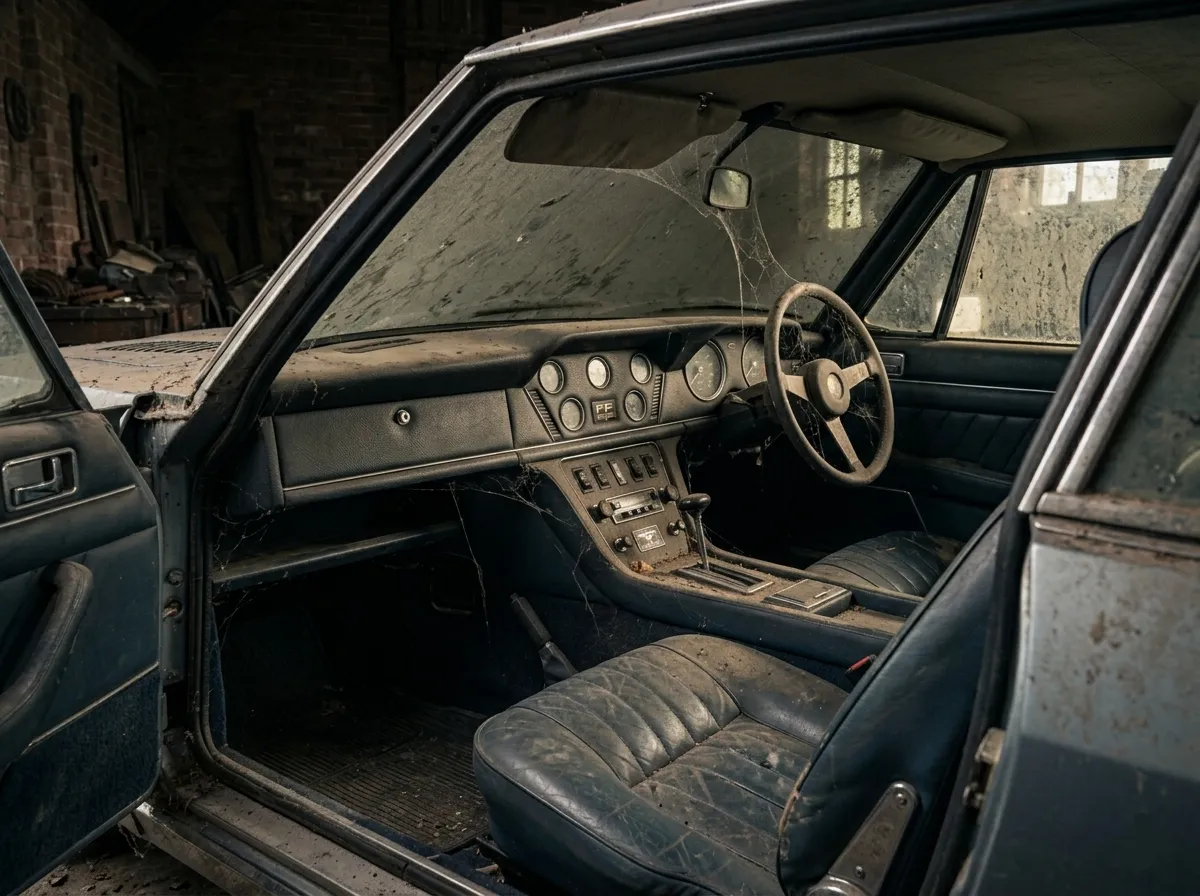
Mr. Pickard didn’t buy the Jensen FF as a collector’s toy or a weekend conversation piece. He owned several quarries in Staffordshire and wanted a comfortable, capable, all-weather car that could take him to construction sites and excavations without fuss. The FF’s advanced drivetrain was not just an engineering talking point. It made good sense for his use. He even specified fog lights and loud air horns, small additions that suited a man who wanted his expensive GT to handle the realities of work, weather, and rough surroundings. In effect, it was a highly advanced British grand tourer with Italian styling and an American V8, being used as a serious, working machine. Over the years, Pickard drove the car extensively while also maintaining it carefully. In 1973, he moved to the Isle of Man. By his death in 1997, the odometer showed around 60,000 miles, close to 100,000 kilometers. After he died, his daughter inherited the Jensen, returned it to the mainland, and stored it in a dry garage on an estate. There it remained, undisturbed, for about thirty years.
That is exactly what makes this barn find so compelling. It has survived in the condition its owner effectively left it in, with its story still attached. The Mist Grey paint might have been covered in dust and cobwebs, but beneath that layer was the original finish rather than a modern redo. The interior was well-preserved and authentic, which is rare enough on its own. Even more impressive was the paperwork that stayed with the car. The original keys were still there. So were the green registration logbook, service invoices, historical records, and even the original purchase receipt. For collectors, historians, and enthusiasts, that kind of documented continuity is almost as valuable as the machine itself.
The car was eventually taken to the Race Retro 2026 event. Even though the engine had not run in decades and the future owner would be taking on an expensive and complex project, bidding still reached an impressive £30,375, equivalent to €35,000. Buyers weren’t just paying for metal, leather, and a dormant V8. They were paying for rare originality, and a car that quietly rewrote the rulebook long before the rest of the industry caught up. The Jensen FF was revolutionary when it was new, and this rediscovered piece proves it still has the power to stop people in their tracks. After thirty years in the dark, that may be the most fitting comeback of all.
Source: https://www.tips-and-tricks.co/online/barnfindjensen/