Are You Styling Your Hair Wrong? Here are 5 Fine Hair Fails to Stop Right Now
Have you ever spent an hour perfecting your blowout, only for it to fall completely flat before you’ve even finished your morning coffee? If you have fine hair, you know the struggle all too well. It’s a delicate balance: you want volume without the frizz, moisture without grease, and style without the breakage. Often, we try so hard to “fix” our hair that we inadvertently fall into habits that make it look thinner, flatter, and more tired than it actually is.
The truth is, fine hair isn’t “difficult”—it’s just misunderstood. It requires a different set of rules than thick or curly manes. In the following pages, we’re pulling back the curtain on the most common styling blunders that are secretly sabotaging your strands. From the way you wash to the tools you trust, these small shifts in your routine will help you stop fighting your natural texture and start flaunting it.
Ready to reclaim your volume? Let’s dive into the five mistakes you might be making right now.
The “Heavy-Handed” Hydration Trap
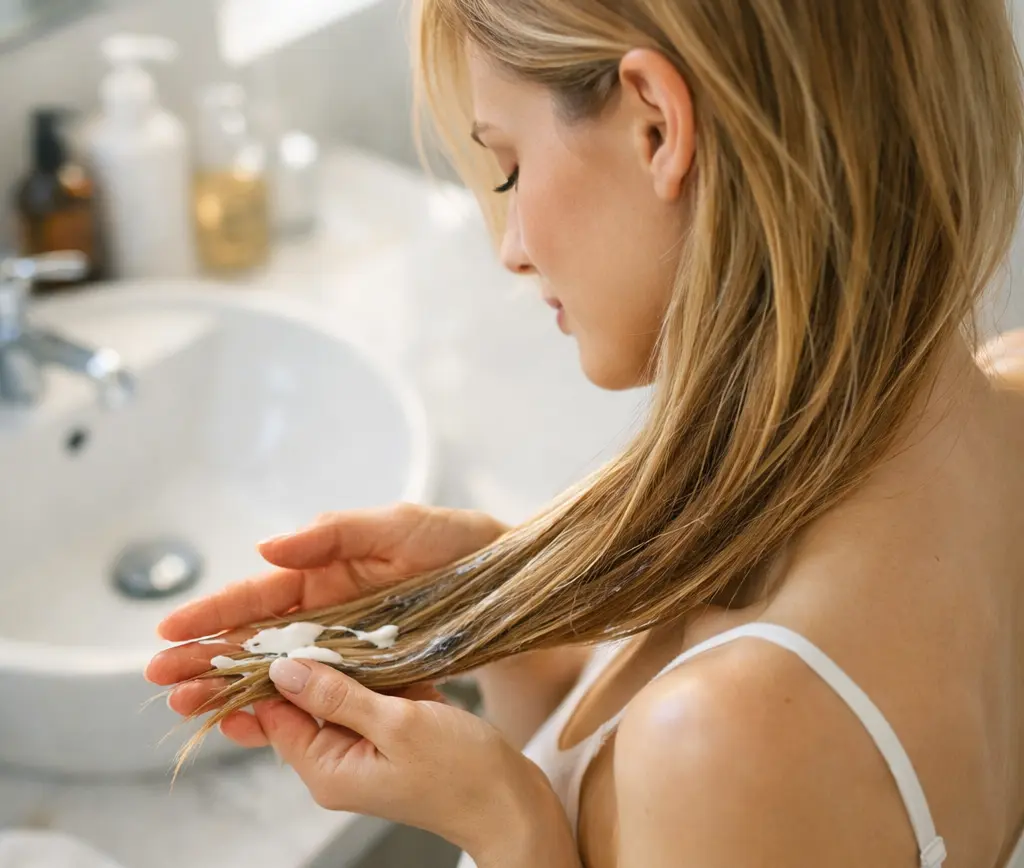
We all want that silky, commercial-ready shine, but for those of us with fine strands, there is a very thin line between “hydrated” and “heavy.” One of the most common mistakes happens before you even step out of the shower. Slathering conditioner from root to tip is a recipe for a flat-hair day. Fine hair is easily weighed down by the oils and silicones found in moisturizing products, which can leave your scalp looking greasy and your volume non-existent by noon.
Instead, think of your conditioner as a treatment for your ends only. Start from the mid-lengths and work your way down, avoiding the scalp entirely. Your natural oils are usually enough to keep the hair near the roots healthy. Additionally, ensure you rinse for at least 30 seconds longer than you think you need to. Any leftover residue acts like an anchor, pulling your hair down and making it look much thinner than it actually is.
The High-Heat Volume Myth
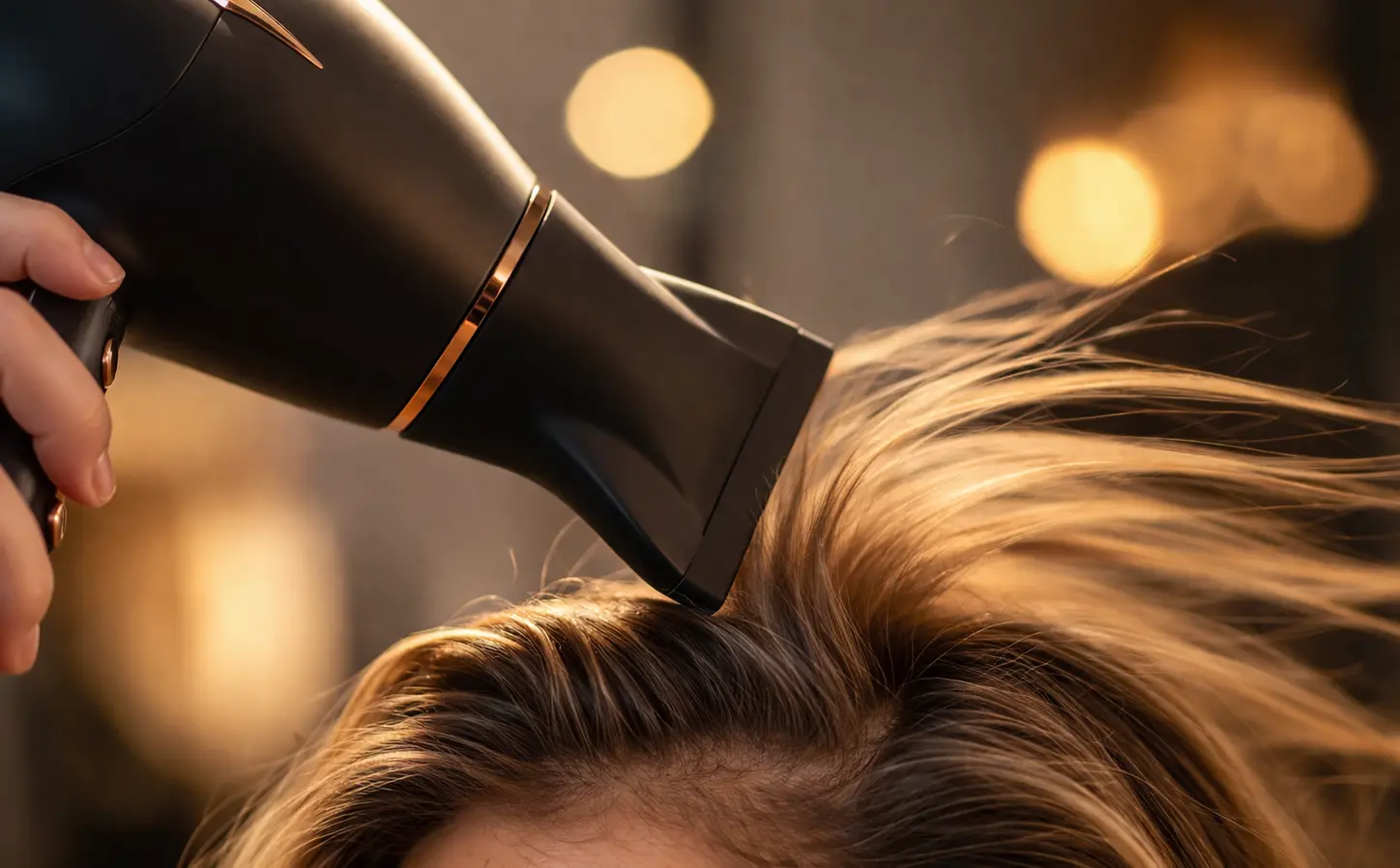
It is tempting to crank up the temperature on your curling iron or flat iron, thinking that more heat equals a more “set” and voluminous style. However, fine hair is delicate; its diameter is smaller, meaning the internal structure reaches high temperatures much faster than coarse hair. When you use excessive heat, you aren’t just styling; you are potentially “parching” the hair, leading to breakage and fried ends that look wispy rather than full.
To keep your hair looking thick and healthy, turn the dial down. Most fine hair can be styled effectively at temperatures below 150°C (300°F). Always apply a lightweight heat protectant spray first—one specifically formulated for fine hair so it doesn’t add weight. If you’re using a blow dryer, try flipping your head upside down and focusing the air at the roots. This uses gravity to your advantage, creating “lift” without needing to scorch your strands into submission.
Over-Brushing and the Wrong Tool
There is an old myth that brushing your hair 100 times a day leads to health and shine. For fine hair, this is actually a one-way ticket to thinning. Fine hair is prone to mechanical breakage, and over-brushing—especially with the wrong tools—can snap delicate strands and cause unnecessary shedding. Using a brush with stiff, plastic bristles can tug at the scalp and tear through tangles with too much force.
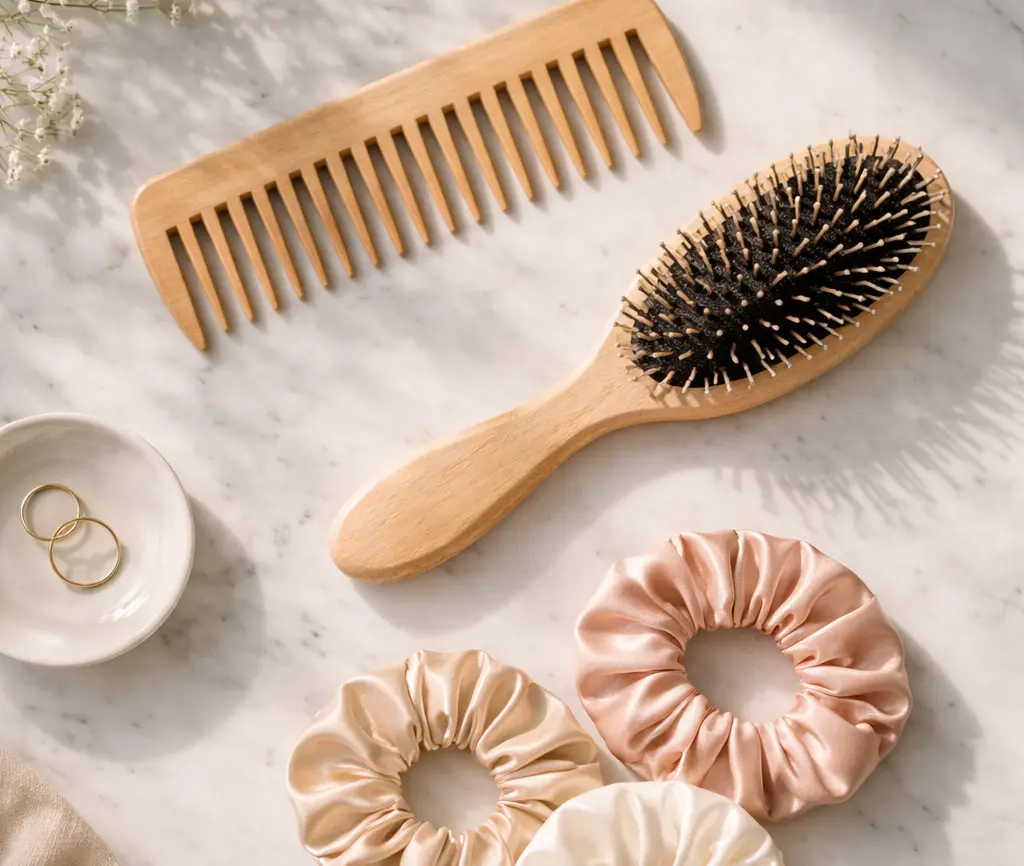
The fix is a simple tool swap. Reach for a wide-tooth comb when your hair is wet, as that is when it’s least vulnerable to stretching and snapping. For dry styling, a brush with soft boar bristles or flexible “tangle-teezer” style teeth is much kinder. When you do brush, always start at the tips and move upward toward the roots. This “bottom-up” technique ensures you aren’t pushing a small knot down into a giant one, keeping your hair on your head where it belongs.

The Product Overload Over-Correction
When your hair feels limp, the instinct is to reach for every volumizing mousse, root-lift spray, and dry shampoo in your cabinet. We’ve all been there—hoping that more product equals more height. But here’s the irony: using too many “volumizing” products creates a “product-on-product” buildup. Eventually, that buildup becomes heavy, and by the end of the day, your hair looks dull, feels “crunchy,” and sags under the weight of its own “help.”
The goal for fine hair is “functional minimalism.” Pick one hero product, like a lightweight mousse, and distribute it evenly. If you love dry shampoo for texture, use it sparingly and ensure you’re using a clarifying shampoo once a week to strip away the invisible layers of gunk that accumulate. When your hair is truly clean and free of buildup, it has a natural bounce and lightness that no amount of spray can replicate.

The “Safe” One-Length Cut
Many people with fine hair stick to a blunt, one-length cut because they’ve been told it makes the ends look thicker. While a solid baseline is great, a total lack of movement can actually backfire. Without any internal shape, fine hair can look “curtain-like”—heavy at the bottom and completely flat against the scalp. This lack of dimension often emphasizes the lack of density rather than hiding it.
The secret weapon for fine hair is “invisible layers” or “ghost layers.” These are subtle, soft layers cut into the interior of the hair to create movement and lift without sacrificing the thickness of your ends. If you’re feeling bold, a shorter style like a “bixie” or a structured bob can also do wonders; removing the weight of long hair allows your roots to stand up taller. Don’t be afraid of the shears—sometimes, losing a little length is the fastest way to gain a lot of volume.
Source: https://www.tips-and-tricks.co/fashion-and-beauty/flathairmistakes/