
Many People Assume Neck Pain Comes With Age — But This Common Cause Is Often Overlooked

At first, it didn’t seem like anything unusual. She’d wake up, turn her head, and feel that same familiar stiffness again. Some mornings it was just a dull ache. Other times it felt tight enough to make getting out of bed oddly uncomfortable. It wasn’t severe. Just annoying. And because it kept happening in small ways, it was easy to explain away. Maybe she had slept in a strange position. Maybe it was stress. Maybe it was just one of those things that starts happening more often with age and slowly becomes part of the routine.
That’s what made it so easy to ignore. After all, a lot of people wake up with little aches and stiffness here and there. Most don’t immediately assume there’s a specific reason behind it. But over time, it became harder not to notice. Because it wasn’t random anymore. It kept showing up in the same place, in the same way, often first thing in the morning.
And once she finally realized what might actually be behind it, the answer felt almost embarrassingly obvious.

One of the most frustrating things about neck pain is how easy it is to blame on everything else. People often assume it must be bad posture, too much screen time, stress, or simply “sleeping wrong.” And to be fair, all of those things can play a role. But that’s also what makes this kind of discomfort so easy to brush off. You tell yourself it’ll go away on its own. Then the same thing happens again the next morning. That’s when people usually start noticing a pattern.
The pain tends to be worst right after waking up. It eases a little as the day goes on. Then it comes back again after another night in bed. That detail matters more than most people realize. Because when discomfort keeps showing up after sleep, it often points to something happening during the night — not just during the day. And that’s where a lot of people miss the real issue. It may not be your mattress.
It may not even be your sleeping position alone. Sometimes, the problem is much closer to your head than you think.
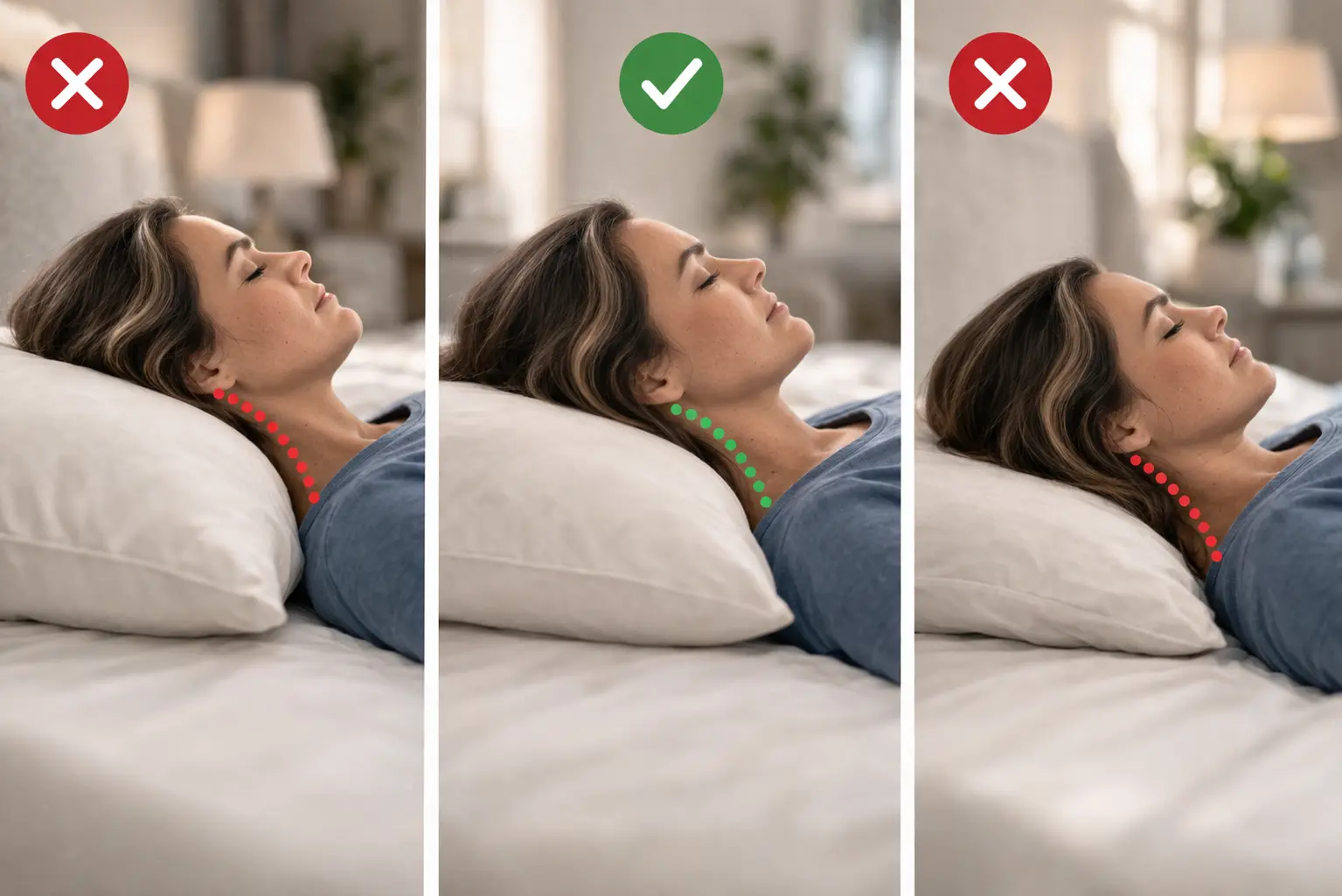
In a lot of cases, the real issue is the pillow. Not just whether you use one — but whether it’s actually supporting your neck the way it should. A pillow that’s too high can push your neck into an awkward angle for hours. One that’s too flat, too soft, or worn out may let your head sink without enough support. Either way, your neck can end up spending the whole night slightly out of alignment — and that strain tends to show up by morning.
Health sources like Harvard Health and Cleveland Clinic note that pillows that are too soft, too firm, or poorly matched to how you sleep can contribute to neck discomfort. That’s also why sleep position matters. Side sleepers usually need more height to fill the space between the shoulder and head, while back sleepers often do better with something lower that keeps the neck neutral. Stomach sleeping is often the roughest on the neck because it tends to twist or extend it for long periods.
And once you start thinking about it that way, the pattern starts making a lot more sense.

The good news is that this is one of those problems that’s often easier to improve than people expect. You don’t necessarily need a whole new sleep setup. But you do want to pay attention to a few simple signs. If your pillow is flattened out, lumpy, constantly folded in half, or you keep adjusting it all night to “make it work,” that’s usually a clue something’s off. Sleep experts generally suggest replacing many pillows every 1 to 2 years, since older pillows can sag and lose support over time.
A better pillow won’t fix every kind of neck pain, but if the issue keeps showing up in the morning, it’s one of the smartest places to look first. And if pain is severe, follows an injury, lasts for weeks, or comes with tingling, weakness, fever, or pain that shoots into the arms or legs, that’s a good sign to check in with a clinician instead of just changing your bedding.
Sometimes the things we assume are “just part of getting older” turn out to be much more fixable than they seem.