
This 15-Minute Toilet Fix Is Something Plumbers Won’t Tell You About

A running toilet is one of those household problems people tend to ignore for longer than they should. At first, it just sounds like a small annoyance — a bit of water movement, a faint hissing sound, maybe the occasional refill noise long after no one has used it. Easy to put off. Easy to assume it’s not a big deal. But over time, it can become one. Because even a minor toilet leak can quietly waste a surprising amount of water, and in some cases, that means a higher bill for a problem that often turns out to be much simpler than people expect.
That’s the good news. A running toilet doesn’t always mean you need a plumber, expensive repairs, or some complicated DIY job involving tools and parts you’ve never heard of. In a lot of homes, the cause is something small inside the tank that has shifted, worn down slightly, or stopped sealing the way it should. And if that’s the case, there’s a good chance you can fix it yourself in less time than you’d think.
You just need to know what to look for first.
What Usually Causes It
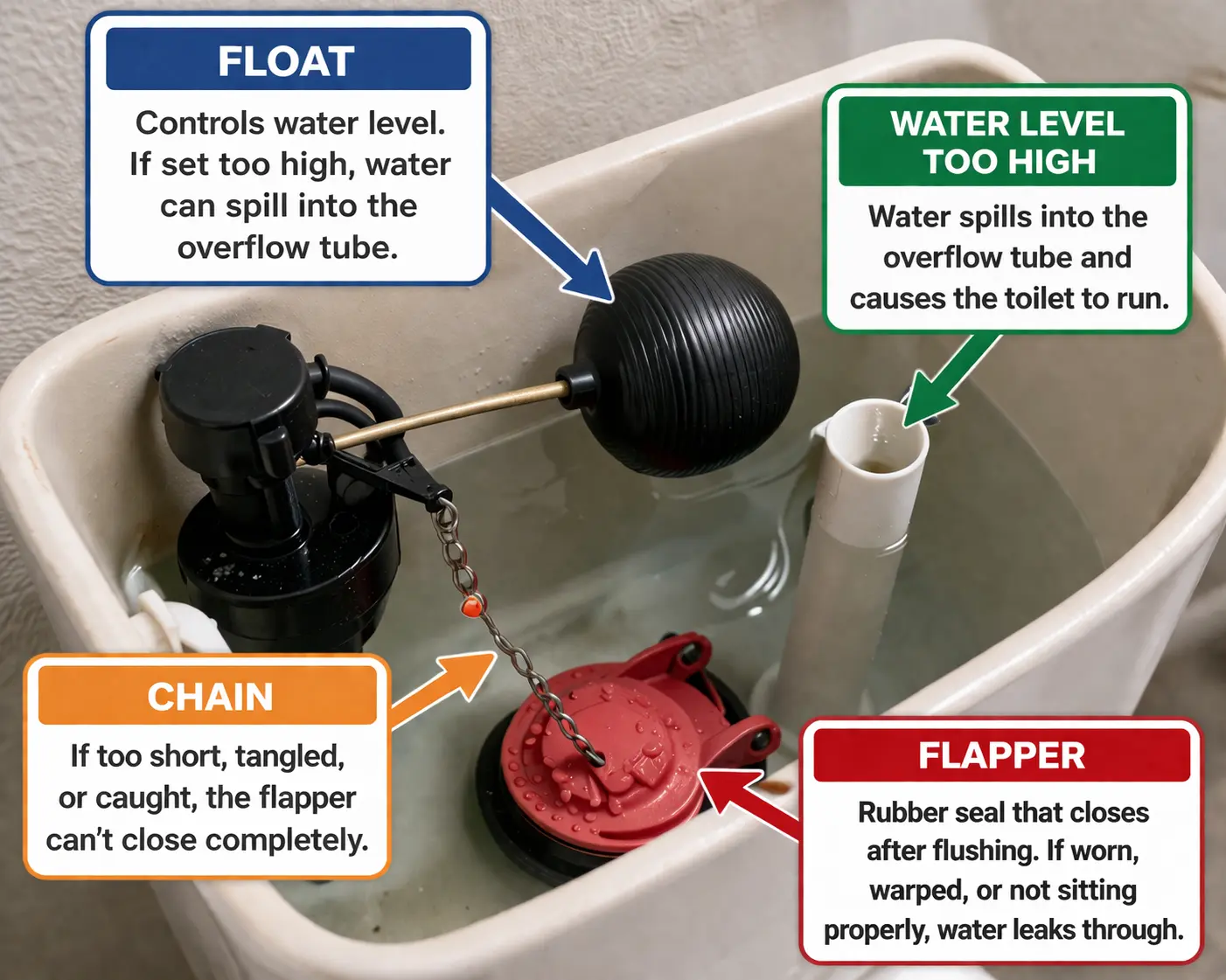
In many cases, a running toilet comes down to one of just a few very common issues inside the tank. The first is usually the flapper — the rubber piece at the bottom of the tank that lifts when you flush and then drops back down to seal the water in. If it doesn’t sit properly, or if it’s slightly worn or warped, water can keep leaking through even after the flush is over. Another common cause is the chain attached to it.
If that chain is too short, tangled, or caught awkwardly, it can stop the flapper from closing all the way. Then there’s the float, which helps control how high the tank fills with water. If the water level is too high, it can keep spilling into the overflow tube and make the toilet run continuously even when nothing looks obviously wrong. That’s why this fix is often easier than people expect. Because once you remove the tank lid and look inside, the problem is usually visible within a minute or two.
And more often than not, it only needs a small adjustment — not a full repair.
The 15-Minute Fix
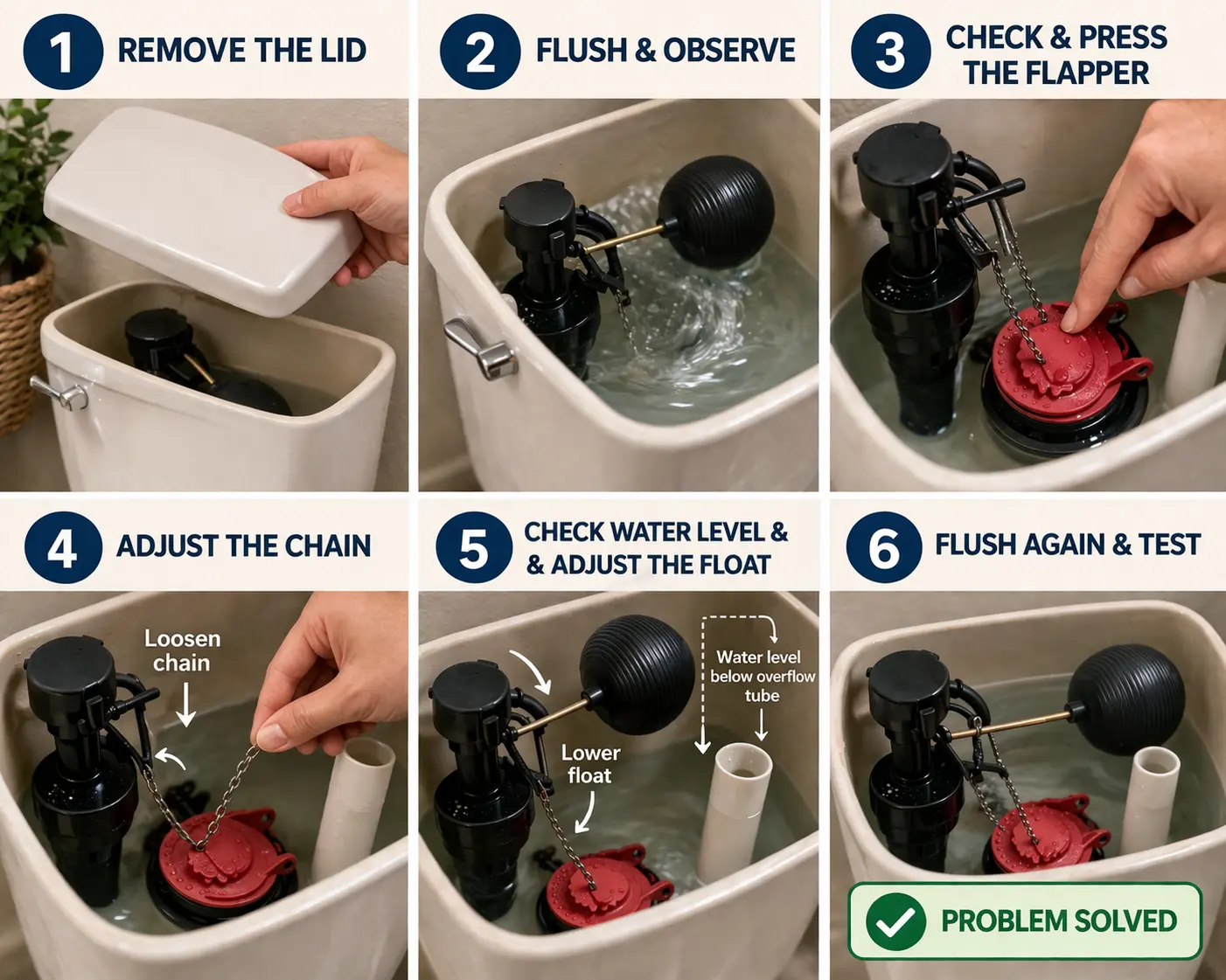
Start by taking the lid off the toilet tank and setting it somewhere safe. Then flush the toilet once and watch what happens inside as the tank refills. You’re looking for anything that doesn’t seem to reset properly after the flush is done. If the flapper at the bottom doesn’t close fully, press it gently into place. Sometimes it just isn’t sealing properly. If the chain looks too tight, twisted, or caught on something, loosen it so the flapper can drop naturally without being pulled upward.
Then check the water level. If the water keeps rising high enough to spill into the overflow tube, adjust the float slightly downward so the tank stops filling a bit sooner. On many toilets, that can be done with a small screw or clip adjustment depending on the model. Once you’ve made those changes, flush again and wait. If the water stops running and the tank fills normally without continuing to trickle, you’ve probably solved the issue. And in many cases, that’s all it takes.
Not a plumber. Not a major repair. Just a quick adjustment most people never realize they can do themselves.

When It’s Time to Call Someone
If you’ve adjusted the flapper, chain, and water level and the toilet is still running, that usually means one of the parts may be too worn out to keep doing its job properly. And at that point, you’re still not necessarily dealing with a major repair — but it may be time to replace a small part rather than keep adjusting it. For example, if the flapper is cracked, stiff, or no longer sealing even when it looks like it’s sitting correctly, it may simply need replacing. The same goes for fill valves or floats that no longer respond the way they should.
That’s usually when it makes sense to either:
- replace the faulty part yourself
- or call a plumber if you’d rather not deal with it
The important thing is not to keep ignoring it. Because a toilet that keeps running isn’t just noisy — it can quietly waste water every single day without you realizing how much it adds up over time. And honestly, that’s what makes this such a useful little fix to know.
Because sometimes, solving a frustrating household problem really is as simple as lifting the lid and taking a look.
Source: https://www.tips-and-tricks.co/do-it-yourself/toiletfix/