Do You Have To Get Up Frequently At Night To Pee? The Problem May Not Be Your Bladder…
If you find yourself staring at the digital clock at 3:00 AM before shuffling toward the bathroom for the third time, you likely blame your bladder. We’ve been conditioned to think of the bladder as a leaky faucet or a shrinking balloon, but for many of us, the real culprit is much further south. It’s a physiological plot twist that most people never see coming: the secret to a dry night might actually be found in your…legs!
This shift in understanding changes everything about how we approach sleep hygiene. Instead of cutting off water at 6:00 PM and spending the evening thirsty, the focus shifts to how we manage our movement and posture during the day. It turns out that your “weak bladder” might actually be a perfectly functioning organ that is simply being asked to do an impossible job at the wrong time. Peeling back the layers of how our circulatory system interacts with gravity, we can stop treating the symptoms and start addressing the physiological floodgates that open the moment our heads hit the pillow.
The Midnight Shuffles You Can’t Explain
We’ve all been there—tucked in, drifting into a deep, restorative sleep, only to be jolted awake by that familiar, nagging pressure. It feels like a betrayal by your own body. You try to ignore it, hoping the feeling will subside, but eventually, you’re forced to brave the cold floor and the blinding bathroom light. This cycle, known medically as nocturia, is often dismissed as a sign of aging or “just having a small bladder.” But what if I told you that your bladder is often just the innocent messenger delivering a package it didn’t even order?
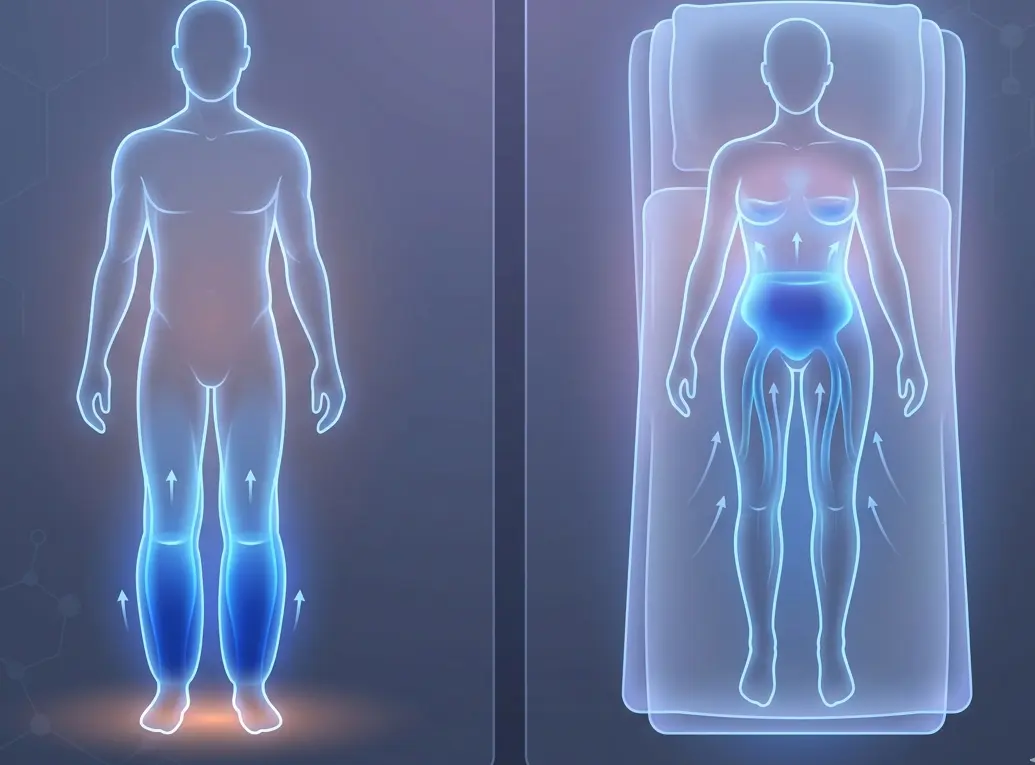
The reality is that your body is a complex hydraulic system. During the day, gravity is your enemy; as you sit or stand, fluids naturally settle in your lower extremities. By the time you climb into bed, your legs might be holding onto a hidden reservoir of fluid that you didn’t even realize was there. The moment you lie flat, gravity stops pulling that fluid down, and your body starts the “cleanup” process. It’s a fascinating, although exhausting, internal relocation project that turns your sleep into a series of pit stops.
The Hidden Reservoir in Your Calves
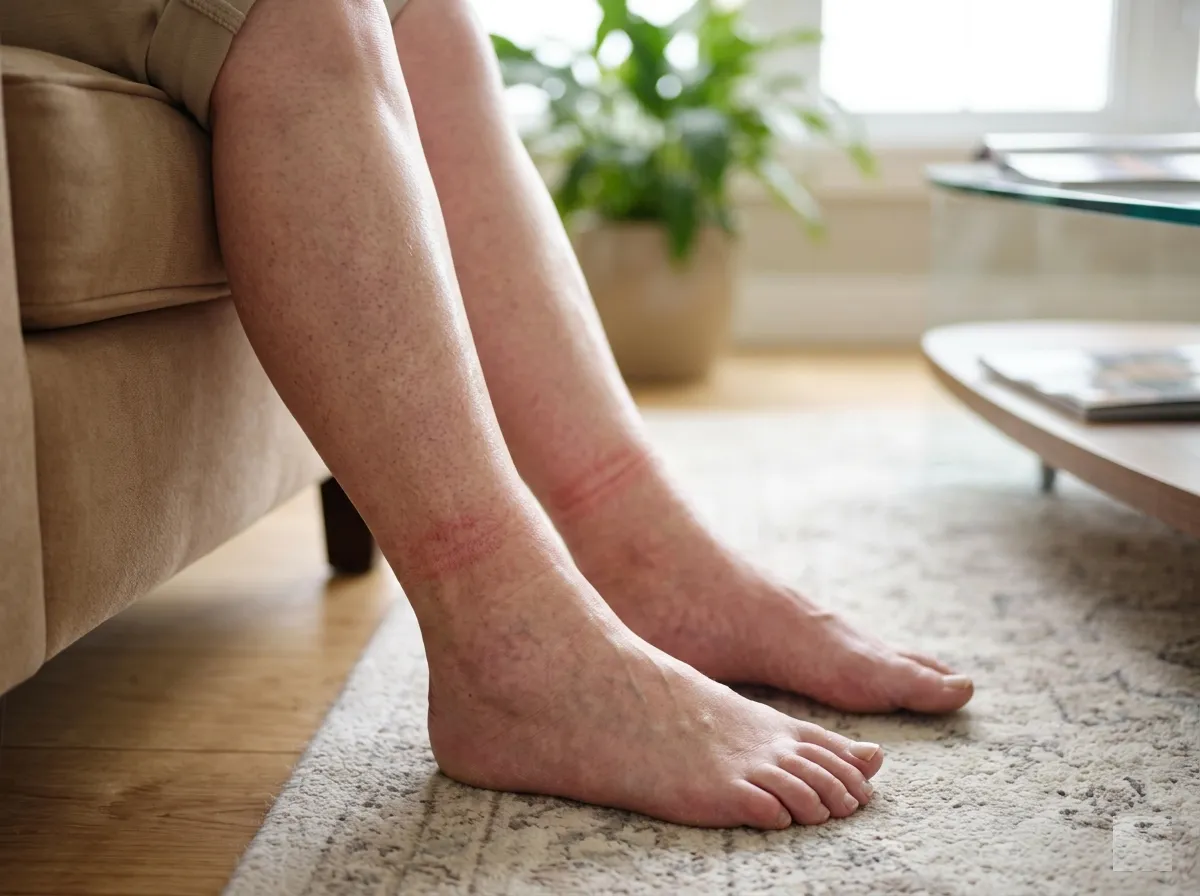
To understand why your legs are waking you up, we have to look at how fluid moves when you aren’t looking. During your daily routine, whether you are crushing it at the office or running errands, fluid can accumulate in the tissues of your legs—a condition called peripheral edema. It isn’t always obvious swelling; sometimes it’s just enough to make your socks leave a slight indentation at the end of the day. This “third-space” fluid stays trapped in your lower half as long as you are upright, but the second you hit the mattress, the game changes.
When you transition to a horizontal position, your legs are suddenly at the same level as your heart. This change in posture allows the fluid that was “stuck” in your ankles and calves to re-enter your bloodstream. Your kidneys, being the diligent filters they are, see this sudden surge of blood volume and get to work. They process the excess fluid into urine, which then fills the bladder. Essentially, your legs have spent all day “collecting” the water that your bladder is now forced to “evict” in the middle of the night. It’s not that your bladder has a low capacity; it’s that it’s being overwhelmed by a flood from the South.

Outsmarting Gravity Before Bedtime
The good news is that once you identify the legs as the source, you can stop fighting your bladder and start managing your circulation. The “fix” is often surprisingly simple and involves a bit of proactive physics. Instead of waiting for your body to start the drainage process the moment you want to sleep, you can give it a head start. By elevating your legs above the level of your heart for thirty to sixty minutes before you actually go to bed, you allow that fluid to shift while you’re still awake and near a bathroom.
Think of it as a “pre-sleep purge.” While you’re watching the evening news or reading a book, propping your feet up on a stack of pillows can encourage that fluid to move early. This way, you do your frequent bathroom trips during the 9:00 PM to 10:00 PM window instead of the 2:00 AM to 4:00 AM window. Additionally, wearing compression socks during the day can prevent the fluid from pooling in the first place. These small adjustments don’t just protect your sleep; they optimize your entire vascular system, proving that sometimes the best medical advice isn’t a pill, but a change in perspective—and a well-placed pillow.