The Doctor Saw My Ultrasound And Begged Me To Get A Divorce… I Never Expected The Truth…
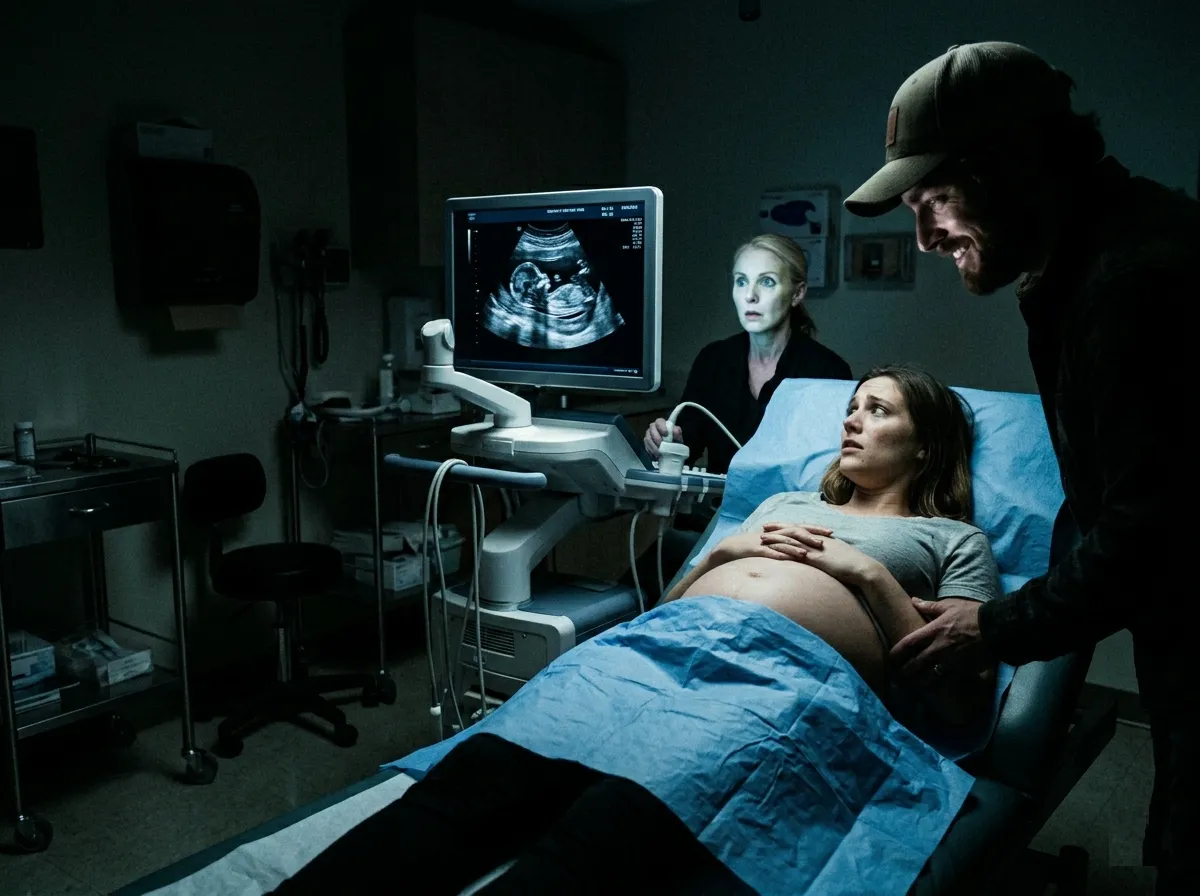
The room was dim except for the pale glow of the ultrasound screen. I lay back on the paper-covered bed with one hand on my stomach while my husband, Adrian, stood beside me, smiling like this was the happiest day of his life. For weeks, he had been more attentive than ever. He made my tea, checked every label before I ate anything, and reminded me to rest as if I were carrying some precious porcelain rather than a baby. When the technician turned the monitor toward us and pointed out a tiny profile, he squeezed my shoulder and whispered, “There’s our little girl.” I nearly cried.
Then Dr. Meera Shah walked in, glanced at the image, and stopped so suddenly the stool behind her bumped the wall. It was only a second, maybe less, but I saw it clearly. Something far more personal than medical concern. She leaned closer, zoomed in on the baby, and her face changed again. Adrian laughed lightly and asked whether everything looked normal. Dr. Shah didn’t answer right away. Instead, she asked the technician to print a few stills and then continued talking normally.
Adrian soon got a phone call. He kissed my forehead and stepped into the hallway. The moment the door clicked shut, Dr. Shah lowered her voice. “Listen to me carefully,” she said. “I should not be saying this in the way I’m about to say it, but you need to hear it.” My mouth went dry. She held my gaze for one long second and then said, “You need to divorce your husband.” I stared at her. She looked back at the ultrasound, then at me. “And whatever you do,” she whispered, “don’t tell him I said that…”

For the rest of the appointment, Dr. Shah acted as though nothing strange had happened. She measured the baby, noted that growth was on track, printed three glossy images, and spoke to Adrian in the calm, reassuring tone doctors use when everything is supposedly fine. By the time we reached the parking garage, he was talking about nursery paint colors and whether we should finally tell his parents the baby was a girl. I answered when I had to, but my mind stayed trapped in that room. Divorce your husband. Don’t tell him I said that.
At a red light, Adrian looked over at me. “You’re quiet,” he said. “Did the doctor say anything when I stepped out?” His tone was gentle, but there was an edge under it, the kind that made a simple question feel like a test. I forced a smile and said she had only warned me about swelling and stress. He held my gaze for a beat too long, then nodded and turned back to the road. When we got home, he insisted I go upstairs and lie down while he made dinner. Twenty minutes later, he came in carrying soup on a tray and my phone in his other hand. “Claire called,” he said, naming my older sister. “I didn’t answer. You don’t need her upsetting you.”
After he left the room, I checked my phone. Claire had called. There was also a message that reminded me that I had forgotten to pick up my prenatal vitamins. There was no signature, but it didn’t need one. I stared at the screen until my pulse started to pound in my throat. I knew what I had to do. Downstairs, I heard Adrian moving through the kitchen, opening drawers, humming softly to himself as though our life were perfectly ordinary.
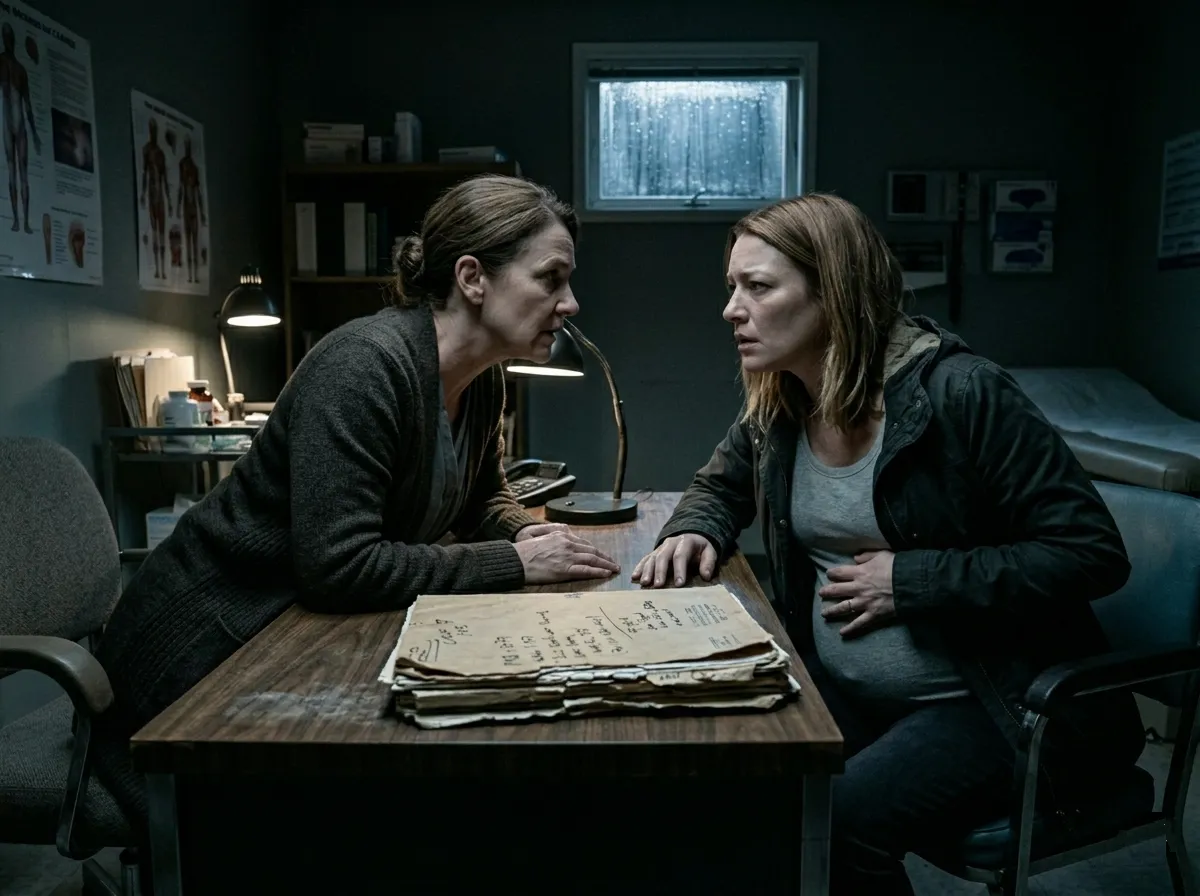
I told Adrian the same story, that I had forgotten to pick up my prenatal vitamins. It was my lucky day. Adrian’s online meeting kept him busy, and I got to drive down alone. He didn’t suspect a thing. The clinic was dark except for one consultation room near the back, where Dr. Shah waited in plain clothes with a thick paper file on the table. She looked less like a doctor now and more like a woman who had rehearsed this conversation and still dreaded every word of it. “I’m not trying to frighten you,” she said as soon as I sat down. “I’m trying to stop you from walking deeper into something you do not understand.”
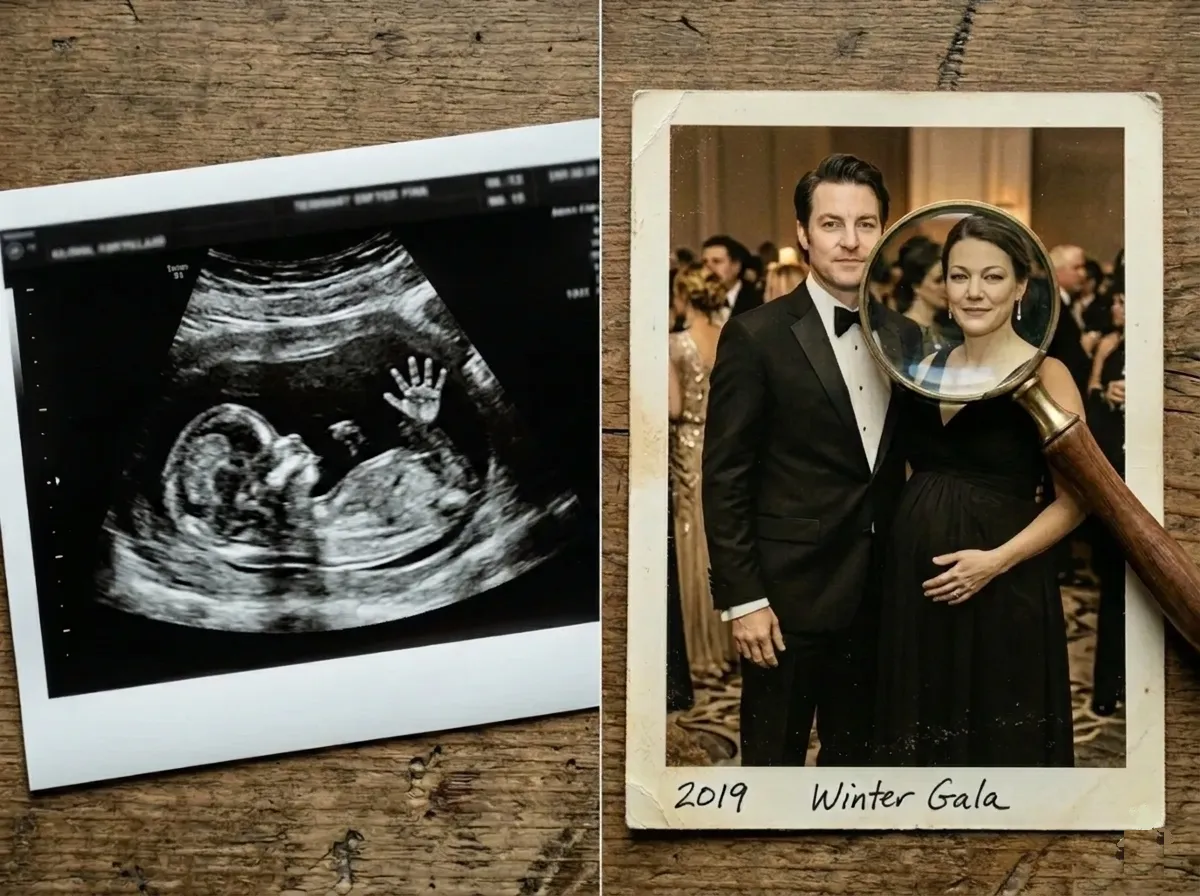
She slid an old ultrasound print across the table. “This was taken seven years ago.” At first, I only noticed the blur of a tiny baby hand. Then she placed my new scan beside it and pointed to the same unusual curve in the little finger. “It’s rare, inherited, and harmless by itself,” she said. “I’ve only seen it twice.” I looked up at her. “Once today,” I said quietly. She nodded. “And once before, when I was a consultant on another doctor’s case. The father at that appointment used another name, but it was your husband.” I actually laughed, because the sentence was too absurd to be real. Adrian lied about little things sometimes—where he had been, who had called—but not this. Not another identity.
Dr. Shah didn’t react. She just opened the file and turned a photograph toward me. It showed Adrian, younger but unmistakably him, standing beside a heavily pregnant woman at some charity event. His arm was around her waist. Both of them were smiling for the camera. “Her name was Rebecca,” Dr. Shah said. “She was a patient I knew. By the time she understood what kind of man she had married, she had already signed away most of her money and had no one left around her. He had isolated her first. That is why I told you to leave.”
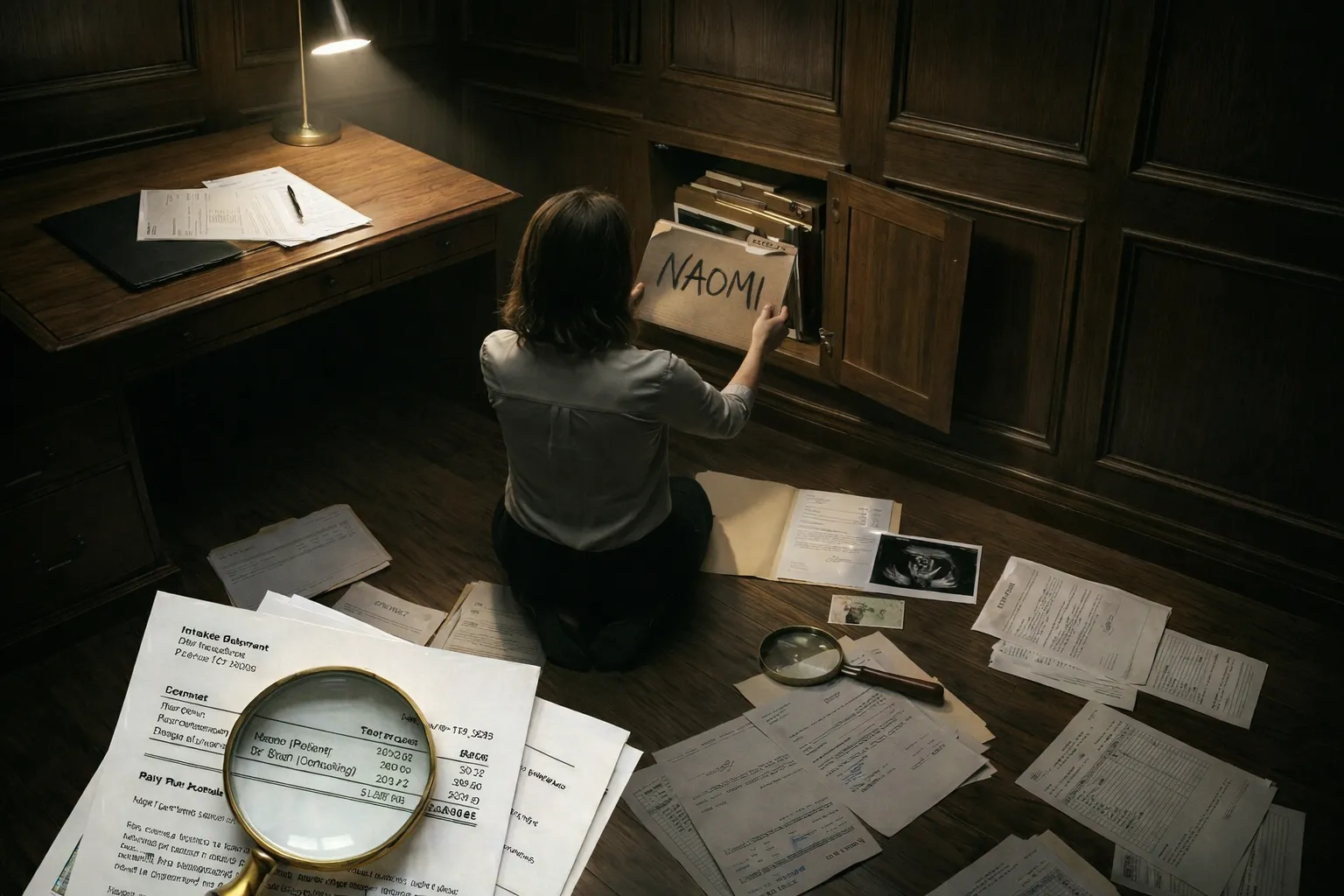
I spent the next day pretending everything was normal. Adrian left for work after kissing my forehead and reminding me to stay off my feet. The second his car disappeared, I went into his study. He never said I couldn’t enter it, but he had a way of making certain rooms feel off-limits without ever speaking the rule aloud. The drawers were neat, the shelves color-coded, the desk surface almost bare. For ten minutes, I found nothing except contracts, receipts, and an expensive fountain pen. Then I noticed a locked cabinet tucked behind a row of framed travel books. The key was taped beneath the desk.
Inside were three folders with labels I had never seen before. One held copies of legal documents under another surname. One contained statements from bank accounts I didn’t recognize. The third had my name written across the tab in Adrian’s handwriting. My hands shook as I opened it. There were printouts of my inheritance portfolio, my late mother’s trust schedule, and handwritten notes about timing. One line had been underlined twice: “access after birth”. I sat back so abruptly that I felt the fetus move inside me.
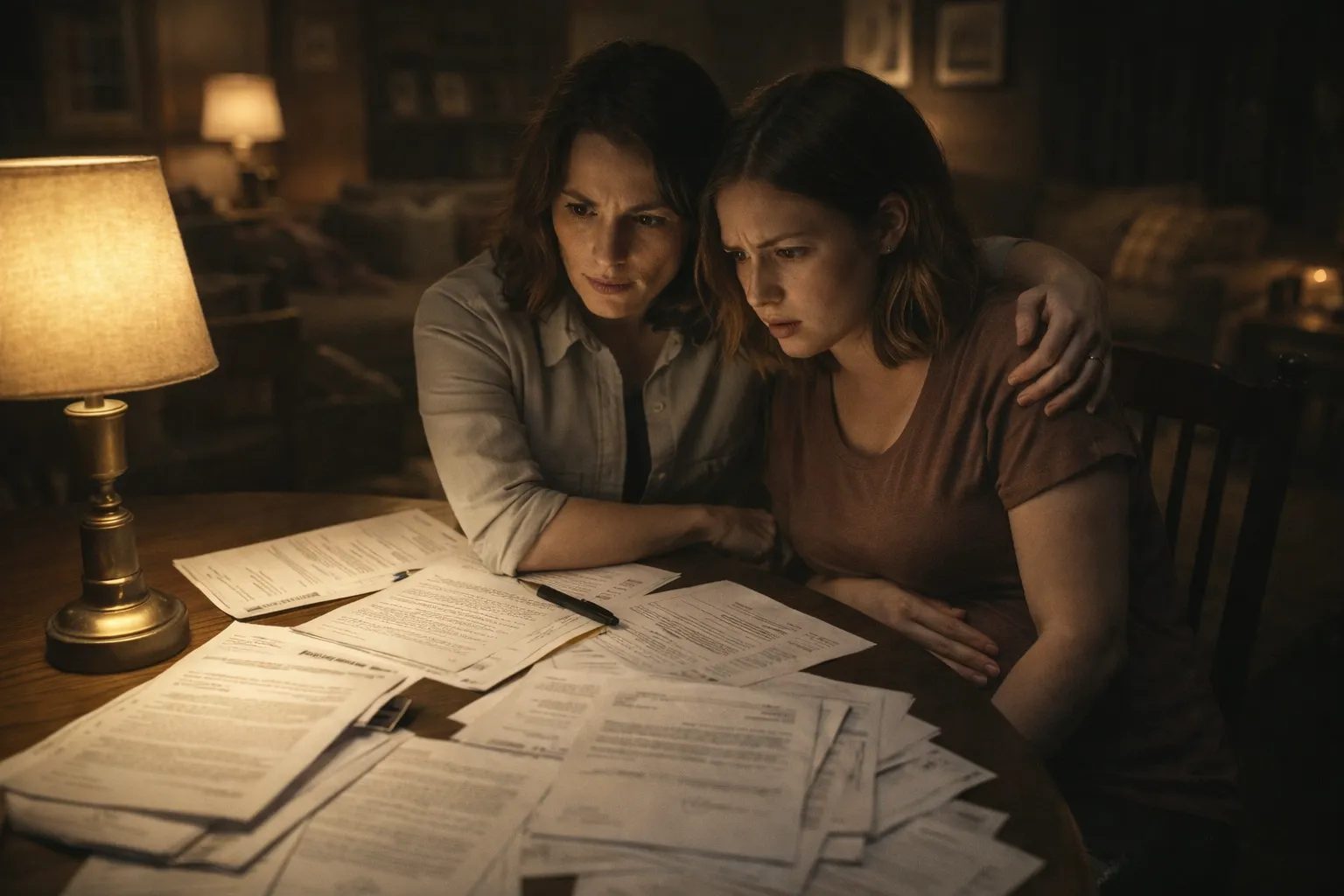
I called Claire before I could talk myself out of it. Adrian had spent two years convincing me she was jealous, dramatic, and destructive. Still, when she answered and heard my voice crack, she didn’t waste a second asking questions. She drove over, looked through the papers with me, and went pale, exactly the same way Dr. Shah had. “Naomi,” she said, very softly, “do you remember Dad’s lawyer warning you not to merge everything too quickly after the wedding?” I nodded. “Adrian pushed you to do it anyway.” I looked at the pages spread across the desk and finally admitted the truth I had been avoiding all morning. My husband hadn’t just lied to me. He had been playing me.
That evening, Claire arranged for me to meet Dr. Shah again, this time in the office of a family lawyer she trusted. I expected more paperwork, maybe a strategy, maybe advice on how to leave quietly. Instead, Dr. Shah introduced me to a woman sitting by the window with both hands wrapped around a paper cup. Her hair was shorter than in the photo I had seen. Her face was leaner. But the eyes were the same. “Naomi,” Dr. Shah said, “this is Rebecca.”
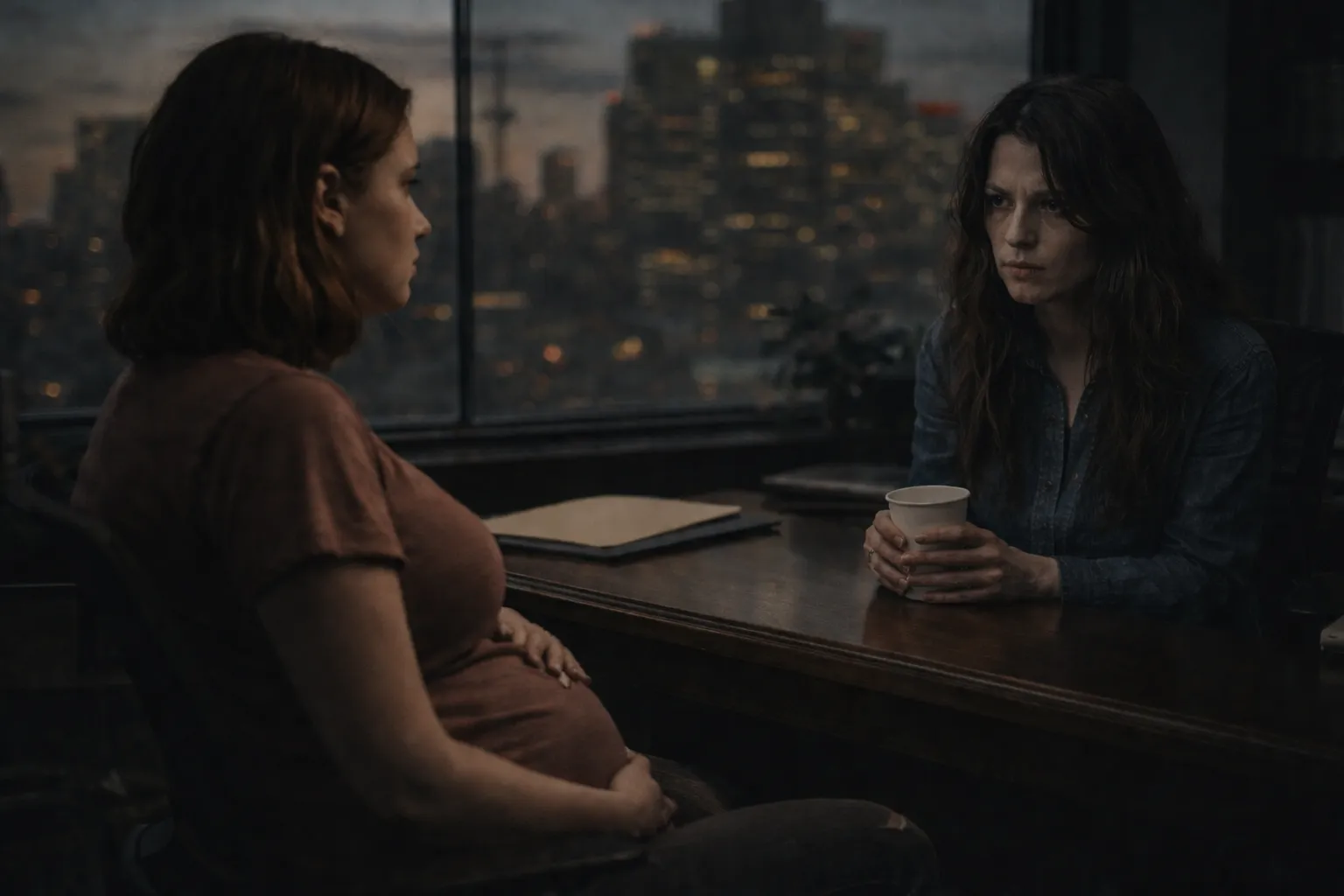
For a moment, I couldn’t move. Rebecca gave me a small, tired nod, as if she understood exactly how impossible this felt. She told me she had not died, despite what Adrian—then calling himself Elias—had allowed people to believe. After her son was born, the control became constant. He monitored her spending, screened her calls, and gradually pushed every friend and relative out of reach. When she finally threatened divorce, he panicked. He forged signatures, moved assets, and tried to position her as emotionally unstable so no one would trust her version of events. With the help of a trusted friend and a legal advocate, she barely escaped with her son. To disappear from him completely, she had let her old life vanish too.
“He needs marriage,” Rebecca said quietly. “Not love. Marriage gives him access, legitimacy, sympathy, and time. A pregnant woman is at her most vulnerable, and he uses it to dupe them.” I felt sick because every word fit too neatly. Adrian had encouraged me to leave my job during fertility treatment. He had insisted that stress was bad for the baby. He had framed dependence as care.
Then Rebecca told me how it had taken her years to track him down under his new alias and get in touch with Dr. Shah. She gave me her understanding of him. “ He narrows down on women who are kind and naive,” he had said. “Someone grieving. Someone with something to inherit.” Claire looked at me across the table. Neither of us had to say it aloud. My dad had died only a year before I met him. Adrian had chosen me long before I thought I had chosen him.

For the next week, I played along. It was the hardest thing I have ever done. Adrian noticed every shift in my mood, every pause before an answer, every time I reached for my phone and stopped. So I smiled more. I thanked him for cooking. I let him discuss stroller brands and school districts and the family future he had never actually meant to build. Meanwhile, Claire worked with the lawyer to freeze any movement on my remaining separate assets, and Dr. Shah documented everything she could legally document. Rebecca provided copies of old emails, timelines, and settlement records that linked Adrian to the previous identity without leaving room for him to shrug it all off as a coincidence.
Then Adrian presented me with his next move.
One evening, he came home carrying a folder and a bottle of sparkling apple cider, grinning like a man with wonderful news. He said he had arranged a meeting with my late father’s estate adviser to “simplify things before the baby comes.” He spoke gently, rationally, lovingly. The trust could be streamlined. Tax exposure could be reduced. If we signed now, he said, there would be less stress later. He even framed it as a gift to me. I looked at the folder in his hands and saw the trap so clearly, I nearly laughed. Instead, I told him it sounded smart.

The meeting was set for Friday afternoon in a private conference room at the adviser’s office. Adrian seemed relieved after I agreed. Too relieved. That night, after he fell asleep, I lay awake feeling our daughter shift beneath my ribs and tried to calm the racing in my chest. The lawyer had told me not to confront him at home. Claire had told me not to back out. Rebecca had told me men like Adrian never stop on their own; they only stop when the story stops favoring them. By morning, I understood what Friday really was. It wasn’t just a legal appointment. It was the first time I would stop being the woman he believed he could manage.
The conference room smelled of leather chairs and fresh coffee. Adrian arrived early, relaxed and immaculate in a navy suit, one hand resting possessively at the small of my back as if we were the happiest couple in the building. My father’s estate adviser, Mr. Bell, greeted us with unusual formality and invited us to sit. A second man I didn’t know was already at the far end of the table, flipping through a file. Adrian barely looked at him. He was too busy arranging the papers in front of me and sliding a pen into place. “Just a few signatures,” he said with a smile.

Mr. Bell cleared his throat. “Before we begin,” he said, “there are some identity concerns we need addressed.” Adrian’s expression didn’t change, but I felt his hand leave my chair. The man at the far end introduced himself as a forensic accountant working with my legal counsel. Adrian turned to me then, slow and careful, as if he had suddenly realized the room had changed shape around him. “Naomi,” he said, almost amused, “what is this? Did you contact them beforehand?” The door opened before I could answer. Rebecca walked in first.
Whatever else Adrian was, he was disciplined. But in that one instant, discipline failed him. The color drained from his face. He stood so abruptly his chair scraped across the floor. Rebecca did not sit. She placed a small stack of documents on the table—old incorporation records, property links, signature comparisons, photographs. Mr. Bell added the transfer papers Adrian had hoped I would sign to the pile and folded his hands. “Nothing moves today,” he said. “In fact, nothing moves again until the court says so.”
Adrian looked at me as if I had betrayed some sacred vow. For the first time, I saw the truth clearly: he had never wanted a wife. He wanted access while wearing a wedding ring. I pushed the pen back across the table. “I’m filing for divorce,” I said. His mouth opened, but there was no performance left that could save him. The end was not dramatic in the way I once imagined endings would be. Adrian did not chase me through airports or shout beneath windows or break down in a final confession. He hired lawyers, denied everything, and tried to reposition himself as a misunderstood husband caring for a stressed pregnant wife. But the records were too solid, the timelines too consistent, the financial intent too obvious. The court froze the trust changes he had been pushing. My separate assets stayed separate. His previous alias became impossible to explain away.
I moved into Claire’s guest room for the last stretch of my pregnancy. It was cramped, loud, and full of things that had nothing to do with the carefully curated life Adrian had built around me. I loved it almost immediately. Claire made burnt toast every morning. Dr. Shah checked on me more often than she had to. Rebecca sent a short message once asking, How are you holding up?
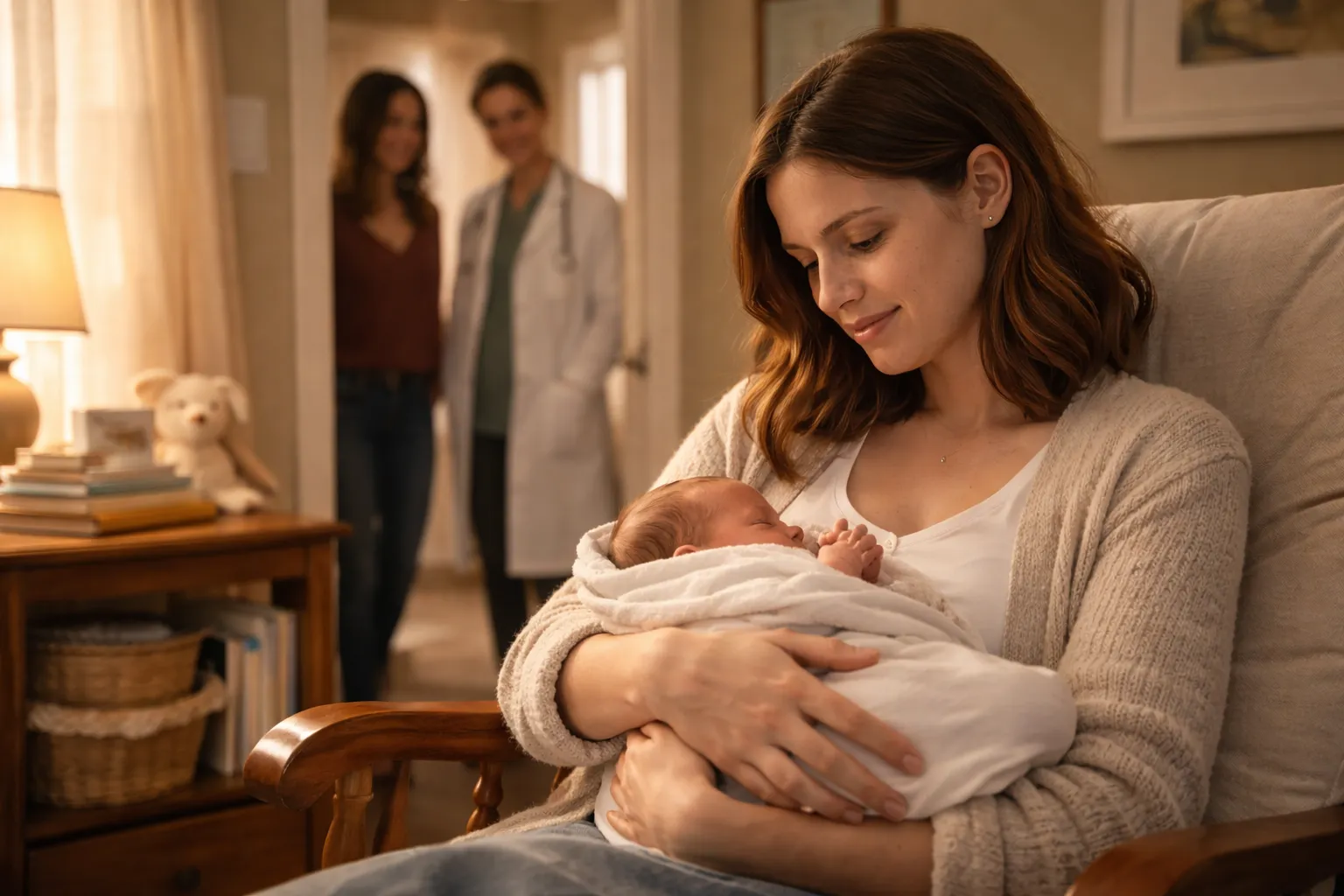
Three months later, my daughter arrived just before dawn with a furious cry and one tiny, curved little finger on her left hand. When the nurse placed her on my chest, I thought about that first ultrasound and the terror that had followed it. Then I looked around the room. Claire was crying openly. Dr. Shah was smiling from the doorway. Morning light was beginning to thin the dark outside the windows. My marriage had ended. My illusion had ended. My fear had not vanished entirely, but it no longer owned the room. I kissed my daughter’s forehead and understood, at last, that the doctor had saved mine and my daughter’s lives.
Source: https://www.tips-and-tricks.co/online/fatherdivorce/