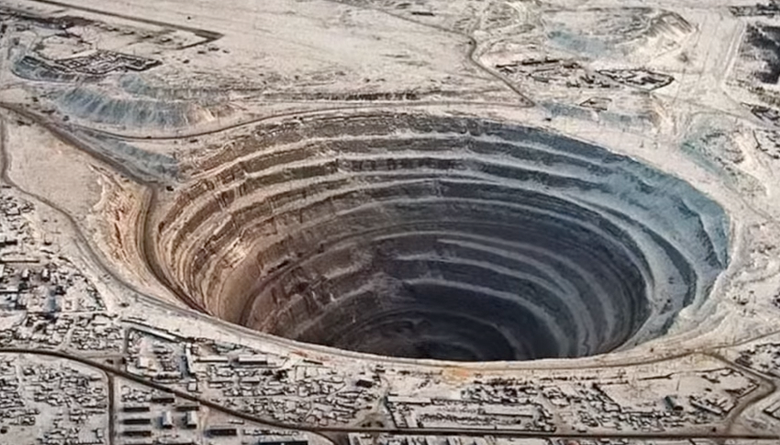
Scientists explore deepest places on Earth and encounter ‘Death Star’
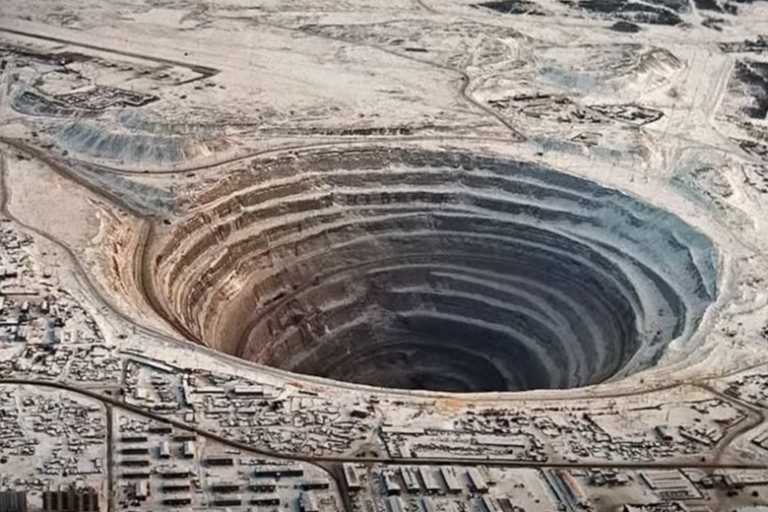
Scientists have been trying to uncover the secrets hidden in the Earth’s crust for decades.
For decades they drilled towards the core of our globe. The borehole in northwestern Russia became one the deepest holes mankind has ever dug. But at a depth of more than 12,000 meters, the researchers encountered something unexpected, forcing them to abort their experiment for good.
Curious about what the scientists found deep in the earth? Read more on the next page!
Fascination with the unknown
Mankind has always been fascinated by the mysteries around her. The unknown is scary, so we’ve always tried to learn as much as possible about the world around us. Natural phenomena such as thunderstorms and earthquakes have been stripped of their mystery as we delved into meteorology and earth sciences.
Yet it took a long time before we were bored with the mysteries that lie on the surface of the earth. The first satellite went into space in 1957. We went exploring among the stars, hoping to unlock the secrets of the universe. But we didn’t just have an eye for the mysteries above our heads…
Underground world
Today we know more about the universe than ever before. Organizations like NASA and Roskosmos are still revealing new discoveries. Private organizations such as SpaceX by Elon Musk and Blue Origin by Jeff Bezos are now flying among the stars as well. Although we still do not know everything about our universe, part of the mystical veil has already been lifted.
But with our heads in the clouds, we overlook a whole other world filled with mysteries. Some scientists even believe that our knowledge of outer space is greater than our knowledge of what lies beneath the Earth’s surface.
While every child learns about the space race during the Cold War, few know about the equally exciting battle for the deeper parts of our globe. We will be taking you on a discovery journey into the deepest depths of our planet.
Project Mohole
Since the late 1950s, American scientists and their Soviet counterparts have been competing for the secrets beneath our feet. They conducted in-depth experiments to penetrate as far as possible into the Earth’s crust. Experts estimate that this hard crust is about 50 kilometers thick. Eventually, the Earth’s crust merges into the mantle, the mysterious center that makes up 40% of our planet’s mass.
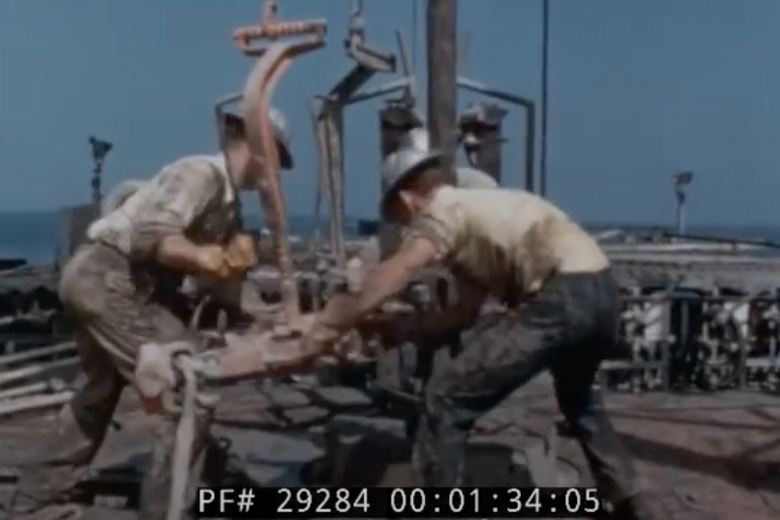
Project Mohole was the start of this deep race. The United States launched this project in 1958. A group of engineers drilled through the bottom of the Pacific Ocean near Guadalupe, Mexico. They managed to get to a depth of about 180 meters, but unfortunately the funding was cut off after their project ran for about eight years. With Project Mohole canceled the Americans were unable to penetrate the mysterious Earth’s mantle.
Then it was the Soviets turn…
Progress
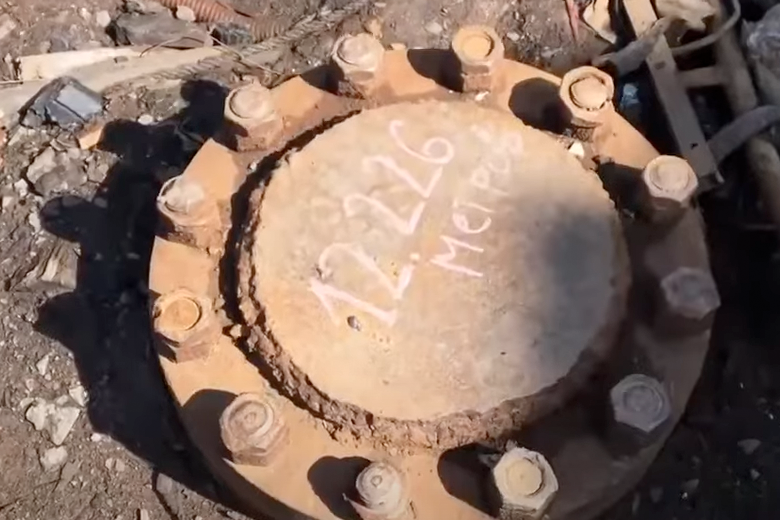
A team of Soviet researchers began drilling in the crust of Russia’s sparsely populated Kola Peninsula on May 24, 1970. Their goal was the same as that of many children having a beach day… To dig as deep as possible.
The researchers set a target of 15,000 meters. With special equipment, they embarked on this challenge of colossal proportions. As the Soviet Union pushed deeper and deeper into the Earth’s crust, scientists from the United States watched with envy.
But then they also managed to make progress in this competition…
Bertha Rodgers
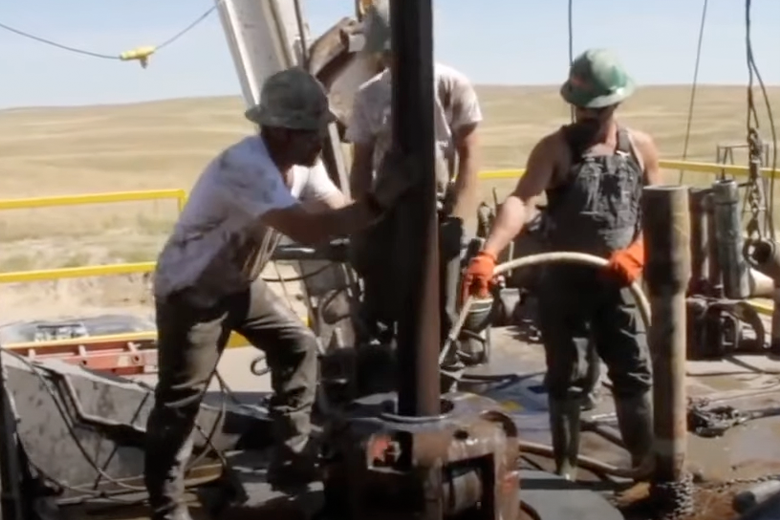
In western Oklahoma, the Lone Star Producing Company reached a depth of 9.5 kilometers in its search for oil. Unfortunately, the company did not find what they were looking for during their drilling operations in 1974: not a single drop of oil was found in this place. The so-called Bertha Rodgers hole remained the deepest bore in the world for the next five years.
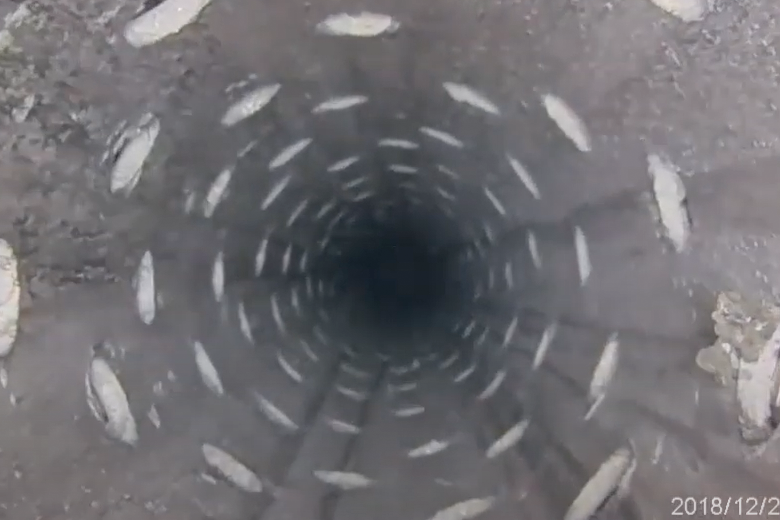
This record was broken on June 6, 1979 by the Soviet-funded Kola borehole. Four years later, in 1983, the hole even reached a dizzying depth of 11.9 kilometers. To give you an idea of what this looked like: The diameter of the hole was only six inches.
Technical issues
After reaching this milestone, the scientists temporarily halted their experiment. For twelve months, they gave different people the opportunity to visit the enchanting place. But when they wanted to continue drilling after this break, a technical problem arose, which prevented them from drilling any further.
The experiment seemed to have reached its end. And at a depth of nearly 12 kilometers, they had gotten closer to the Earth’s mantle than anyone else ever did before. Yet, even the most optimistic estimates suggested they were still about 45 kilometers away.
They had no idea how close they had come to discovering something incredible…
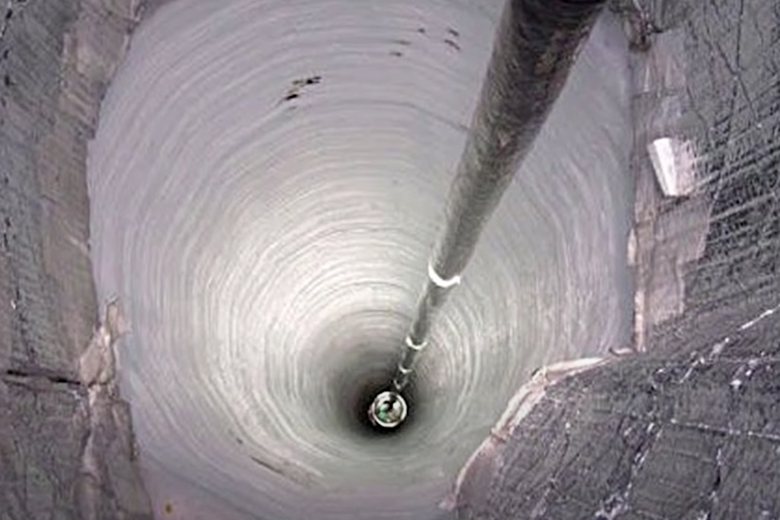
Do not give up
The Soviets decided to try again. They started working on a new hole, which reached a record depth of 12,262 meters in 1989. The scientists were on track and expected to reach a depth of 13.4 kilometers by the end of 1990. They never expected to reach this before. After all, the Americans and their Bertha Rodgers gap had only reached 9.5 kilometers.
This prediction came true. They were hopeful and adjusted their target to 15 kilometers. According to their predictions, they could reach this depth sometime in 1993. But something turned out to be underneath the remote Russian tundra that they had never considered before. A similar depth had never been reached by anyone. The scientists were now venturing into uncharted territory.
At this depth the scientists discovered a very bizarre phenomenon.
Heat
The first 3 kilometers of their drilling attempt had been fairly predictable. The temperature was about what the scientists expected. But then something changed that they couldn’t have foreseen beforehand. The temperature started to rise much faster than expected. The closer the researchers got to their target, the further the mercury rose. When they reached around 15 kilometers, they were already at a temperature of 180°C. That was 80°C warmer than their predictions!
But that wasn’t all. In addition to the heat, there was another discovery that messed up the whole investigation. What they found at the bottom of their insanely deep borehole was the reason they decided to abandon their attempt for good.
Discovery
The researchers found out that the rock became less dense the deeper they drilled. This allowed it to react very unpredictably to the higher temperatures at great depths. Because the scientists’ equipment could not withstand this degree of unpredictability, they decided to stop the project. This decision was made in 1992, 22 years after they began their drilling attempt.
But before they closed the so-called Kola Superdeep Borehole, scientists posted at this location got the opportunity to gain a wealth of knowledge about the secrets lurking in the depths of our globe. Curious about what they discovered at these unimaginable depths? Read on quickly!
Fossils
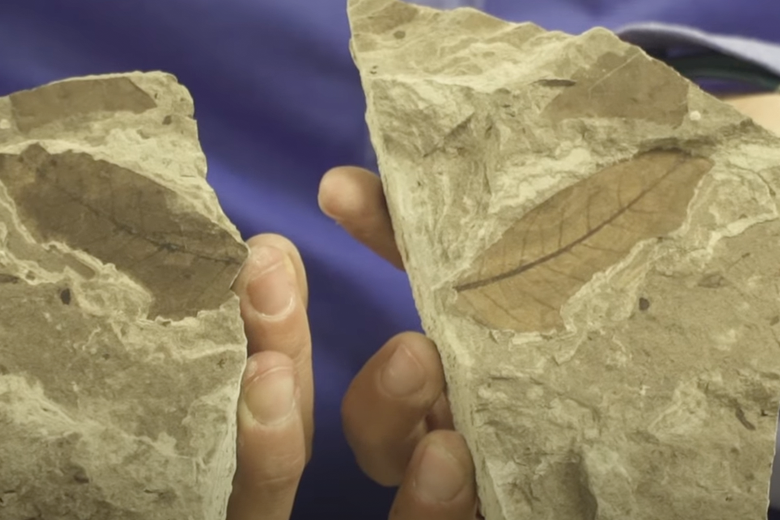
At a depth of about six kilometers, the scientists discovered microscopic fossils of marine plants. Because these remains had been hidden in the Earth’s crust for almost an eternity, they were pretty much still intact. The scientists estimated that these fossilized marine plants were about two billion years old. You can, once again, see that our globe is very old and we have yet to discovered all of its secrets.
But the minuscule fossils discovered by the scientists weren’t the most exciting secret the borehole uncovered at this site that would be going down in history as the deepest hole ever dug by humans. Curious about the other shocking discoveries made here?
Read more on the next page!

Running water
Using so-called seismic waves, the scientists predicted that the Earth’s crust beneath our feet was made up of different types of rocks. At about a depth of three to six kilometers, the granite would turn into basalt. But the reality was very strange. The scientists were puzzled: no matter how deep they drilled, they were only able to find granite. Even at the deepest point.
The change in the seismic waves was not caused by a change from granite to basalt, as they expected. The truth was much more shocking. Several kilometers below the Earth’s crust, at depths no one expected could ever exist there, the researchers discovered flowing water.
Closing the hole
It is believed that this phenomenon is the result of a strong pressure that forces oxygen and hydrogen atoms out of the rock. The water created by this chemical reaction has nowhere to go and is therefore trapped underneath the surface. This discovery was met with astonishment in scientific circles. We might never have discovered this without the Kola Superdeep Borehole.
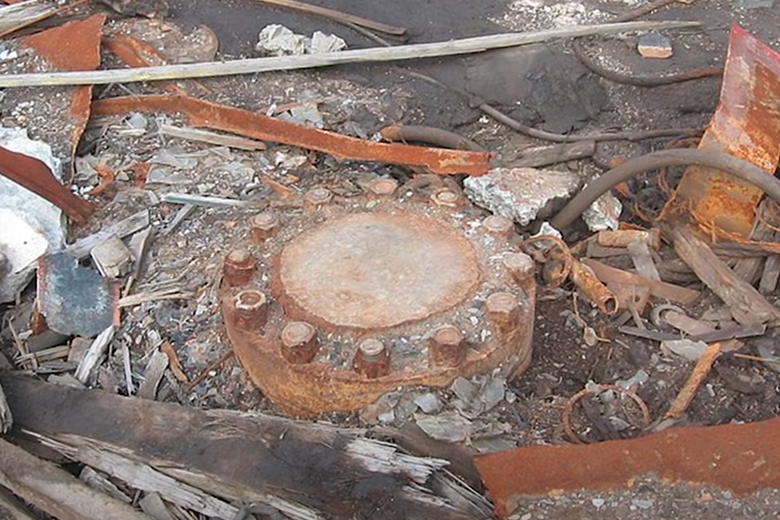
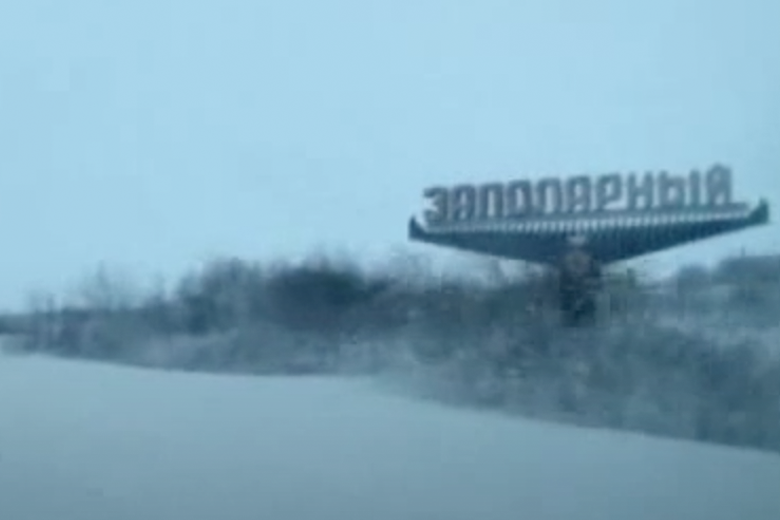
The closure of this gap occurred around the same time that the Soviet Union fell. In 1995, the scientific project was permanently halted. Today, the hole is primarily seen as an environmental hazard, as it provides direct access to the unstable depths. Interested parties can admire the remains of the experiment in a museum in the town of Zapolyarny, about nine kilometers away.
The race isn’t over yet
It has been more than 25 years since the hole was closed. The depth reached by the Soviets with the Kole Superdeep Borehole is still unmatched. However, the race to the center of the globe isn’t over yet. Excavation is still ongoing in several places.
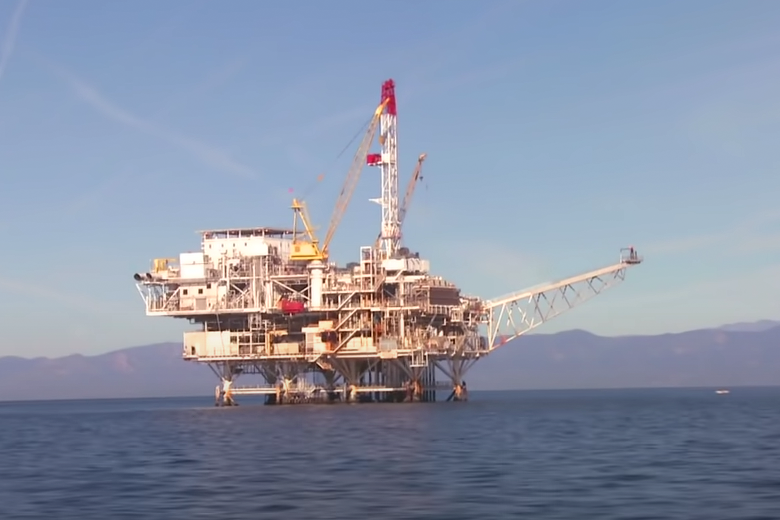
Oil rigs from the International Ocean Discovery Program continue to dig deep under the seabed. Faulty equipment and extreme temperatures make it very difficult, but the search for what secrets still remain underneath the earth’s surface has not stopped. Fortunately, you don’t always have to drill miles deep to make new discoveries. There is still plenty to be found closer to the surface.
For example, during an expedition to Antarctica, a real “Death Star” was discovered. Curious how that happened? Read on quick!
Expedition to the South Pole
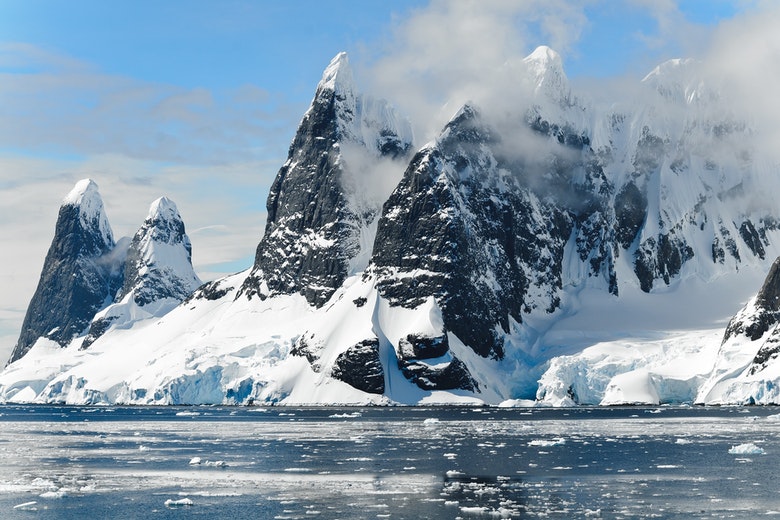
A submarine with two crew members was dropped into the icy waters of Antarctica for a discovery voyage. The crew members’ goal was to penetrate deeper into the murky ocean surrounding the South Pole than ever before. Here they would make discoveries that would make shivers run down your spine. It’s unbelievable what lurks beneath the waves.
Source: https://www.tips-and-tricks.co/various/scientists-encounter-death-star/