You May Never Have Heard Of These 20 Uncommon Fruits
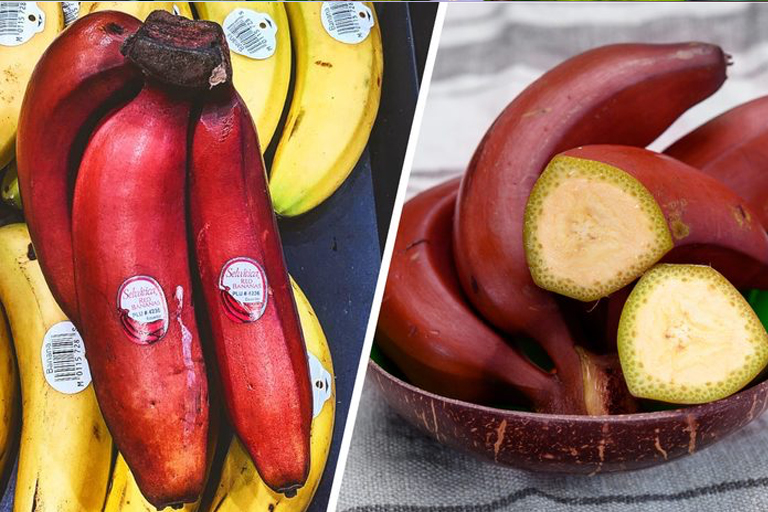
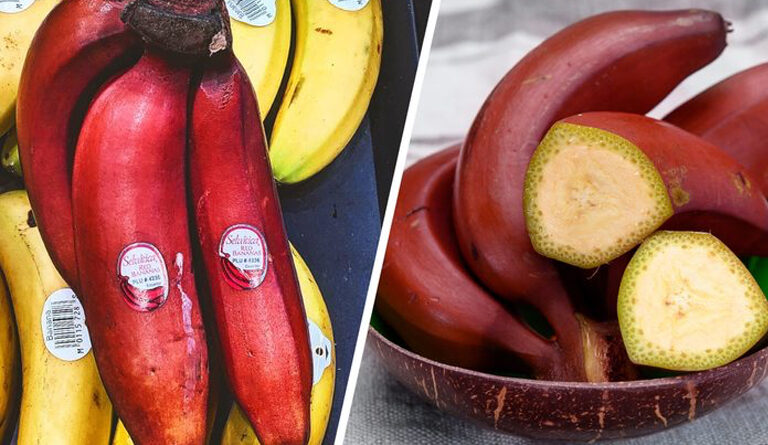
1. Red bananas
Did you know that there are red bananas? It will come as no surprise if we tell you that there are over 1,000 different kinds of bananas around the world. The red variety is soft and sweet-tasting, with a flavor like a regular banana with a hint of raspberry sweetness.
On the next page you’ll find a tiny version of a common large fruit.
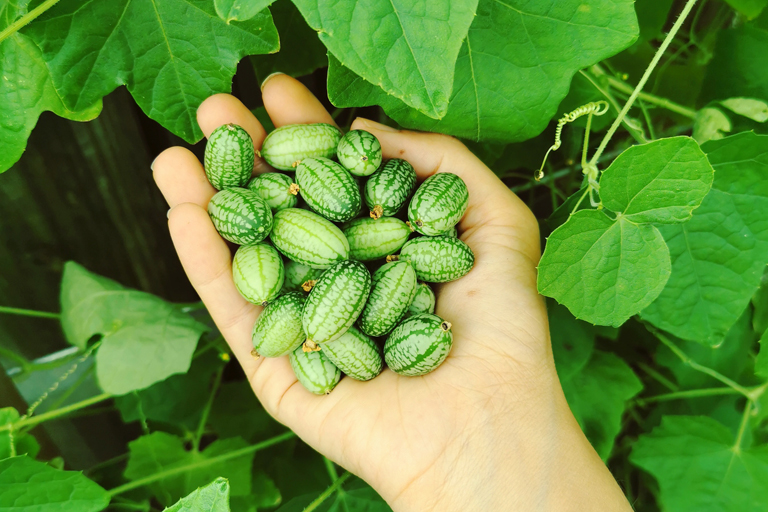
2. Cucamelon
Cucamelons look exactly like tiny watermelons. The fruits are distant relatives of cucumbers and its flavor is reminiscent of them as well, with an added citrusy tang to it. The cucamelon can be eaten straight off the vine. You don’t need to peel it before you eat it.
On the next page you’ll find a fruit with a name that will make you think twice before you try it.
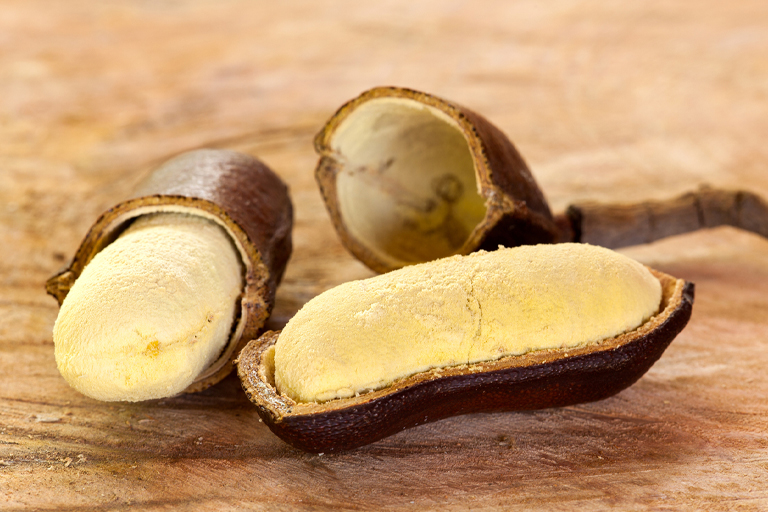
3. Stinking toe fruit
This strange fruit is the fruit of the West Indian Locust, one of the largest trees in the Caribbean. Its pod is reminiscent of a toe. Wen broken, it releases an extremely repugnant smell. Both characteristics are combined in the name “stinking toe fruit”. The flesh of the fruit is dense and sweet.
On the next page you’ll find a fruit that is filled with jam.
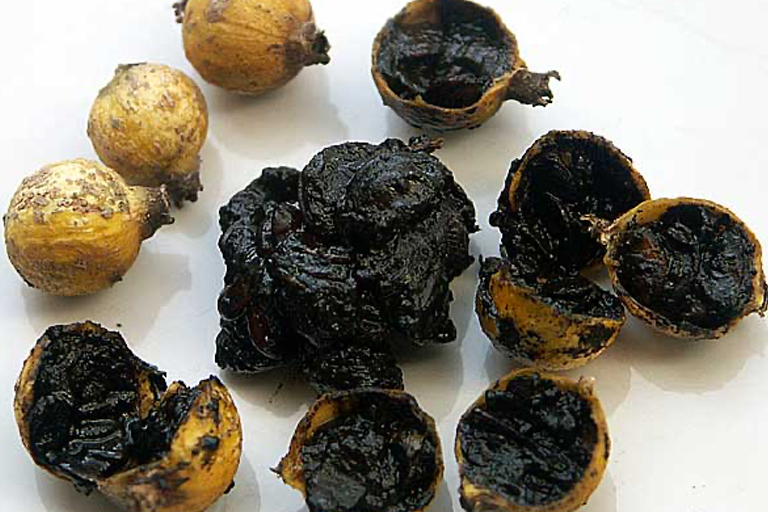
4. Blackberry jam fruit
You don’t need to process this fruit to make jam out of it, its fresh pulp already tastes exactly like blackberry jam. Its consistency is also so alike, that some people actually spread it over bread. You can either suck it out of the shell, or scoop it up like you would with regular jam.
On the next page you’ll find the bitter relative of cucumbers.
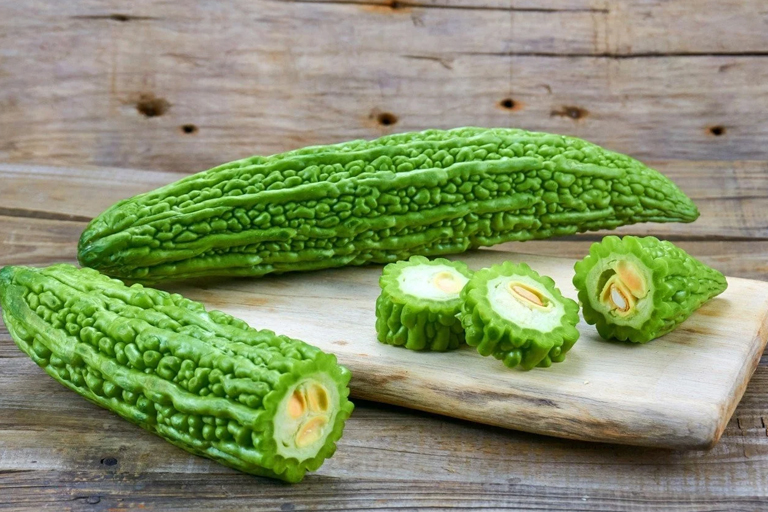
5. Bitter melon
This fruit is considered a staple in many types of Asian cuisine. It’s closely related to zucchini, squash, pumpkin and cucumber. The high levels of quinine in the fruit (which you might know from tonic) make it very bitter. It’s commonly eaten in curries or other vegetable dishes.
On the next page we’ll show you a curious fruit that is native to the Pacific Islands.
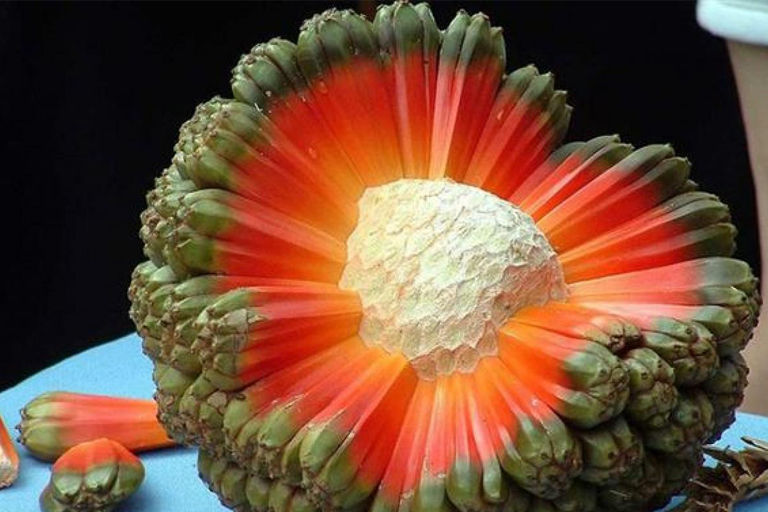
6. Hala fruit
A Hala fruit is a fruit that is native to Hawaii, Australia and the Marshall Islands. It is reminiscent of a pinecone mixed with a pineapple. The fruit is made up of many different segments, which are called keys or cones. The inside of the keys are edible and taste like sugary mango.
On the next page you’ll find a strange fruit called the Buddha’s hand.
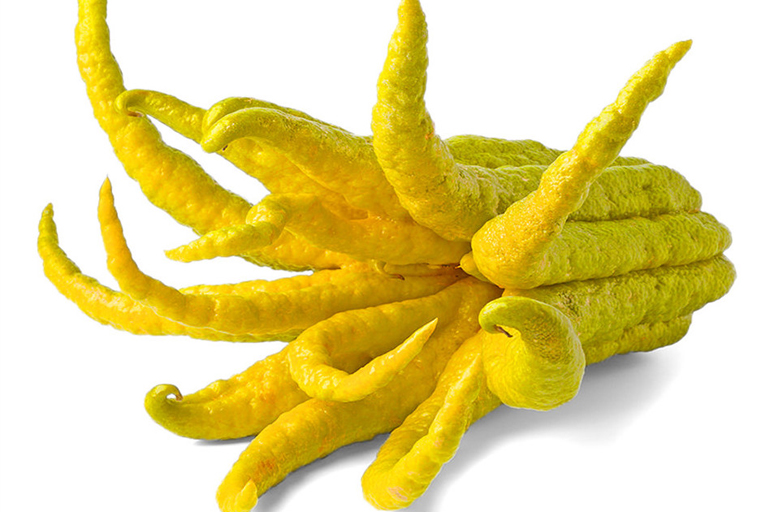
7. Buddha’s hand
This yellow, creepy looking fruit is called Buddha’s hand. It’s actually a variety of citrus fruit, which is segmented into finger-like segments. Its origins are tracked back to India and China, where most domesticated citrus fruits originate. The Buddha’s hand fruit contains no pulp or juice, unlike its other citrus cousins.
On the next page you’ll find a fruit that looks like it has the skin of a reptile.
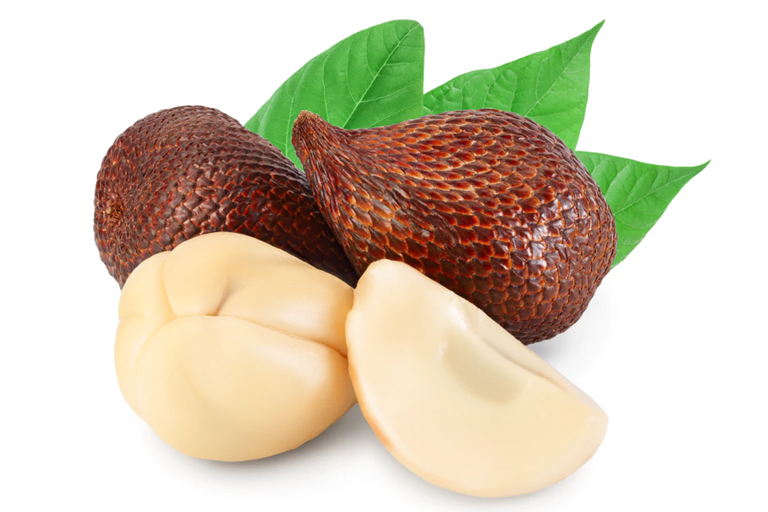
8. Snake fruit
This Indonesian fruit has a very distinct appearance. Its outside is prickly like a cactus and, most notably, covered in what appears to be snakeskin. The fruit is about the size of a fig and grows in clusters of fifteen to forty fruits. Its edible inside has the texture of a garlic clove and tastes a bit like a crunchy pineapple.
On the next page you’ll find a prickly fruit called the African horned cucumber.
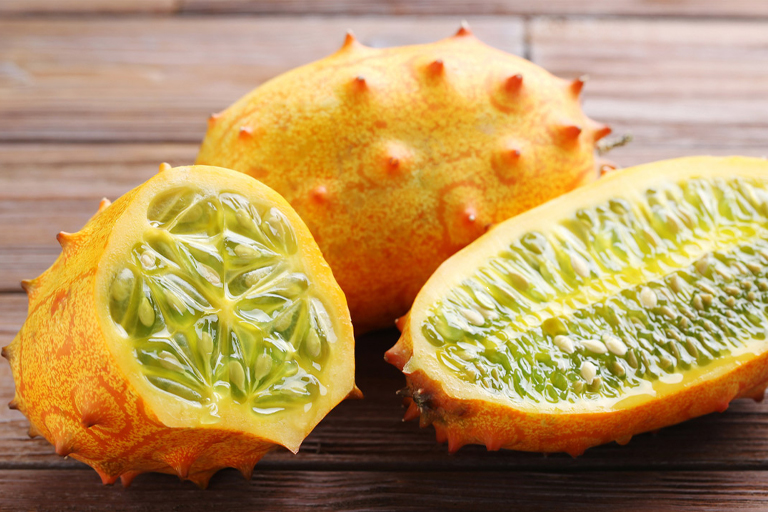
9. African horned cucumber
This unusual fruit has spiny horns on its green, yellow or orange skin. When the skin ahs turned a bright deep orange, it is ready to eat. The pulp inside the fruit, which looks a bit like green Jell-O, tastes unlike any other fruit. It is described as “sweet-sour, banana-lime, tropical fruit tasting”.
On the next page you’ll find a fruit called Cherimoya
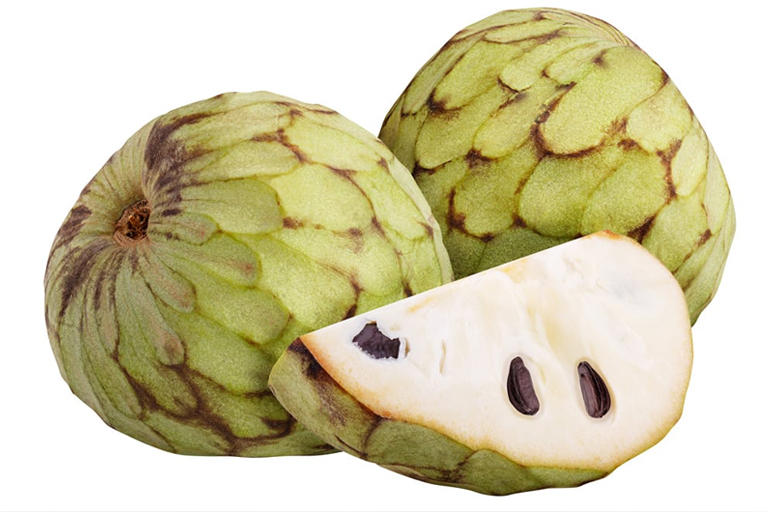
10. Cherimoya
The Cherimoya is an edible fruit native to Ecuador and Peru. It grows in tropical, subtropical regions throughout the world. American writer Mark Twain called the cherimoya “the most delicious fruit known to men”. The inside of the fruit tis creamy and sweet, giving it the nickname “the custard apple”.
On the next page you’ll find a tropical fruit called Mangosteen.
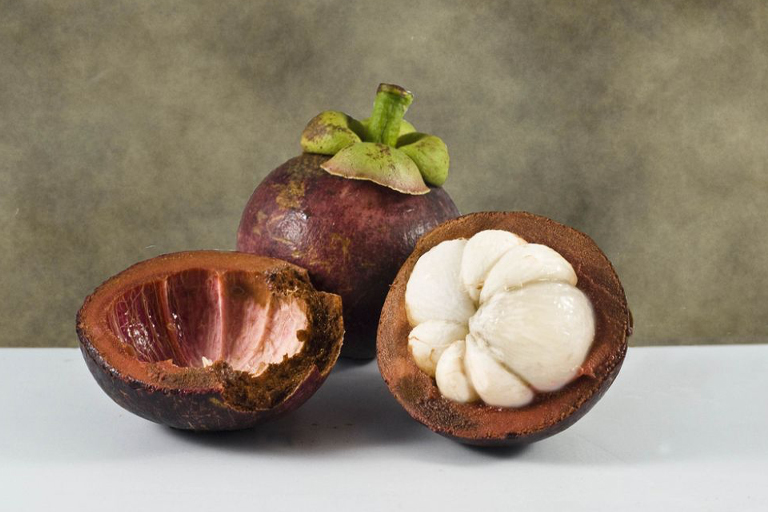
11. Mangosteen
This tropical fruit that is native to Asia is also called the “queen of fruits”. The insides of a mangosteen taste like a mix between lychee, grape and apple. It is sweet and juicy. Its texture is soft, juicy and stringy. You can even eat the purple skin of the fruit, but this has a taste that is more bitter than sweet.
On the next page you’ll find the miracle fruit, which has one very strange characteristic.
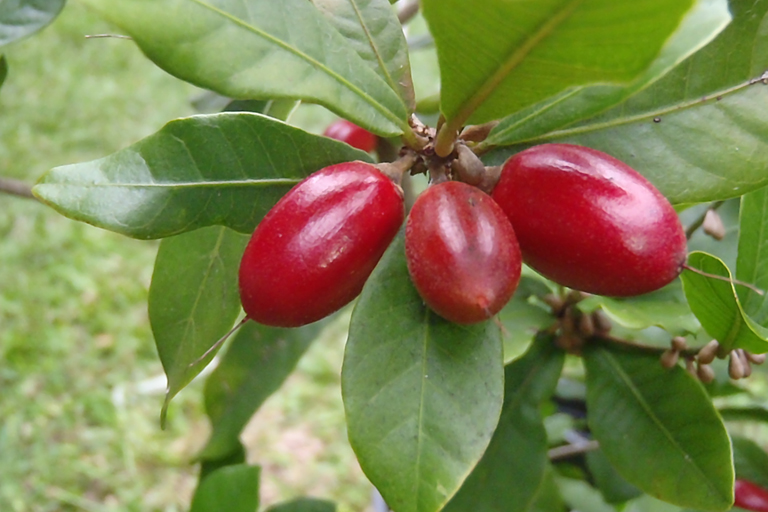
12. Miracle fruit
This fruit, which is appropriately named “miracle fruit”, is an extremely strange fruit. When eaten, it causes sour foods, like vinegar, lemon and lime, to taste sweet. This strange effect is because of “miraculin”, which is a glycoprotein module that binds to the tongue’s taste buds and alters your taste. The effect lasts up to 30 minutes.
On the next page you’ll find a relative of the lychee: the rambutan.
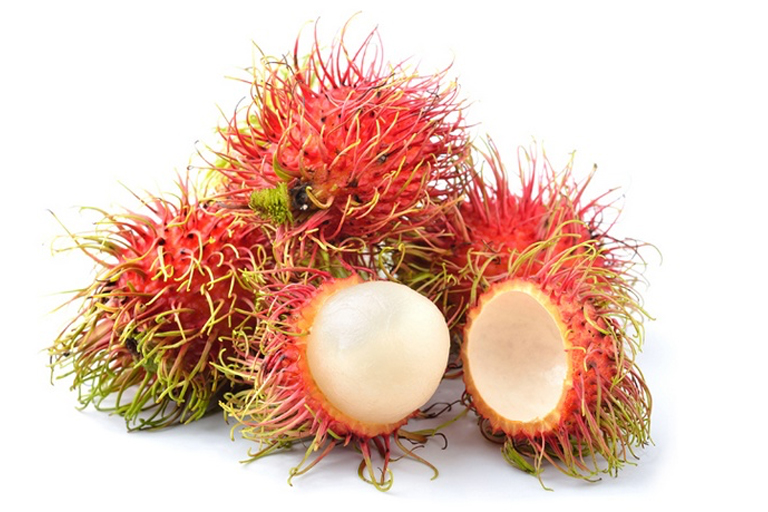
13. Rambutan
This unique fruit is covered in red spiny “hairs”, giving it a very distinct appearance. It is native to Southeast Asia and closely related to the lychee. The flesh of rambutans is whitish or a very pale pink, with a sweet, mildly sour flavor that tastes a bit like grapes.
On the next page you’ll find a fruit that goes by the nickname of “chocolate pudding fruit”
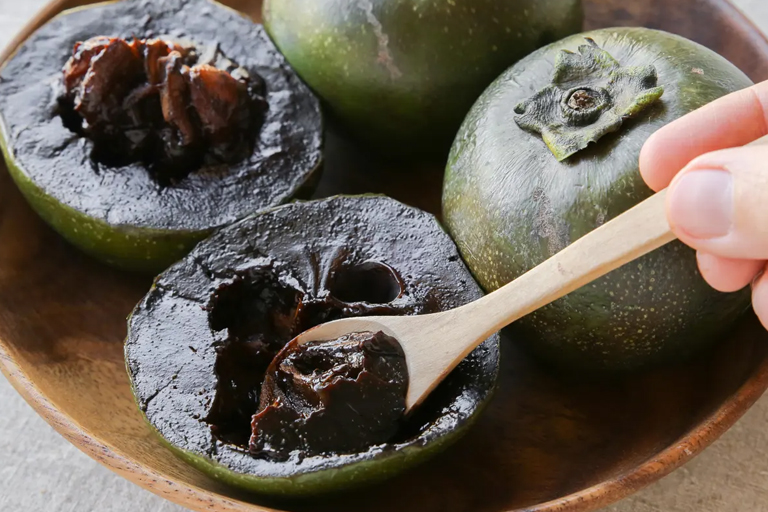
14. Black sapote
This fruit is called the black sapote, or “chocolate pudding fruit”. Its taste is unlike any other fruit in the world, containing delightful tones of honey, caramel and dates. The best time to eat this fruit is when the outer appearance looks like its past its prime and bruised. The texture of a perfectly ripe black sapote is creamy and mushy.
On the next page you’ll find another relative of the lychee: the ackee.
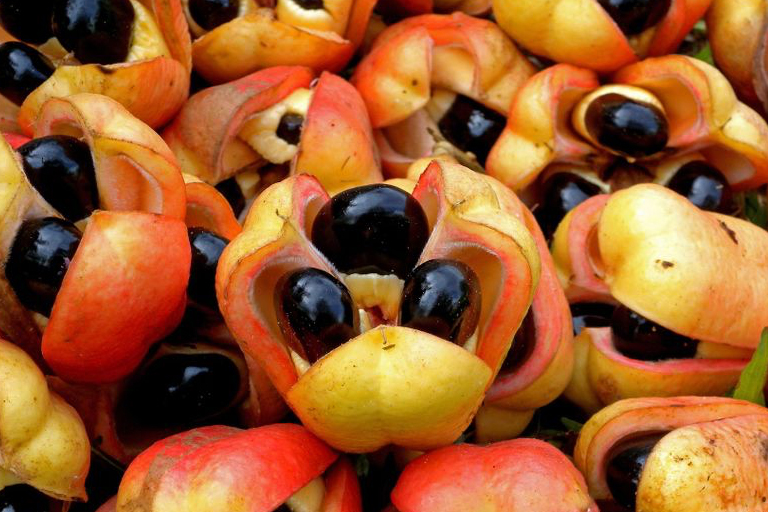
15. Ackee
The ackee is a fruit that is related to the lychees and the rambutan you saw earlier in this list. It has a reputation as being poisonous with potential fatalities, but when ripe, prepared properly and cooked it is renowned as delicious. The ackee is the national fruit of Jamaica and considered a delicacy. It has a nut-like flavor and the texture of scrambled eggs.
On the next page you’ll find the so-called “king of fruits”.