Dog is taken to be euthanized – minutes later, something unexpected happens…
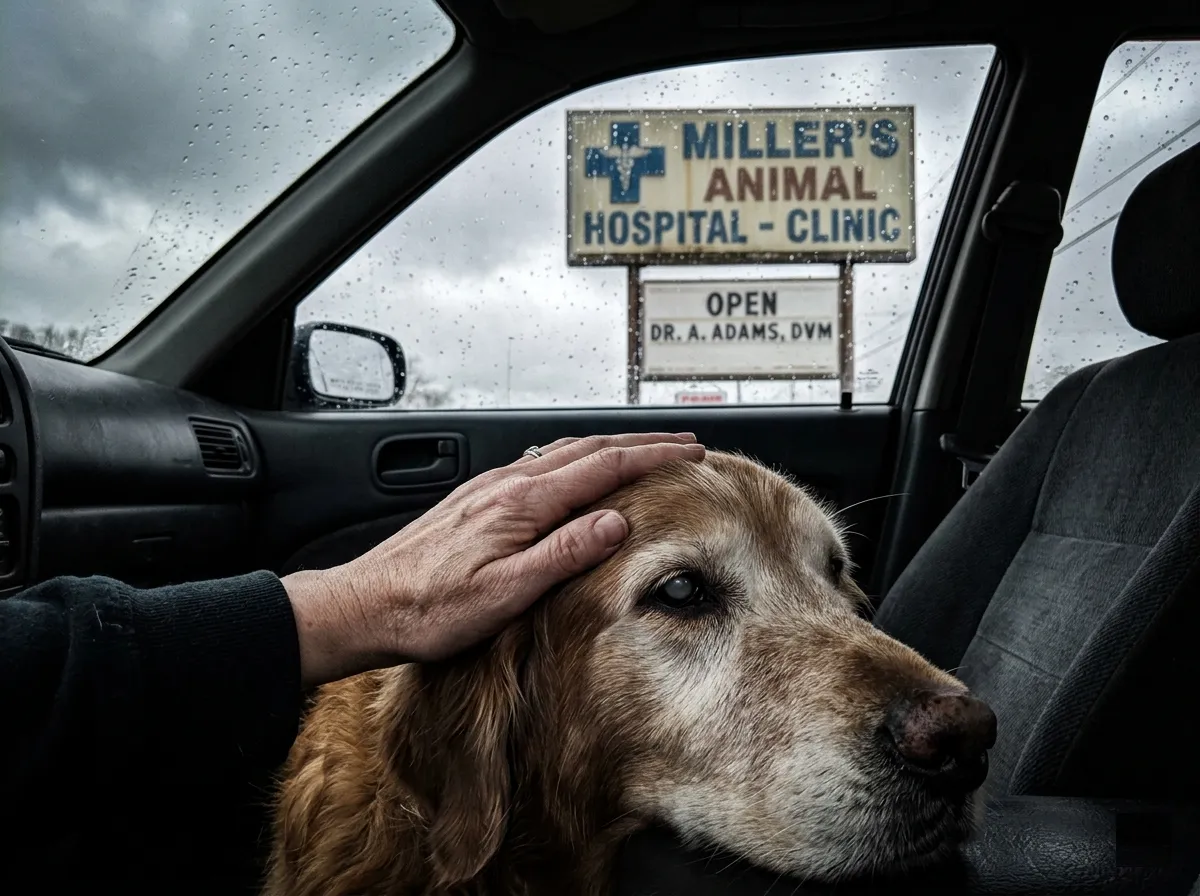
The Longest Drive
The engine hummed a low, mournful tune as the old station wagon pulled into the gravel lot of the vet clinic. Max, a twelve-year-old Golden Retriever with a coat the color of a faded sunset, rested his heavy head on the center console. His breathing was labored, a rhythmic rasp that had kept Sarah awake for weeks, signaling the inevitable approach of a day she had prayed would never come. She reached out, her hand trembling as she stroked the velvet softness of his ears, whispering a silent apology for what was about to happen.
Inside the clinic, the air was thick with the scent of antiseptic and the heavy silence of shared grief. Every person in the waiting room looked away, their eyes fixed on the linoleum floor as Sarah checked in. The receptionist didn’t ask for a name; she simply nodded with a look of profound pity that felt like a physical blow to Sarah’s chest. They were ushered into Room 4—the “Comfort Suite”—a room designed to look like a living room but smelling undeniably of the end.
Sarah knelt on the floor, pulling Max’s large, tired body into her lap. He gave a small, weary lick to her hand, his tail thumping once, twice, then falling still against the rug. The vet, a kind man named Dr. Aris, entered with a soft knock. He carried a small tray, and in that moment, the reality of the choice crashed down on Sarah. She wasn’t just saying goodbye; she was the one holding the door open for him to leave forever…
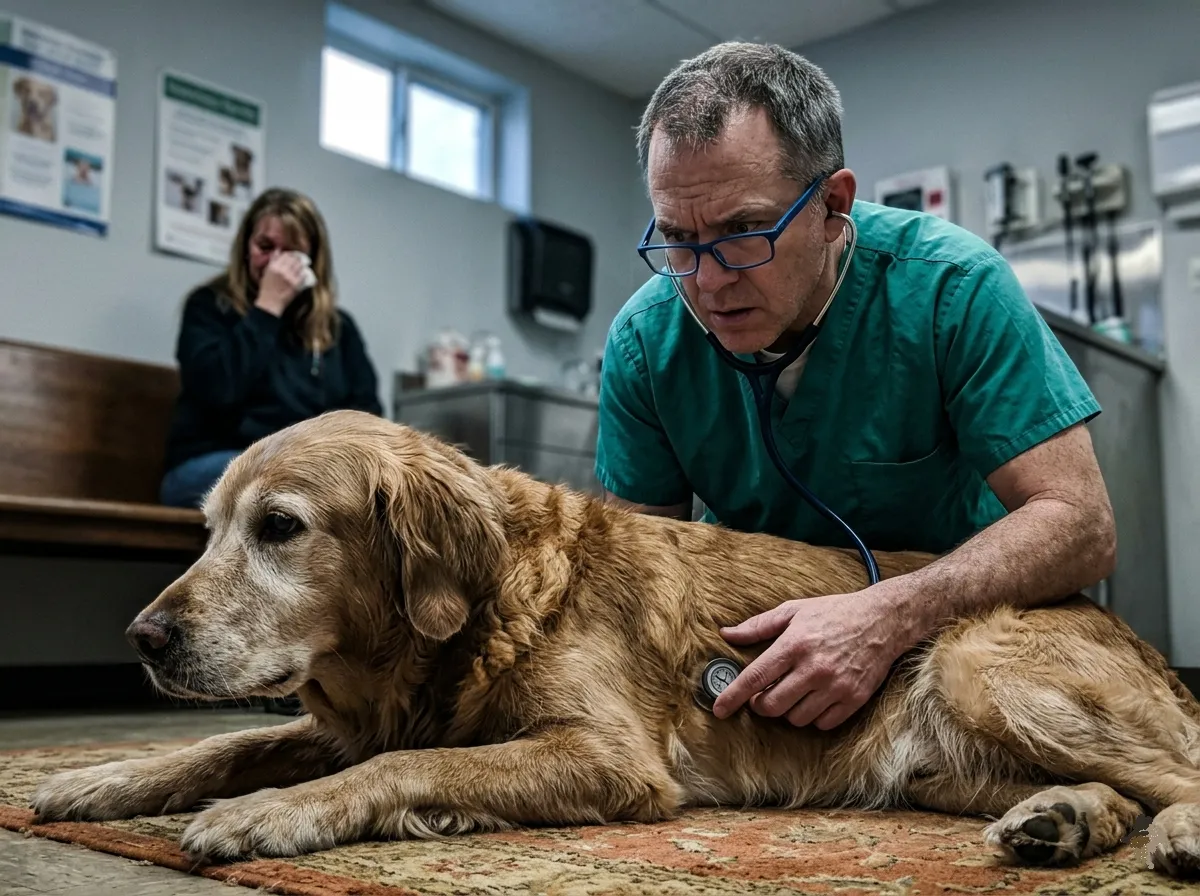
The Final Assessment
Dr. Aris knelt beside them, his movements practiced and gentle. He didn’t rush to the needles; instead, he placed a hand on Max’s flank, feeling the shallow rise and fall of his chest. He began to explain the process, his voice a steady drone that Sarah struggled to process through the fog of her tears. He spoke of peace, of the absence of pain, and of the “gift” of a dignified exit. But looking at Max’s cloudy eyes, Sarah only felt like a traitor to her best friend.
Max had been with her through everything—the messy divorce, the move across the country, and the long nights of loneliness. He was the only constant in a decade of upheaval. To see him now, unable to stand on his own, his back legs withered by aggressive arthritis and something the doctors called “neurological decline,” was a slow-motion car crash. She nodded, giving the doctor the signal to proceed with the sedative that would put him into a deep sleep before the final injection.
As the doctor reached for the syringe, he paused, his brow furrowing slightly. He pressed his stethoscope to Max’s chest, moving it slowly across his ribcage. Sarah’s heart hammered against her ribs. Was it too late? Had his heart already given up? The silence in the room grew heavy, punctuated only by the ticking of a wall clock. Then, Dr. Aris looked up, a strange expression crossing his face—not one of sorrow, but of intense, clinical confusion.
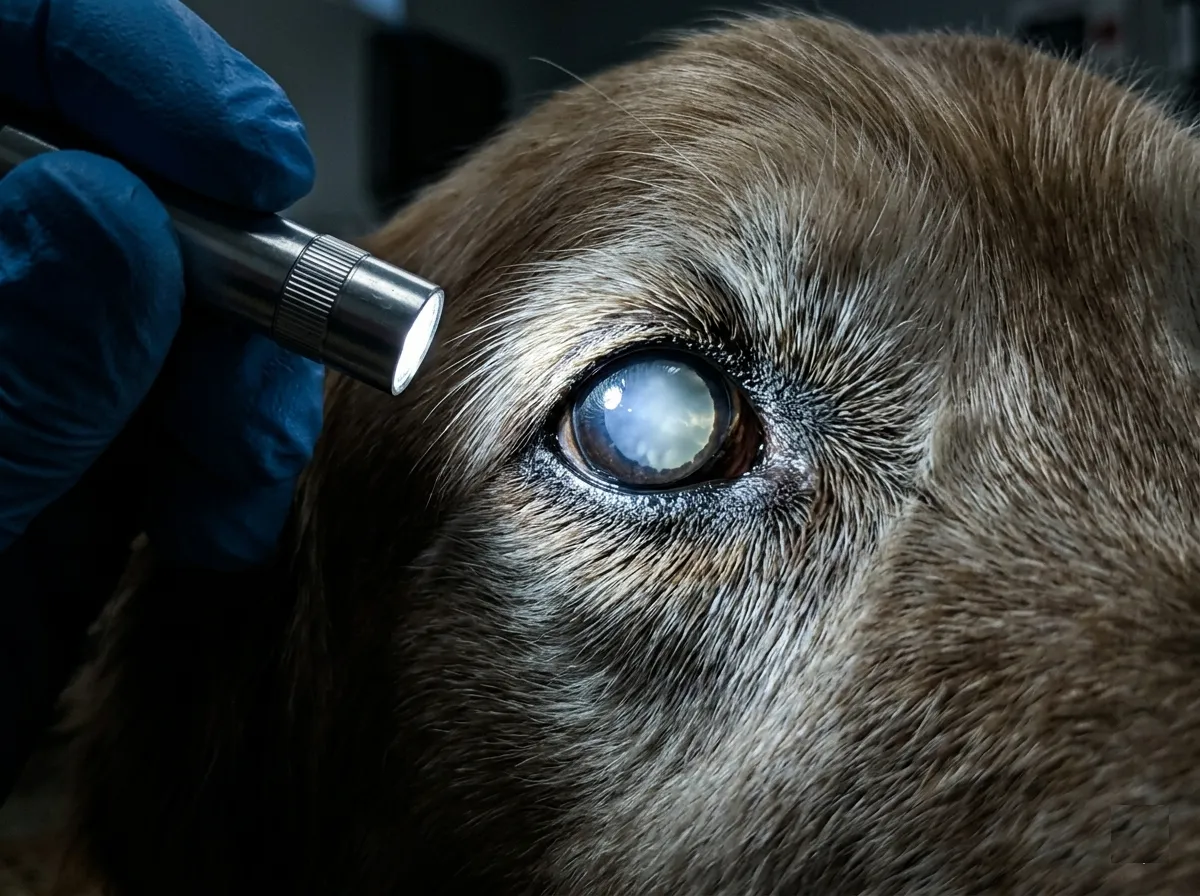
The Unexpected Pause
“Hold on a moment,” Dr. Aris whispered, more to himself than to Sarah. He shifted his position, pressing two fingers firmly against Max’s inner thigh to check his pulse. Sarah held her breath, her eyes darting between the doctor and her dog. Max remained motionless, his eyes half-closed, seemingly indifferent to the sudden tension in the room. The doctor stood up abruptly, stepping over to the counter to grab a small flashlight and a reflex hammer.
He began a series of rapid-fire neurological tests that seemed entirely out of place for a dog seconds away from being euthanized. He shone the light into Max’s pupils, watched the contraction, and then tapped the tendons in his hind legs. To Sarah’s shock, Max’s back leg gave a sharp, involuntary twitch—a movement that had been difficult for him for months. The doctor’s eyes widened, and he muttered something under his breath.
Sarah wiped her eyes, her voice shaking. “Doctor, what’s happening? Is he in pain?” She was terrified that this was some final, cruel spasm before the end. But Dr. Aris wasn’t looking at the tray of syringes anymore. He was looking at Max as if he were a puzzle that had suddenly changed its shape. He asked Sarah a question that felt completely irrelevant: “Did you say he started failing right after you moved into the new house on Miller Street?”
A Strange Connection
Sarah blinked, confused by the shift in topic. “Yes, about three months ago. Why does that matter? The specialists said his disease was degenerative.” She remembered the move clearly; it was an old Victorian fixer-upper she had bought to start a new life. Within weeks of moving in, Max had gone from hiking trails to barely being able to cross the kitchen floor. The decline had been so rapid that every vet she saw told her it was simply his time.
Dr. Aris didn’t answer immediately. He went to the computer and began typing furiously, his eyes scanning medical journals and case reports. “The symptoms fit,” he muttered, “the lethargy, the apparent paralysis… it mimics what we thought it was perfectly.” He turned the monitor around to show Sarah a grainy photo of a tiny, dark object. “Sarah, I need to check something. It’s a long shot, and it’s almost unheard of in this region, but I need to be sure before we do this.”
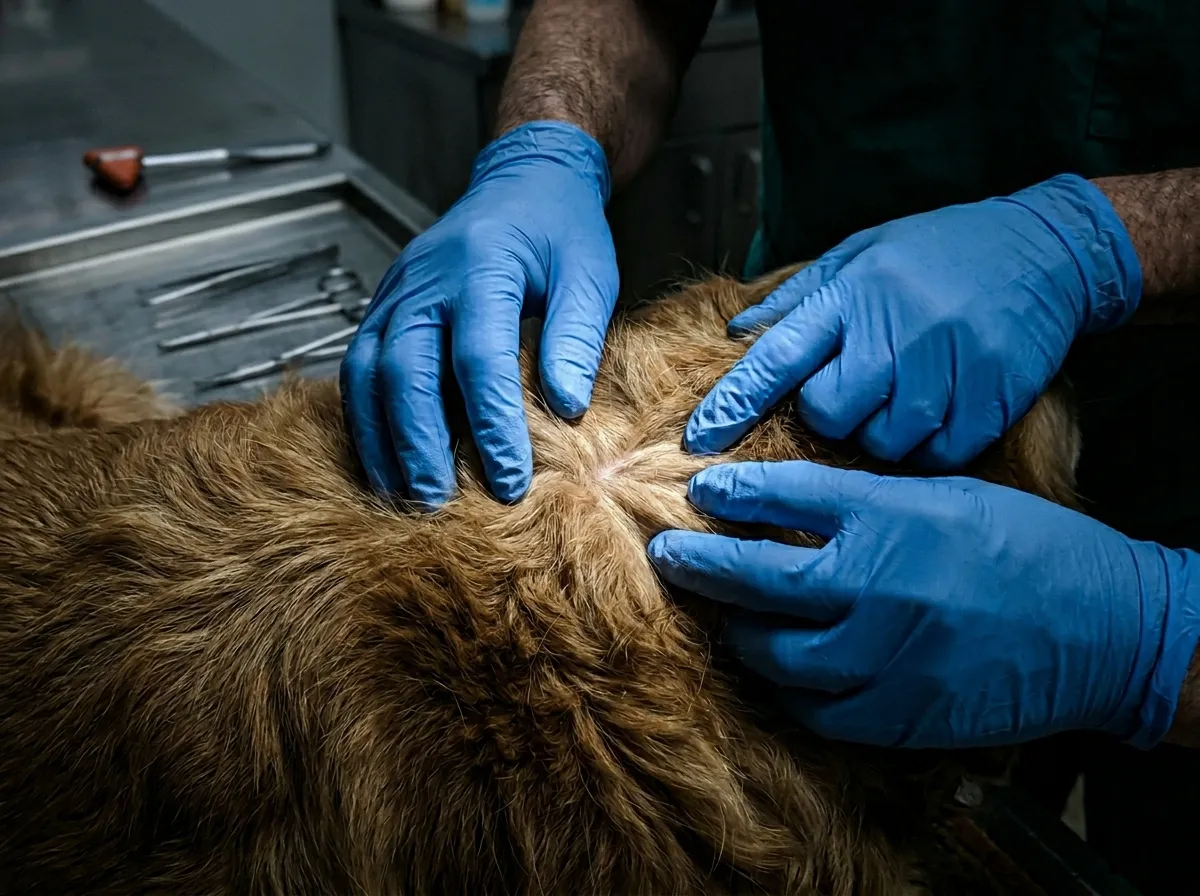
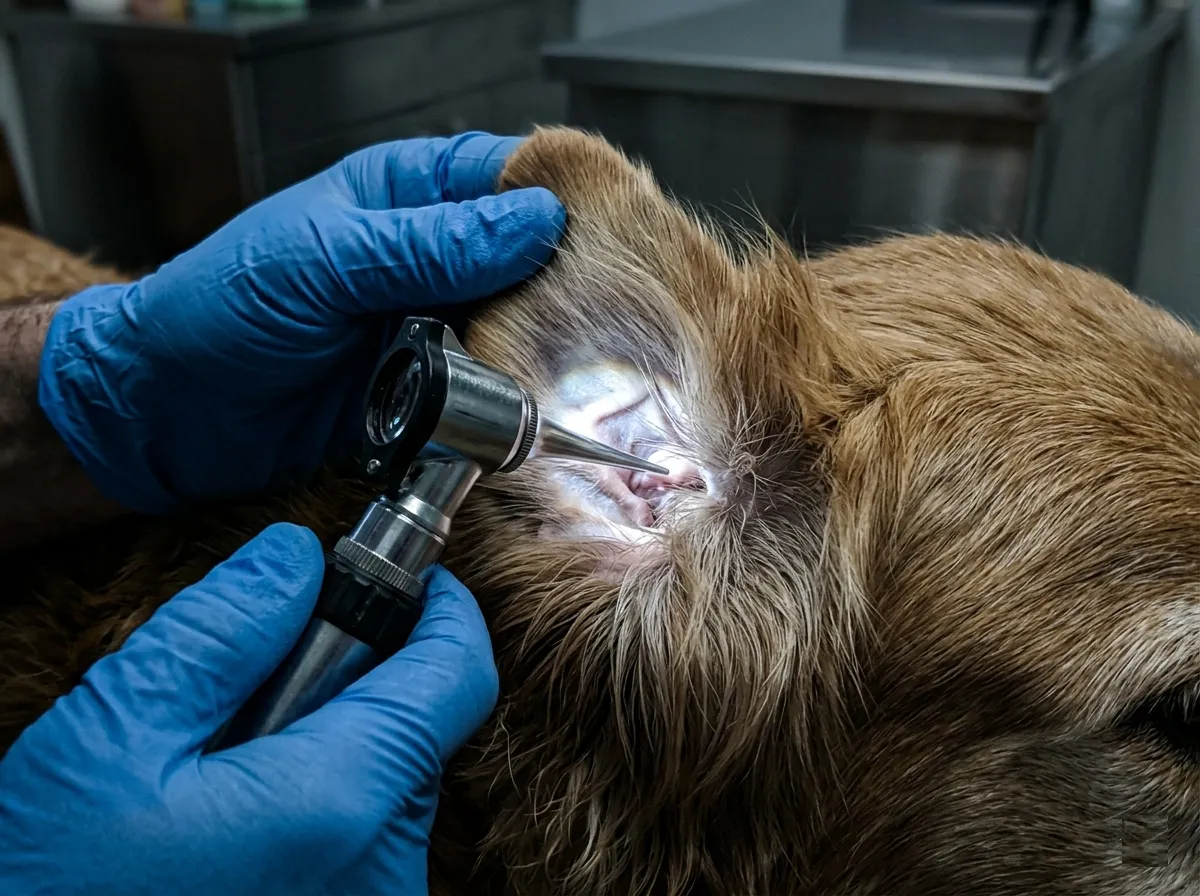
He pulled on a pair of latex gloves and began a meticulous search through Max’s thick, golden fur. He wasn’t looking for tumors or injuries; he was parting the hair down to the skin, inch by inch, starting at the base of the skull and moving down the spine. Sarah watched, her heart oscillating between a sliver of hope and the crushing weight of reality. After several minutes of searching, the doctor stopped near Max’s left ear and gasped.
The Hidden Culprit
“I found it,” Dr. Aris said, his voice breathless with excitement. He reached for a pair of fine-tipped forceps. Sarah leaned in, her eyes widening as the doctor delicately extracted a tiny, engorged creature from deep within Max’s ear canal. It was a tick, but unlike any Sarah had ever seen. It was blue-grey and bloated, its legs still wiggling feebly. “It’s a rare kind of tick,” the doctor explained, “but specifically, it’s a carrier of a rare neurotoxin.”
He explained that some ticks secrete a toxin in their saliva that causes “Tick Paralysis.” It’s a condition that perfectly mimics terminal neurological failure. It starts at the hind legs and moves upward, eventually hitting the lungs and causing respiratory failure—the exact symptoms Max was showing. Because the tick was buried so deep in the ear canal, it had been missed by every grooming and every previous exam. Max wasn’t dying of old age; he was being slowly poisoned.
Sarah felt a wave of dizziness wash over her. She looked at the syringe on the tray—the medicine that would have “mercifully” ended his life. If Dr. Aris hadn’t been curious enough, or if Max hadn’t twitched at just the right moment, she would have killed him for a curable condition. “So, what now?” she whispered, her voice cracking. “Is it too late? The toxin… has it done permanent damage?”
The Waiting Game
Dr. Aris placed the tick in a vial and turned his full attention back to Max. “The incredible thing about Tick Paralysis is that it’s almost entirely reversible,” he said, though his face remained guarded. “Once the source of the toxin is removed, the body begins to clear it out. But Max is old, and he’s been paralyzed for a long time. His system is weak. We need to stabilize him and see if his nerves can wake back up.”
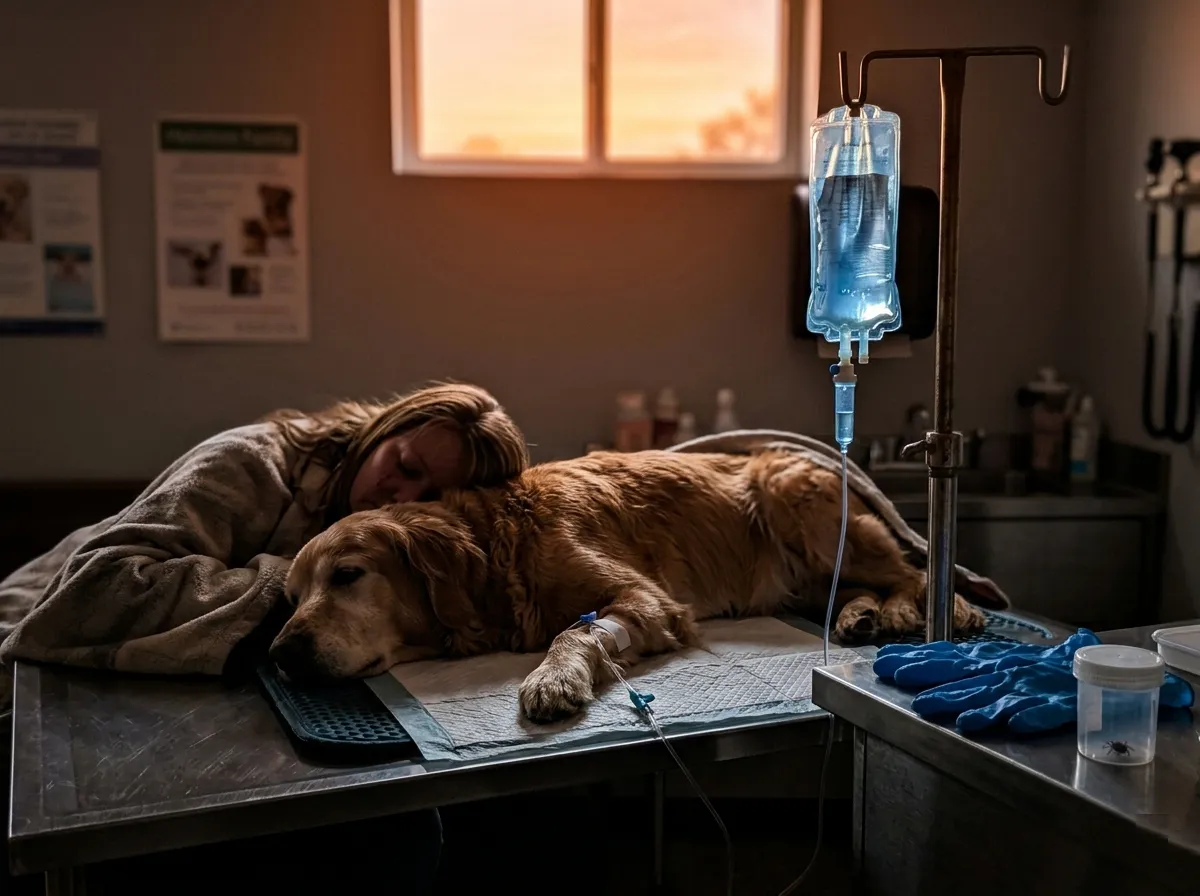
He cancelled the euthanasia order and immediately started Max on an IV of fluids and high-dose antioxidants. The “Comfort Suite” was transformed from a place of death into a makeshift intensive care unit. Sarah refused to leave his side. She curled up on the rug next to him, her head resting on her arm, watching the slow drip of the IV bag. The vet warned her that the next few hours were critical. If the paralysis had reached his diaphragm, he might still stop breathing.
Hours passed in a blur of ticking clocks and the soft whir of the clinic’s ventilation system. Outside, the sun began to set, casting long, orange shadows across the room. Sarah talked to Max, telling him about the walks they would take and the steaks she would buy him if he just opened his eyes. But Max remained limp, his breathing still shallow and rhythmic. The initial burst of hope began to sour into a fresh kind of agony: the agony of waiting.
A Sign of Life
Around 2:00 AM, the clinic was silent except for the occasional bark from the kennel area. Sarah had drifted into a light, fitful sleep when she felt a sudden, sharp pressure on her hand. She bolted upright, her heart racing. Max’s head hadn’t moved, but his front paw was twitching violently. It wasn’t a seizure; it looked like a man trying to shake off a limb that had fallen asleep.
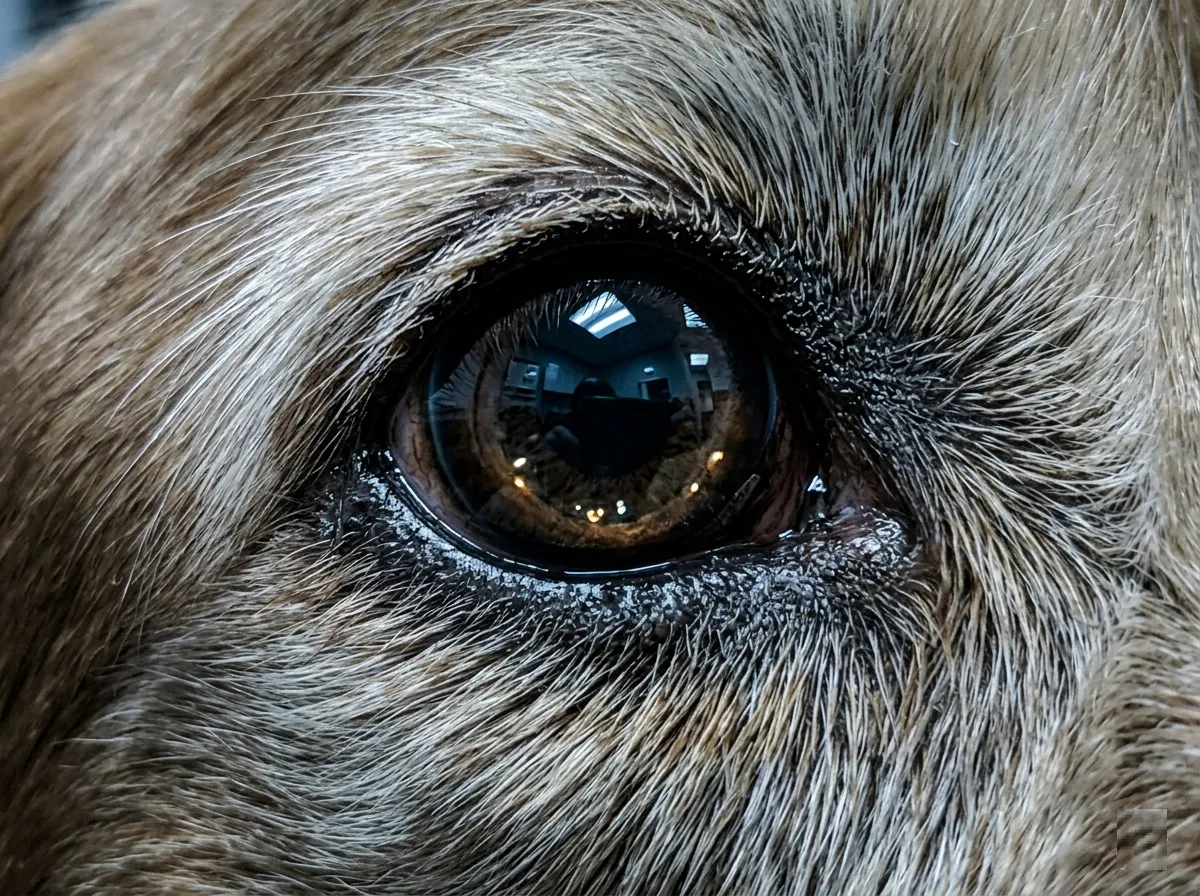
She called for the night technician, who came rushing in. Together, they watched as the movement spread. Max’s ears flicked toward the sound of their voices. Then, the most incredible thing happened: Max let out a long, shaky sigh—a much deeper breath than he had taken in weeks—and his eyes snapped open. They weren’t cloudy and distant anymore; they were bright, focused, and unmistakably there.
He tried to lift his head, his neck muscles straining with the effort. He let out a soft, pathetic whimper, looking at Sarah with a sense of urgency. The technician checked his vitals and beamed. “The toxin is clearing. His reflexes are returning much faster than I expected.” Sarah burst into tears, but this time, they were tears of pure, unadulterated joy. She buried her face in his neck, feeling the warmth of his skin and the strengthening beat of his heart.
The First Step
By dawn, the transformation was nothing short of a miracle. Max was sitting up, leaning his weight against the wall, but holding his own head high. Dr. Aris returned in the morning, his eyes widening as he walked into the room. “I’ve read about these recoveries, but seeing it is something else,” he admitted, kneeling to scratch Max behind the ears—avoiding the spot where the tick had been.
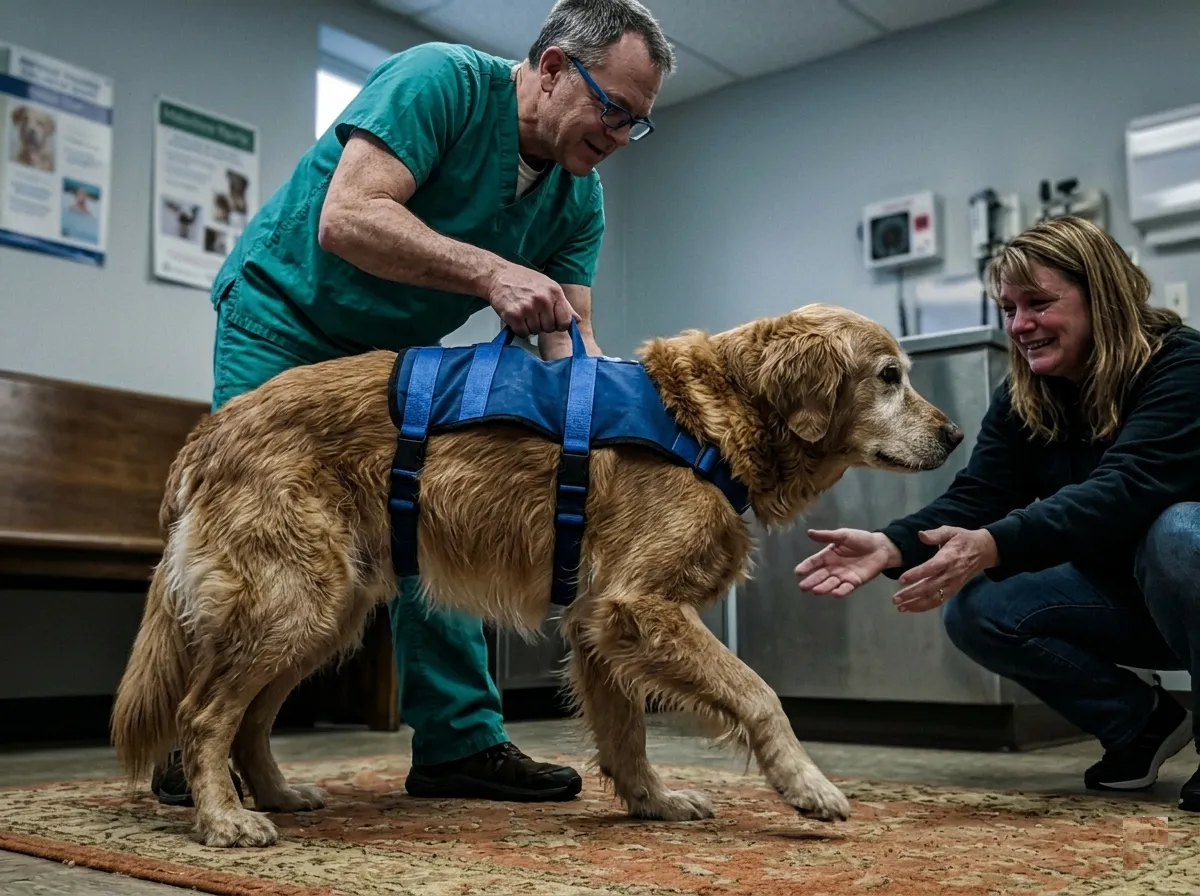
Now came the real test. The paralysis had faded, but Max’s muscles had wasted away from months of inactivity. They needed to see if he could walk. The technician brought in a specialized harness with handles to help support his weight. Sarah stood at the other end of the room, her hands over her mouth, her heart pounding. “Come on, Max,” she whispered. “Come to me, boy.”
Max’s legs shook like jelly. He took one tentative step, his back left leg sliding out from under him. The technician caught him, steadying his hips. Max grunted, a sound of pure determination that Sarah hadn’t heard in years. He adjusted his stance, took a second step, and then a third. He was wobbling like a newborn fawn, but he was moving. He reached Sarah and collapsed into her arms, wagging his tail so hard his entire back half shook.
The Return Home
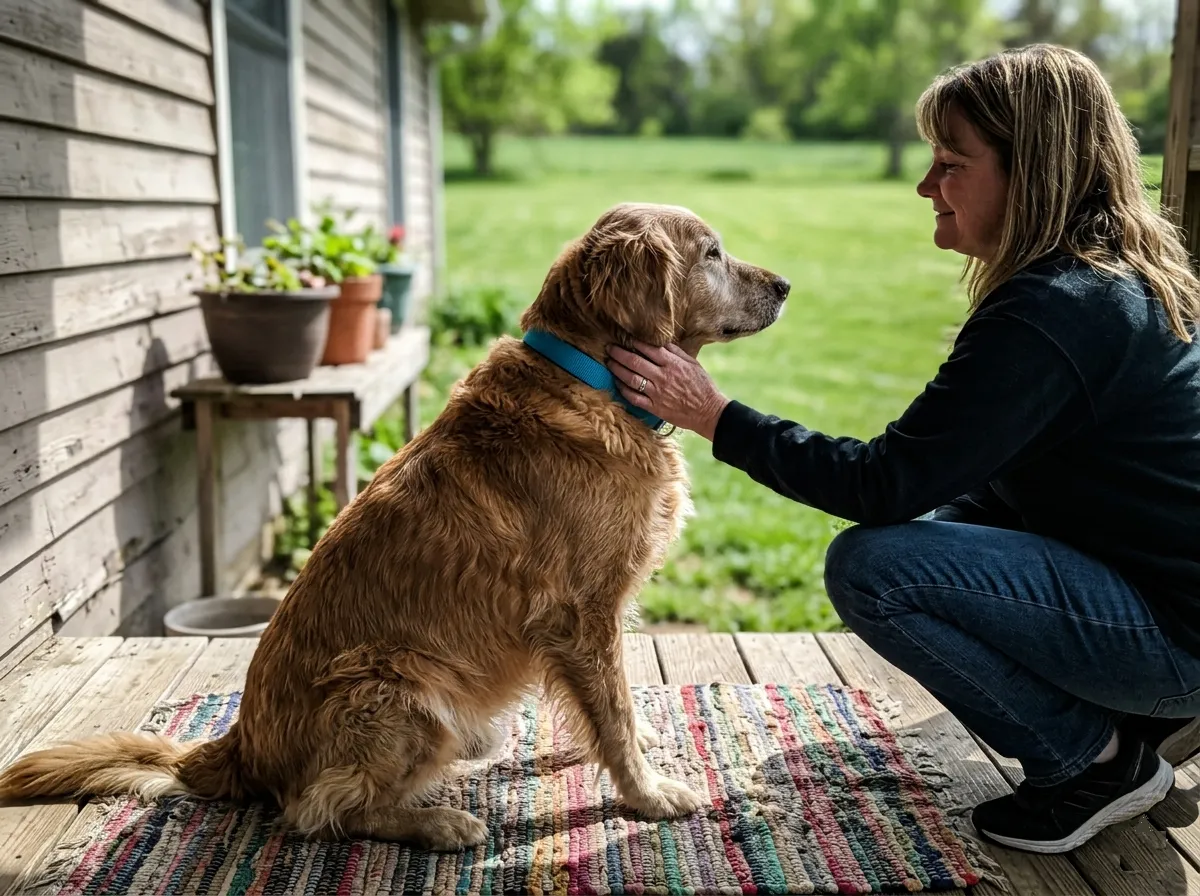
The drive back from the clinic was the polar opposite of the drive there. Instead of a heavy, silent weight in the back seat, Max was sitting up, his nose pressed against the window, watching the world go by with renewed wonder. Sarah felt like she was breathing for the first time in months. She kept looking in the rearview mirror, half-expecting him to vanish, terrified that this was all a beautiful dream.
When they arrived at home, Sarah didn’t let him out immediately. She took a can of industrial-strength yard spray and a tick-prevention collar she’d bought on the way home. She realized now that the beautiful, overgrown ivy in her new backyard had been a breeding ground for the parasites. She felt a pang of guilt, but she pushed it aside. She had been given a second chance, and she wasn’t going to waste a second of it.
She helped Max out of the car. He walked up the porch steps—slowly, one at a time, but under his own power. He went straight to his favorite sun-drenched spot on the rug in the living room and let out a deep, contented groan as he settled down. He looked around the room, his tail giving a soft thump-thump-thump against the floorboards. He was home, and the “Comfort Suite” was a lifetime away.
The Gift of Time
Weeks passed, and Max’s recovery continued to defy the odds. The “terminal” dog was now chasing tennis balls—not as fast as he used to, and with a bit of a limp, but with a zest for life that put Sarah to shame. She became an advocate, sharing Max’s story online to warn other pet owners about the deceptive symptoms of tick paralysis. Her post went viral, potentially saving hundreds of dogs from the same tragic mistake.
Sarah often thought back to those final minutes in the clinic. She thought about the tray of syringes and the silence of Room 4. It taught her a profound lesson about hope and the importance of a second opinion. She looked at Max, sleeping at her feet, and realized that every day since that “final” appointment was a bonus—a gift of time she nearly threw away.
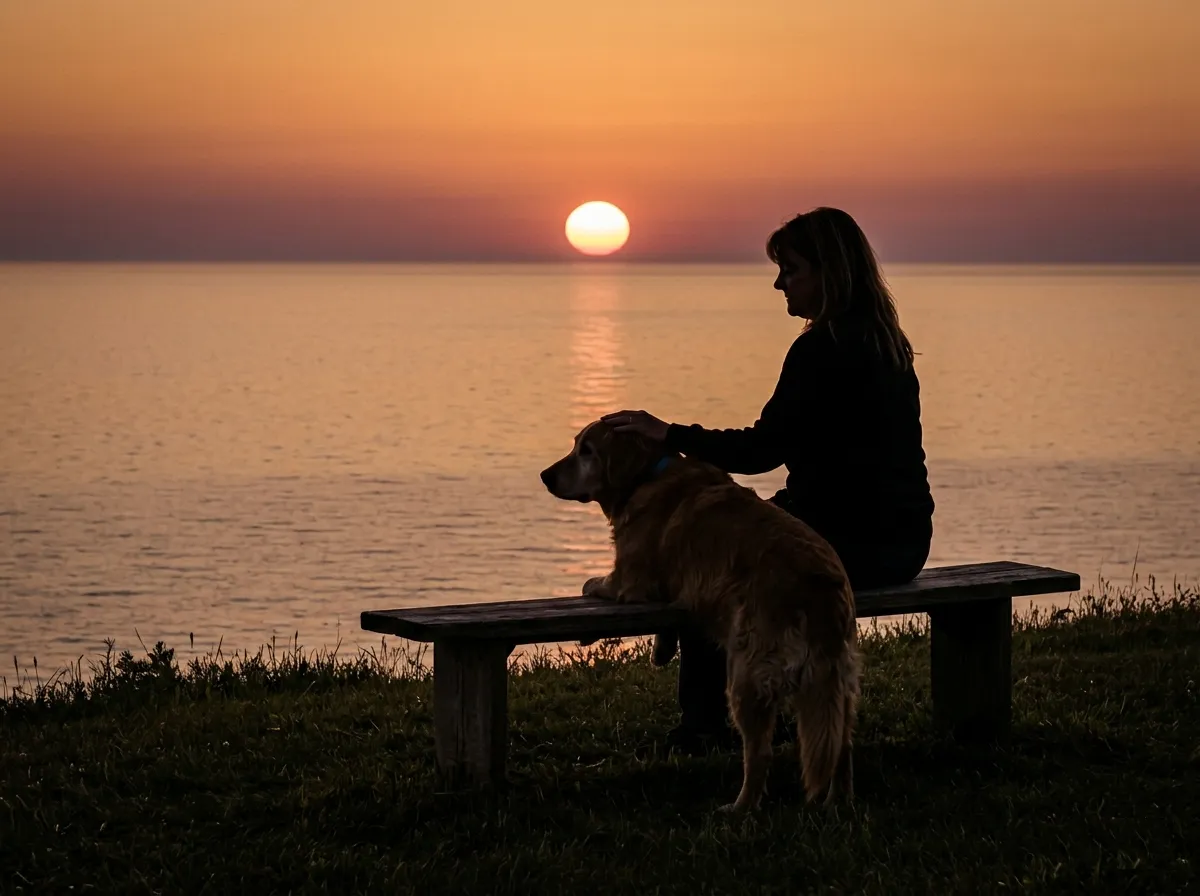
One evening, as the sun set over the yard, Max looked up from his bone and walked over to Sarah. He rested his head on her knee, his eyes clear and full of an ancient, canine wisdom. She stroked his ears, feeling the spot where the tick had once been, now just a tiny, fading scar. “We got lucky, Max,” she whispered. He let out a soft “woof” and licked her hand, the same hand that had almost signed his life away, now the hand that held his world together.